
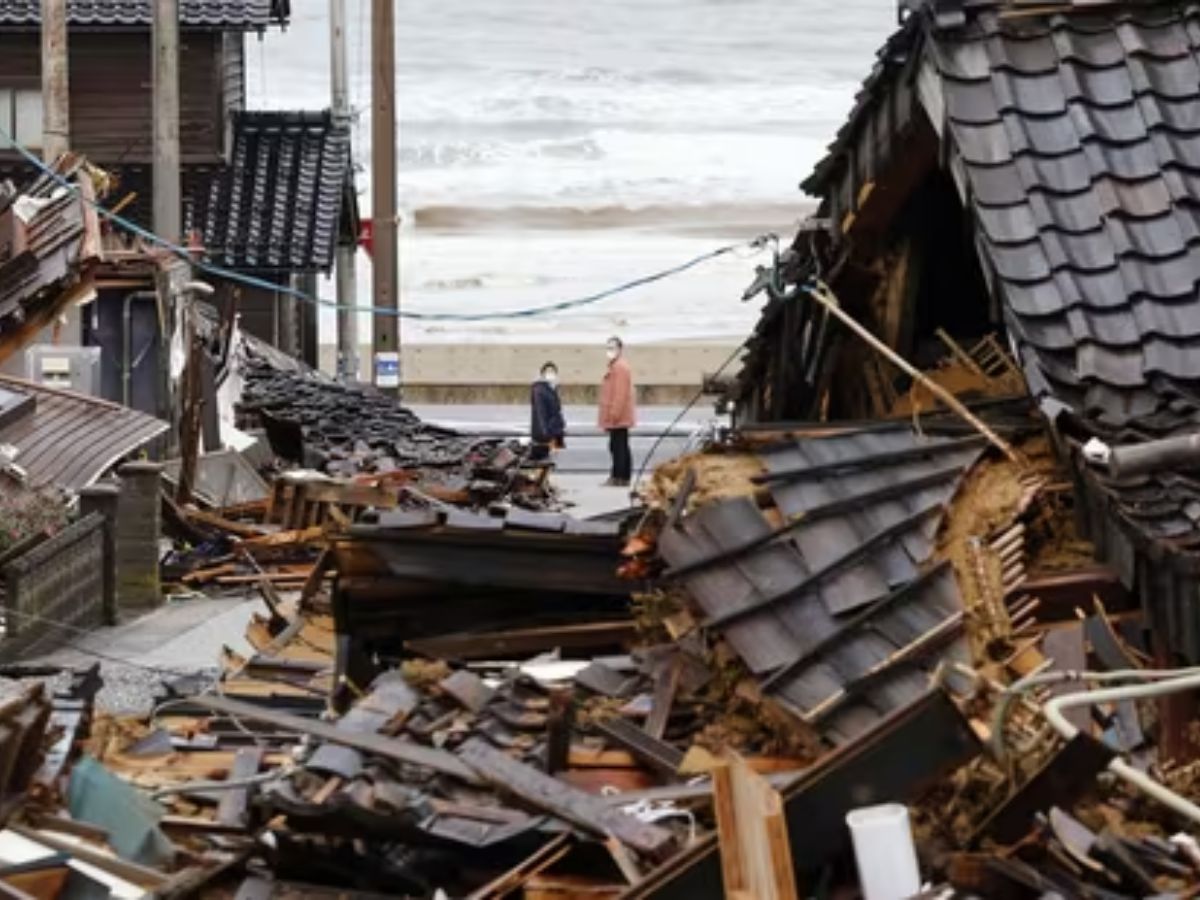
The world’s most seismically active country, Japan, experiences 1,500-2,000 earthquakes annually. The earthquakes range from slight to intense and are triggered by the country’s proximity to the seismically active Ring of Fire where numerous plates converge.
Despite this constant threat, Japan has consistently been able to avert loss of lives and property destruction through a combination of high-tech technology, strict building codes, community preparedness, and speedy emergency responses.
Infrastructure That Acts Swiftly
Japan’s infrastructure has been programmed to act instantly in case of earthquake activity. Trains, elevators, and industrial systems are programmed to stop the moment earthquake activity is detected.
The legendary Shinkansen (bullet train), for instance, comes equipped with an automatic braking mechanism that activates at the first jolt itself. As such, emergency response teams in real-time are alerted and respond without delay.
Tsunami Warning and Strong Coastal Defence
Japan’s earthquakes often lead to tsunami peril. To tackle this, Japan has established a large network of ocean floor sensors that check the motion of the oceans at all times.
After every type of seismic activity, these systems immediately test the potential tsunami hazard and issue warnings, such as wave height and arrival time.
Alerts are transmitted through loudspeakers, sirens, and emergency announcements, ordering people to move to higher, secure terrain.
Coastal communities are also protected by massive seawalls, as much as 10 to 15 meters high in some instances, to absorb the shock of wave incidence.
Earthquake-Proof Engineering
One of the key elements in Japan’s disaster policy is its stringent construction codes. Modern structures are built with the help of elastic materials and methods appropriate for seismic shock absorption. Traditional buildings are retrofitted regularly to meet modern earthquake-resistant norms.
Public buildings like roads, bridges, and rail tracks are also constructed to be quake-resistant. When the powerful 2011 quake (9.0 magnitude) occurred, several Tokyo skyscrapers did not collapse because of these new engineering techniques.
Nationwide Drills and Public Awareness
Preparedness is part of Japanese culture. Drills for earthquakes and tsunamis are conducted frequently in schools, offices, and public buildings. September 1 is used to mark Disaster Prevention Day, when the public across the country performs drills and safety exercises.
Households are also told to stock emergency supplies of food, water, medicine, and flashlights. Students are trained early enough to react with steps like “drop, cover, and hold” during school drills.
Science-Driven Safety Measures
Japan invests a great deal in earthquake- and tsunami-related scientific research. Advanced satellite and GPS networks monitor tectonic movement around the clock. Supercomputers simulate likely quake and tsunami events to help optimize evacuation routes and response protocols.
Scientific backing allows for swift and efficient action by the authorities, frequently minimizing damage and saving lives.
Quick Emergency Response
Trained disaster response teams at national and local levels ensure prompt assistance when an earthquake strikes. Search-and-rescue operations include the Japanese Self-Defence Forces.
In the aftermath of an incident, the government acts with urgency to deliver temporary housing, restore power and other utilities, and provide medical care. Relief missions are assisted by volunteers as well as local citizens, who unite remarkably in the face of adversity.
Strong Sense of Community
Japan’s social solidarity comes to the fore during times of crisis. The nation shares a sense of responsibility and calmness. During the 2011 crisis, communities worked day and night supporting one another and rebuilding their ruined lands.
Recent Earthquake: A Fine Example
Japan’s preparedness was once again showcased during the July 30 earthquake. Though it generated only 30–50 cm tsunami waves, everything that could have been done was done, and it functioned like clockwork. Early warnings, timely evacuations, and strong coastlines were all present.
At the Fukushima nuclear facility, rapid safety procedures prevented any disaster. “Thanks to rapid administrative response and public vigilance, no fatalities or major damage occurred,” a statement issued said, noting how much farther Japan has come since 2011.
Japan is a standing example of disaster management and resilience. It is equipped with not only technology and infrastructure but also a strong culture of preparedness.