
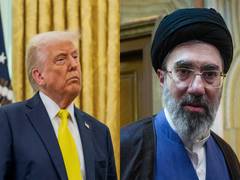
Cairo [Egypt], June 12 (ANI): The Egyptian Foreign Ministry has voiced optimism regarding a potential diplomatic breakthrough, urging both Washington and Tehran to capitalise on the current momentum to secure a definitive pact.
In an official communication shared via the social media platform X, the ministry noted that Egypt “followed with great satisfaction and commends what was announced by US President Donald Trump regarding the cancellation of the military strikes that were scheduled to be carried out against Iran”.
Cairo further articulated its aspirations for the diplomatic corridor, noting that Egypt hopes “the available opportunity will be seized to reach an agreement on various outstanding issues and to foster an environment conducive to ending the war and launching a new phase of regional stability”.
Highlighting its proactive role in navigating Middle Eastern geopolitics, the ministry asserted that Egypt “continues its tireless, serious, and sincere efforts, in coordination and cooperation with regional and international partners, to de-escalate tensions”.
This diplomatic endorsement from Cairo came in the wake of a major declaration by US President Donald Trump, who announced that the United States has “ended war with Iran,” asserting that Tehran authorities have “agreed never to have a nuclear weapon”.
The American leader made these assertions while addressing a virtual tele-rally for Lt. Governor of Georgia Burt Jones on Thursday.
“We ended the war with Iran today, and they have agreed never to have a nuclear weapon, something that we insisted on. That was the whole purpose. That was 95 per cent of it, and they’ve done it in the most powerful way you can do it,” Trump said during his address.
However, official channels in Iran have not made any such proclamations to date, creating a stark contrast with Washington’s optimistic narrative.
This development followed hours after Trump stated that Washington and Tehran are “on the verge of signing a peace agreement,” whilst declaring the cancellation of fresh missile strikes he had warned about earlier.
Subsequently, detailing the logistics of the diplomatic breakthrough, Trump indicated that Vice President JD Vance will potentially attend an agreement-signing ceremony with Iranian representatives as early as this weekend.
“The strait (of Hormuz) will officially open as soon as we sign, which could be soon – very soon, maybe over the weekend in Europe. I won’t be able to be there, but JD will be there,” the American leader averred, as per a report by CNN.
Conversely, Iran has maintained its stance that a final decision on an understanding with Washington has not been reached, following Trump’s announcement of a “great settlement” to conclude the hostilities.
“So far, Iran has not reached a final conclusion on the agreement,” Iranian foreign ministry spokesman Esmaeil Baqaei said, responding directly to Trump’s expectations of an imminent signing in Europe.
Reflecting Tehran’s scepticism, the Tasnim News Agency pointed out that Trump had announced a deal was “imminent” 38 times over the course of the previous two months.
“Until Iran announces the matter of a potential understanding, any news from Trump on this subject should be regarded the same as his previous messaging,” the news agency warned.
Despite this pushback, Trump maintained an optimistic outlook whilst announcing the suspension of the military strikes on his social media platform, Truth Social.
“Based on the fact that discussions with the Islamic Republic of Iran have been brought to the highest level of Iranian leadership and approved, I have, as President of the United States of America, cancelled the scheduled strikes and bombings against Iran this evening,” Trump wrote on Truth Social.
He further claimed that the diplomatic negotiations had received approval from other regional actors involved in the conflict, including Israel, a nation that has remained publicly sceptical about any diplomatic arrangement with Iran.
According to Trump, the other participating actors included Gulf nations such as Qatar, Saudi Arabia, and the United Arab Emirates, alongside regional powers Turkey and Pakistan.
Emphasising that pressure would remain until the dotted line is signed, Trump added, “The Naval Blockade will remain in full force and effect until this Transaction is finalised – Time and place of the signing to be announced shortly.”
These high-stakes diplomatic manoeuvres come against the backdrop of a broader regional conflict, as Tehran and Washington have been exchanging proposals to conclude the hostilities, which commenced on February 28 and subsequently engulfed the Middle East.
Over the last few days, both nations have increasingly engaged in exchanges of fire, despite a fragile ceasefire that has remained in effect since April 8.
Providing inside details on the backchannel diplomacy, a report by Axios revealed that the negotiations extended late into Wednesday night in Tehran, where Qatari envoy Ali Al-Thawadi and Iranian Foreign Minister Abbas Araghchi worked to iron out the remaining creases between the US and Iran.
Three sources briefed on the developments informed the American publication that the Qatari and Iranian representatives believed they had successfully achieved an agreed-upon text that the US would also accept.
According to the sources, differences were specifically narrowed down on three key issues, which included the mechanism for releasing Iran’s frozen assets, the arrangements for reopening the Strait of Hormuz, and the framework for how negotiations over Iran’s nuclear programme would be conducted during a proposed “60-day ceasefire period.”
While these technical points have been bridged, a final resolution still hinges on a supreme political nod in Tehran, as Iranian officials reportedly informed negotiators that the discussions had yielded an agreement in principle, though Ayatollah Ali Khamenei has yet to grant his final approval. (ANI)
Source The article has been published through a syndicated feed. Except for the headline, the content has been published verbatim. Liability lies with original publisher.