
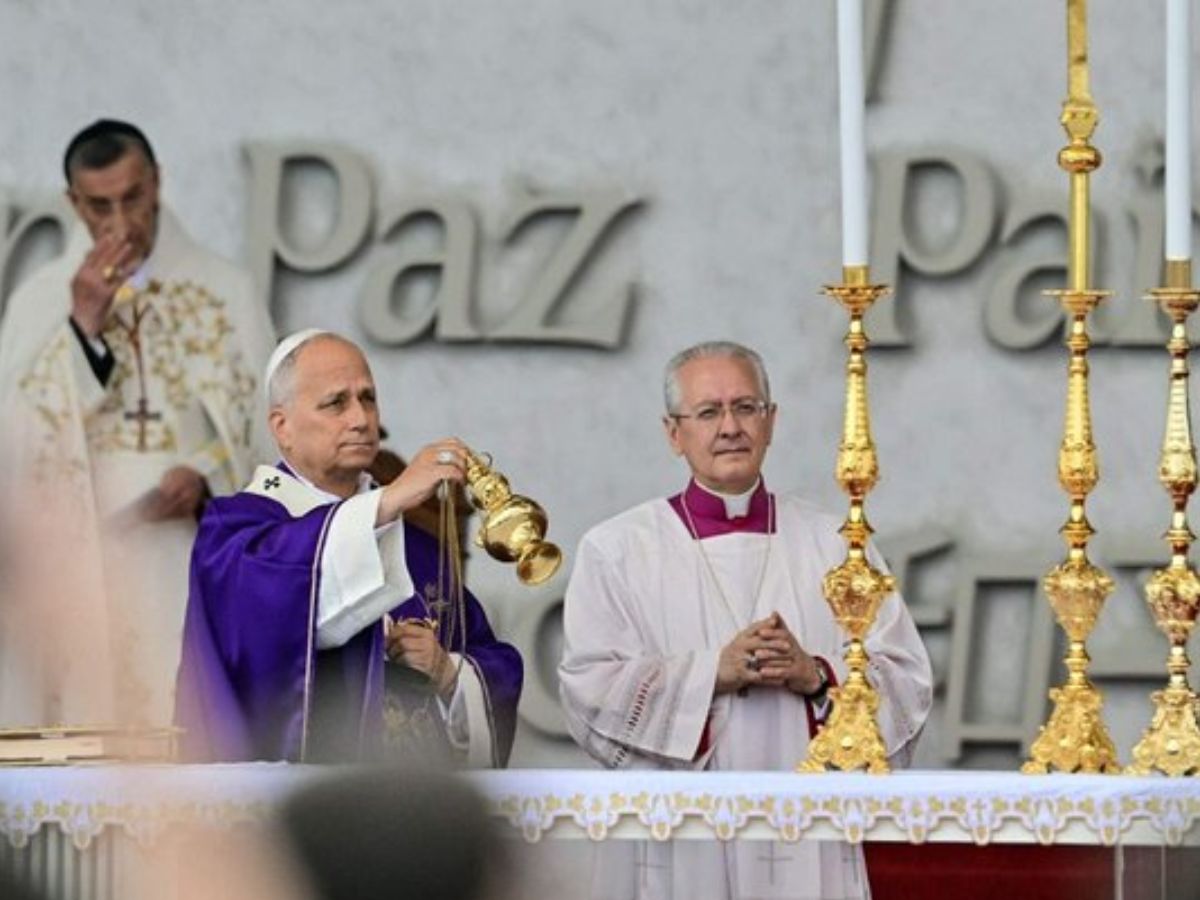
Pope Leo XIV spent Tuesday at the location of the devastating 2020 Beirut port explosion, a place many Lebanese now see as a symbol of government failure and lack of accountability. On the final day of his first foreign trip, he offered prayers for the victims and urged Lebanon to pursue justice.
Families of some of the 218 people who died gathered at the charred location, holding photographs of their loved ones as Leo arrived. He prayed silently at the memorial before walking to each relative and taking their hand in a moment of personal comfort.
The meeting unfolded beside the remains of the last standing grain silo and near heaps of burnt vehicles—stark reminders of the August 4, 2020 blast, caused by hundreds of tons of ammonium nitrate stored in a port warehouse. The explosion caused billions of dollars in damage and shattered several neighbourhoods.
Families Still Waiting for Justice
Five years later, families of the victims are still demanding answers. Despite a judicial investigation, no government figure has been convicted. The probe has been repeatedly stalled, fuelling public anger in a country long frustrated by corruption and decades of unchecked wrongdoing.
Cecile Roukoz, whose brother Joseph died in the blast, said the pope’s visit carries a strong message. “The visit clearly sends the message that the explosion was a crime,” she said. “There should be a message, the country should end impunity and ensure justice is served.”
When Leo arrived in Lebanon on Sunday, he urged political leaders to seek the truth as a path toward healing. Later, during a homily after praying at the site, he specifically mentioned the port explosion and insisted Lebanon must become a nation rooted in justice.
Pope Leo’s Final Mass Draws Massive Crowd
Around 150,000 people filled the Beirut waterfront for his final Mass, held shortly after his visit to the blast site.
In his homily, Leo listed the hardships the Lebanese people have endured from economic collapse to the port explosion to renewed fears of conflict. He said it is understandable to feel “paralyzed by powerlessness in the face of evil and oppressed by so many difficult situations.”
He urged people not to lose hope, encouraging gratitude and perseverance. But he also emphasised that justice is essential.
He called on Lebanese communities to move beyond political and sectarian divisions. “Let us cast off the armor of our ethnic and political divisions, open our religious confessions to mutual encounter and reawaken in our hearts the dream of a united Lebanon,” he said. “A Lebanon where peace and justice reign, where all recognize each other as brothers and sisters.”
He ended with a powerful appeal: “Lebanon, stand up! Be a home of justice and fraternity! Be a prophetic sign of peace for the whole of the Levant!”
Emotional Visit to De La Croix Hospital
Earlier in the day, Pope Leo visited the De La Croix hospital, known for treating patients with mental health conditions. Children dressed as Swiss Guards, cardinals, and even a mini-pope welcomed him.
Mother Marie Makhlouf, who runs the facility, struggled with emotion as she told him that the hospital cares for “forgotten souls, burdened by their loneliness.”
Leo praised the hospital for reminding society of its moral duty. “We cannot forget those who are most fragile. We cannot conceive of a society that races ahead at full speed clinging to the false myths of well-being, while at the same time ignoring so many situations of poverty and vulnerability,” he said.
Lebanese citizens expressed joy that a pope had finally been able to visit, noting that Pope Francis had long wished to come but was prevented by Lebanon’s crises and his own medical issues.
“For Lebanon, (the visit) means a lot,” said pilgrim Maggie Claudine. “We hope that peace will prevail, and that is what we wish for. We want to live in comfort.”
Families of the Victims Demand Accountability
Leo’s message of peace comes as Lebanon deals with economic disaster, the aftermath of last year’s war between Hezbollah and Israel, and ongoing frustration over the port explosion.
Among those present to greet him was Social Affairs Minister Haneen Sayed, whose mother was killed in the blast, and Mireille Khoury, who lost her 15-year-old son, Elias.
When Leo reached her, Khoury pointed to their apartment across from the port the place where Elias died while relaxing in his room.
Khoury said Lebanon cannot recover without justice and responsibility. She has pushed for the conclusion of the stalled investigation, which has implicated numerous political, security, and judicial officials.
Families of victims have met every month since the blast to honour their loved ones and to urge global support for a full investigation, which Lebanese officials have repeatedly obstructed.
“Justice is the basis of building any country,” Khoury told The Associated Press. “Our children were killed in their homes. They were killed because someone kept (ammonium) nitrate in the main port of the city near a residential area.”
She said the pope’s prayer brings comfort, but her anger will not disappear until truth is achieved. “I will not say that this anger will fully just disappear,” she said. “But I think it will give some sort of relaxation of this anger that is in my heart until justice is served.”
Debate Over the Blast Site Silos
The fate of the massive grain silos structures that absorbed much of the explosion’s force remains contested. At one point, the government wanted to demolish them, but survivor families and activists protested, insisting they be preserved as a memorial and as potential evidence in the judicial case. The port has resumed partial operations, but full reconstruction has yet to occur.