
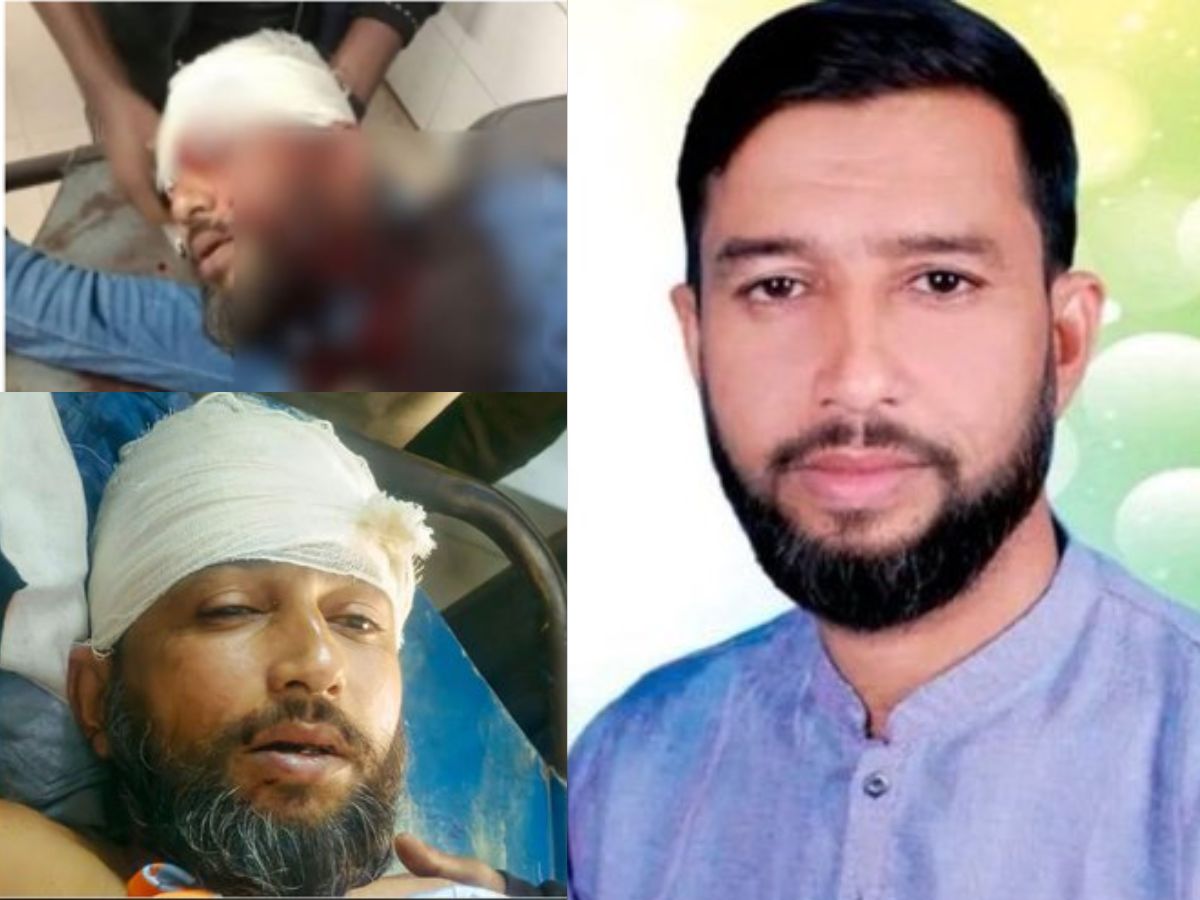
Bangladesh is facing mounting political violence as another prominent student leader was shot in the head in Khulna, just days after the death of Sharif Osman Hadi sparked nationwide unrest.
Motaleb Sikder, a senior activist with the National Citizen Party (NCP), was wounded in broad daylight and rushed to the hospital on Monday. The attack highlights growing tensions ahead of the country’s February 2026 general elections, with political figures increasingly becoming targets of violence.
Who is Motaleb Sikder?
Motaleb Sikder is a senior leader of the National Citizen Party (NCP), one of Bangladesh’s political parties. He serves as the Khulna divisional chief of the party and is the central organiser of its labour wing, Jatiya Sramik Shakti. Locals described him as a key organiser in upcoming rallies and political activities in the Khulna region, which may have made him a target amid the surge in unrest.
At about 11:45 am on Monday, unidentified assailants fired shots at Sikder near Gazi Medical College Hospital in Sonadanga. Police say the bullet struck his head, and residents quickly rushed him to Khulna Medical College Hospital for emergency treatment.
Condition After the Attack
Initial reports described Sikder as being in critical condition following the shooting. However, doctors treating him said he was out of danger after the bullet grazed his scalp, entering one ear and exiting the other without hitting any vital areas. Hospital officials confirmed that he received immediate care and was stabilising as of Monday afternoon.
Police have not made any arrests yet, and investigations are underway to determine who carried out the attack and why. Officers secured the scene, and law enforcement officials are questioning witnesses while gathering evidence to piece together the motive.
Connection to Osman Hadi’s Killing
The shooting comes amid a climate of political unrest that erupted after student leader Sharif Osman Hadi was shot in Dhaka on December 12 and later died in Singapore. Hadi, a well-known spokesperson for the Inqilab Mancha movement, was campaigning ahead of the general elections when he was attacked. His death set off nationwide street protests and clashes between activists and authorities.
Sikder’s shooting has raised concerns that the violence is not isolated and may signal a wider pattern of targeted attacks against political figures and student leaders involved in grassroots movements. Many observers believe the unrest could intensify as the election season approaches, with political divisions and street tensions intertwined.
Political Context and Unrest Ahead of Elections
Bangladesh’s political environment has been highly charged since the ousting of the previous government and the rise of interim authorities. Hadi’s death triggered massive protests, including attacks on media offices and clashes with law enforcement in major cities. Demonstrators have demanded accountability and justice, while authorities have deployed additional security forces to maintain public order.
In this tense atmosphere, political leaders and activists like Sikder remain at risk, whether due to their roles in organising protests or their public visibility in a deeply divided landscape.
Public Reaction and Future Risks
The shooting of Motaleb Sikder has drawn widespread attention within Bangladesh as yet another sign of escalating political tension and violence. As protests continue and the election nears, concerns are rising over the safety of political activists, students, and public figures. Analysts warn that without de-escalation and transparent investigations, such attacks could further polarise society and undermine democratic processes.