
In a drastic response to escalating violence along the Thailand-Cambodia border, Thai military authorities announced martial law in seven districts of Chanthaburi province and one in Trat. The order came after consecutive days of fighting in at least 12 hotspots, where cross-border artillery, airstrikes, and ground combat have turned residential zones into warfronts.
Major General Apichart Sapprasert, commander of the Border Defense Command, confirmed the move on Friday, stating that martial law aims to “ensure civilian safety and support military operations” amid the unfolding emergency.
Deadliest Conflict in a Decade
The confrontation marks the most serious military conflict between the two Southeast Asian nations since 2011. Thai officials confirmed 15 fatalities—14 of them civilians—due to Cambodian shelling, while Cambodia reported one civilian dead and five injured, blaming Thai cluster munitions.
While the use of cluster bombs, banned under international law, remains unverified, Cambodia’s Ministry of National Defence has labeled the attacks as “war crimes.” Videos and images emerging from the region show widespread damage to villages, schools, and hospitals near the border.
Mass Displacement as Border Communities Flee
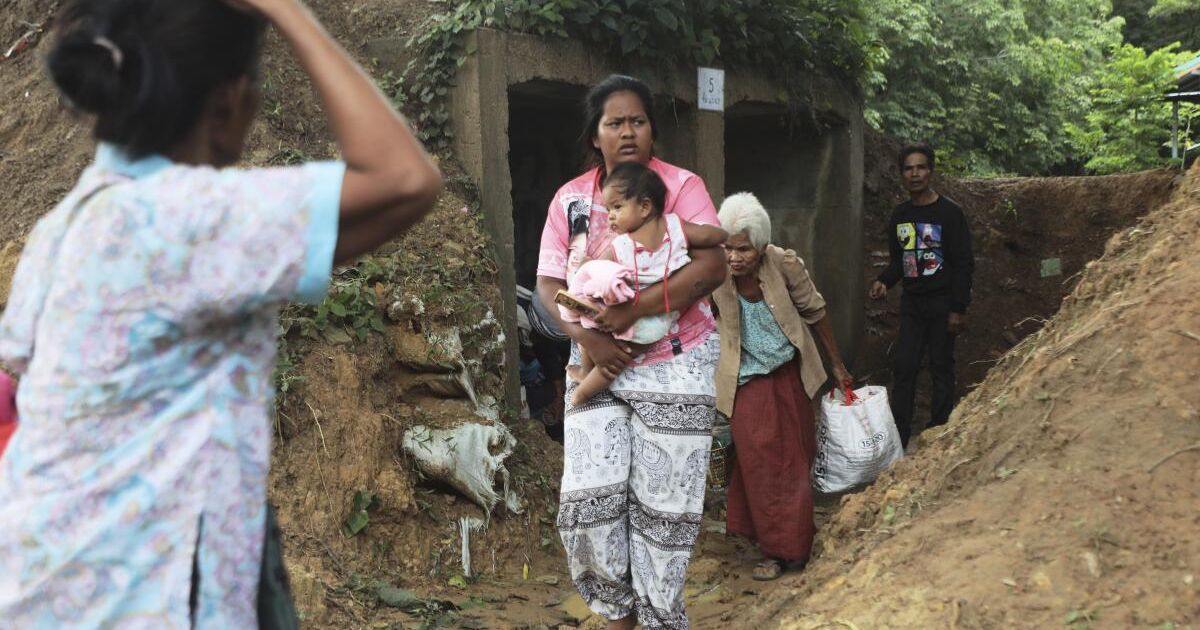
The humanitarian crisis continues to deepen. Thai disaster relief teams report the evacuation of over 138,000 residents from Sisaket and Surin provinces, while Cambodian authorities say more than 4,000 civilians have fled Oddar Meanchey. Government trucks in Thailand were seen carrying families under military protection, as makeshift camps are being established.
International aid agencies have begun mobilizing support, though access to conflict zones remains limited due to ongoing hostilities.
Diplomatic Channels Remain Open, Says Thailand
Despite the conflict, Thailand’s foreign ministry reiterated its openness to diplomacy. Spokesperson Nikorndej Balankura stated, “We are ready if Cambodia would like to settle this matter via diplomatic channels.” He stressed the Thai government’s preference for bilateral negotiations over third-party mediation, though he acknowledged that ASEAN involvement would be welcome if it helped restore dialogue.
Bangkok has declined offers from the United States, China, and Malaysia to mediate, underscoring that the issue is best handled directly between the two governments.
Cambodia Appeals to United Nations
Hun Manet, the prime minister of Cambodia, has demanded an urgent meeting of the UN Security Council and charged Thailand with “unprovoked and premeditated assault.” Cambodia is trying to get Thailand’s military actions denounced internationally and has appealed for foreign observers at the border.
UN Secretary-General Antonio Guterres expressed grave concern over the conflict, urging both sides to show restraint and prioritize peaceful dialogue. Statements calling for a ceasefire have also been issued by France, the EU, China, and the United States.
Escalation Rooted in Long-Standing Tensions
A conflict over a disputed border area in late May resulted in the death of a Cambodian soldier, which sparked the current issue. Trade restrictions, border closures, and now full-scale armed conflict have replaced diplomatic attempts since then.
Cambodia and Thailand each blame one another for starting the conflict. With planes, tanks, and artillery stationed on both sides of the 800-kilometer boundary, the exchange has now turned into a high-intensity combat zone.
As the UN prepares to discuss the situation in New York, regional and global stakeholders hope for de-escalation. But with nationalist sentiment rising in both capitals and military casualties increasing, a peaceful resolution may take more than words.