
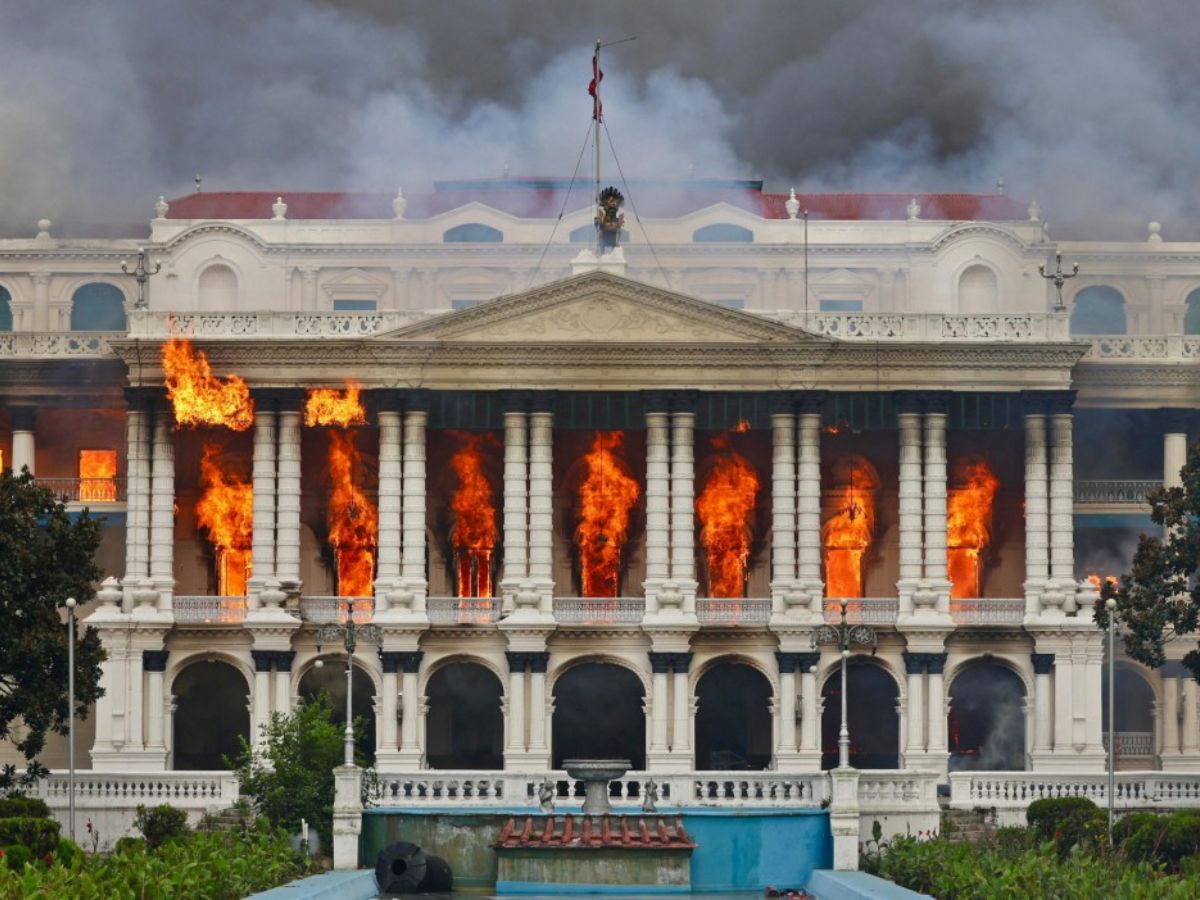
Kathmandu is reeling from violent, youth-led protests that have toppled the government and left a trail of destruction. The wife of former Prime Minister Jhalanath Khanal, Rajyalaxmi Chitrakar, was said to have died amid the confusion. Despite the seriousness of the situation, the truth is a tale of survival: the former First Lady is still alive and undergoing treatment for burns sustained when demonstrators set fire to her house.
Who Was Attacked and What Happened?
The residence of former Prime Minister Jhalanath Khanal was targeted by demonstrators on Tuesday. According to local media reports, protesters set the home ablaze. His wife, Rajyalaxmi Chitrakar, who served as Nepal’s First Lady during her husband’s premiership from 2011-2012, was inside and sustained burn injuries.
Initial confusion and the severity of the attacks led to widespread rumors online that she had been killed. Since then, these have been made clear, and it has been confirmed that she survived the attack and is currently being treated for her wounds.
Also Read: Poland Triggers NATO Security Clause: What Does Article 4 Mean After Russian Drones Breach Airspace?
Was This an Isolated Incident?
Absolutely not. The attack on the Khanal residence was part of a massive wave of coordinated violence sweeping Nepal. In a startling parallel incident, demonstrators rushed into the home of Sher Bahadur Deuba, another former prime minister, and his wife, current foreign minister Arzu Rana Deuba, and physically attacked them.
The savagery of the attacks on the nation’s most powerful politicians was highlighted by viral footage from the event, which showed Mr. Deuba with obvious blood on his face. Responding authorities were notoriously tardy, frequently showing up only after the homes had been looted.
What Sparked This Widespread Violence?
The demonstrations are being led by Nepal’s ‘Gen Z’ protesters, who have intensified long-standing anti-corruption protests. There are majorly two main reasons for the protest:
- Perceived Rampant Corruption: Deep-seated frustration with the political class.
- A Now-Revoked Social Media Ban: The government’s short-lived decision to ban popular social media apps, seen as an attempt to silence dissent, acted as a catalyst for the violent outburst.
The pressure was immense and ultimately successful. Nepalese Prime Minister KP Sharma Oli resigned from his post on Tuesday. His resignation comes after days of violent clashes between agitators and security forces that resulted in the deaths of 19 people.
Also Read: Sushila Karki’s India Connection: How the Ganga & banaras Shaped Nepal’s Interm Leader
PM Oli’s Resignation
Reports indicate that Oli resigned after being advised to do so by the Nepalese Army Chief. There were also unconfirmed reports that Oli was preparing to flee the country as violent protesters set ablaze the offices of the ruling party and the residences of the Prime Minister and President.
In a late Monday night statement, the then-PM Oli shared his grief for those who lost their lives. He claimed the government did not truly want to stop the use of social media apps but had expected agitators to protest peacefully. He assured action against those who violated the law, but the move was too little, too late to quell the fury that had already erupted.