
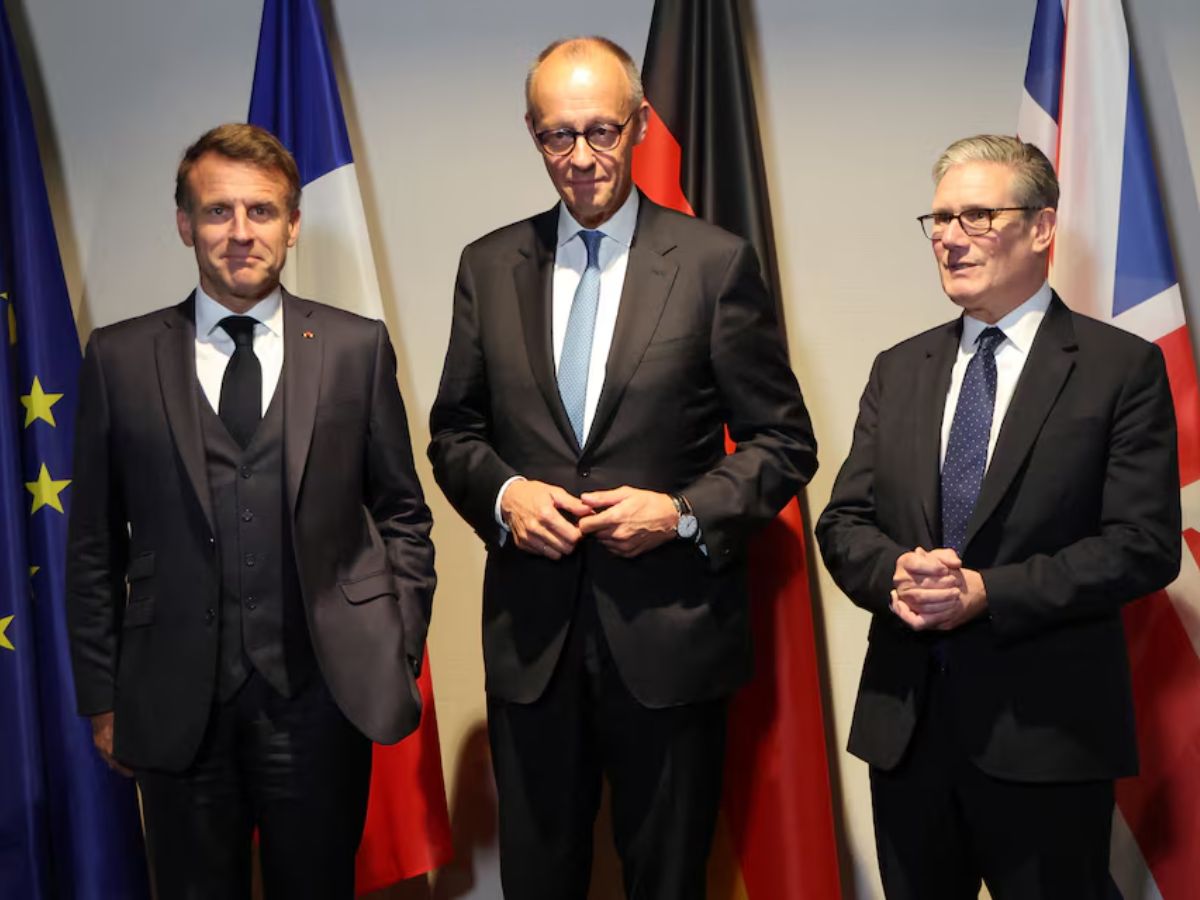
Britain, France and Germany (the E3) have launched a 30-day process to reimpose U.N. sanctions on Iran over its disputed nuclear programme. The move, announced on Thursday, comes just two months after Israel and the United States bombed Iranian nuclear facilities, escalating tensions in the Middle East.
By triggering the so-called “snapback mechanism”, the E3 aim to restore sanctions that were lifted under the 2015 nuclear accord, which had sought to curb Tehran’s nuclear ambitions in exchange for economic relief.
Iran Rejects Pressure, Accuses Europe
A senior Iranian official swiftly denounced the step, describing it as “illegal and regrettable,” and accused the European powers of undermining diplomacy. “The move is an action against diplomacy, not a chance for it. Diplomacy with Europe will continue … Iran will not concede under pressure,” the official told Reuters.
Iran has warned of a “harsh response” if sanctions are reinstated and is reportedly considering options ranging from limiting cooperation with U.N. inspectors to withdrawing from the Nuclear Non-Proliferation Treaty (NPT).
Diplomacy Not Dead, Say Europe
Despite the snapback decision, the E3 foreign ministers insisted the move did not signal the collapse of dialogue. French Foreign Minister Jean-Noel Barrot said diplomacy remained on the table, while German counterpart Johann Wadephul urged Iran to fully cooperate with the U.N. nuclear watchdog and engage in direct talks with the United States.
In their letter to the U.N. Security Council, the E3 wrote: “The E3 are committed to using every diplomatic tool available to ensure Iran never develops a nuclear weapon … The E3’s commitment to a diplomatic solution nonetheless remains steadfast.”
U.S. Secretary of State Marco Rubio welcomed the move, saying Washington remained ready for direct talks with Tehran “in furtherance of a peaceful, enduring resolution to the Iran nuclear issue.” However, an Iranian source said Tehran would only consider talks if Washington guaranteed no further military strikes during negotiations.
Russia and China Push Alternative Path
Russia and China, both allies of Iran, countered the E3 move by drafting a Security Council resolution that would extend the 2015 deal for six months and call for all parties to resume negotiations. Deputy Russian U.N. Ambassador Dmitry Polyanskiy warned: “The world is at crossroads. One option is peace, diplomacy, goodwill … Another option is a kind of diplomacy at the barrel of the gun.”
Israel, which bombed Iran’s nuclear sites in June, praised the E3 action. Foreign Minister Gideon Saar called it an “important step in the diplomatic campaign to counter the Iranian regime’s nuclear ambitions.”
What’s at Stake in 30 Days
If the snapback proceeds, sanctions will hit Iran’s financial, banking, hydrocarbons, and defence sectors, reversing much of the relief granted in 2015. The U.N. Security Council is expected to meet behind closed doors on Friday to discuss the issue.
The E3 have offered Iran up to six months of deferred snapback, but only if Tehran restores full access to U.N. inspectors, accounts for its enriched uranium stockpile, and engages directly with Washington.
Also Read: Russian Attacks Kill 18, Damage EU HQ; Europe Slams Moscow’s Aggression
Nuclear Programme at the Edge
According to the International Atomic Energy Agency (IAEA), Iran has enriched uranium to 60% purity, close to the 90% required for weapons-grade material. The watchdog estimates Iran has enough enriched uranium, if further refined, for six nuclear weapons. However, the IAEA has said it has no credible evidence of a coordinated weapons programme.
The West argues that Iran’s advances far exceed civilian energy needs. Tehran maintains its nuclear programme is entirely peaceful.
Inside Iran, the spectre of renewed sanctions is worsening economic anxiety and fueling political division. Hardliners urge open defiance of the West, while moderates argue for diplomacy. Insiders say the leadership remains split on how to respond to the E3 decision.