
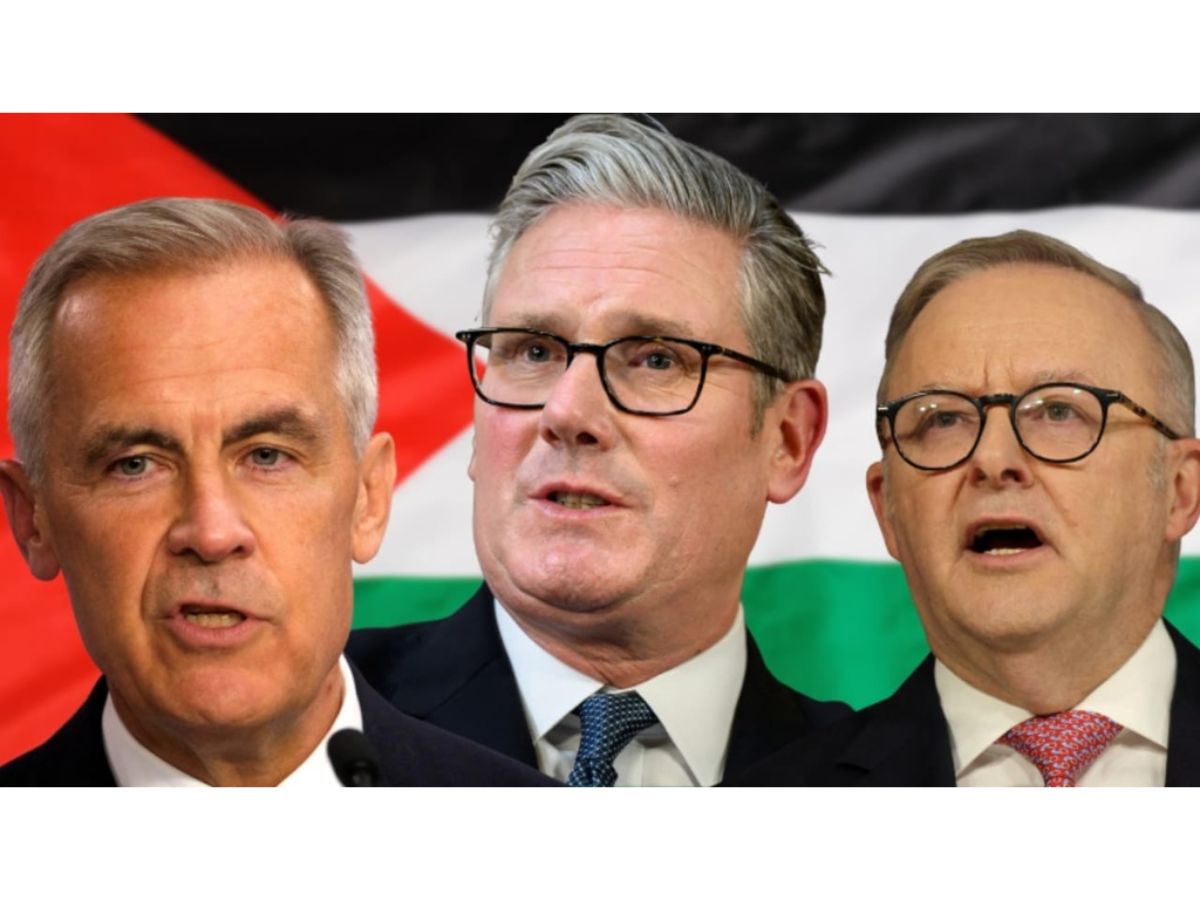
In a coordinated move that reshapes the diplomatic landscape of the Middle East, Britain, Canada, and Australia formally recognised a Palestinian state on Sunday. The decision, driven by profound frustration over the humanitarian catastrophe in Gaza, is intended to salvage the prospect of a two-state solution. It immediately triggered a furious condemnation from Israel, widening the rift between Jerusalem and its traditional Western allies.
The move aligns the three nations with over 140 others that have recognised Palestinian statehood. However, the weight of this decision comes from their status as long-standing allies of Israel, signalling a significant break from diplomatic precedent. British Prime Minister Keir Starmer framed the move as a necessary step for peace. “Today, to revive the hope of peace for the Palestinians and Israelis, and a two-state solution, the United Kingdom formally recognises the State of Palestine,” he stated.
Why Now? What Prompted This Coordinated Move?
The nearly two-year war in Gaza has been the primary catalyst. Western governments have faced immense domestic pressure from citizens appalled by the soaring death toll and widespread famine. The decision is a powerful expression of their inability to rein in Israel and a bid to chart a new political course forward.
Prime Minister Starmer pointed to the “man-made humanitarian crisis in Gaza [that] reaches new depths,” calling the starvation and devastation “utterly intolerable.” Hamas still dominates Gaza, but the recognition is considered as a means of diplomatically isolating the organization and empowering moderate Palestinian leadership.
How Did Israel Respond to the Recognition?
Israeli Prime Minister Benjamin Netanyahu’s reaction was swift and scathing. “I have a clear message to those leaders who recognise a Palestinian state after the horrific massacre of October 7: You are giving a huge reward to terrorism,” he declared. He unequivocally rejected the notion, stating, “It will not happen. A Palestinian state will not be established west of the Jordan River.”
The conflict was triggered by the Hamas-led attack on October 7, 2023, which killed 1,200 people and saw 251 taken hostage, according to Israeli tallies. Israel’s ensuing military campaign has, according to Gaza health authorities, killed over 65,000 Palestinians, most of them civilians, and created a devastating humanitarian crisis.
Also Read: ABVP Sweeps Hyderabad University Polls in Historic Clean Sweep
What Does This Mean On the Ground?
For Palestinians, the recognition is profoundly symbolic. It grants legitimacy to their long-held aspiration for sovereignty. Palestinian resident Sharaf Al Tarda referred to it as a “human duty,” while Mahmoud Abbas stated that it would contribute to the establishment of a state that coexists peacefully with Israel.
However, the immediate practical change is limited. The statehood remains aspirational without control over borders, airspace, or a unified government. Hamas welcomed the move but demanded “practical measures,” highlighting the internal Palestinian political divide. Palestinian resident Sharaf Al Tarda referred to it as a “human duty,” while Mahmoud Abbas stated that it would contribute to the establishment of a state that coexists peacefully with Israel.
What is Britain’s Historic Role in This Conflict?
Britain’s decision carries unique historical weight. British troops captured Jerusalem from the Ottoman Empire in 1917. The 1917 Balfour Declaration expressed support for a “national home for the Jewish people” in Palestine, while also protecting the rights of existing communities. The League of Nations gave Britain the authority to rule Palestine in 1922.
Husam Zomlot, head of the Palestinian Mission to the UK, saw the recognition as a correction of this history. “Today is a moment when the UK Prime Minister… stand[s] and say: ‘We must correct history, we must right the wrongs’,” he said. Conversely, Mandy Damari, mother of a freed Israeli-British hostage, called Starmer “under a two-state delusion,” arguing he was rewarding Hamas while hostages remain captive.
Is This the End of the Line or Just the Beginning?
This trio of recognitions is likely the start of a new wave, not the end. Other European nations, including France, are expected to consider similar moves at the upcoming UN General Assembly. Even while there are still many significant barriers in the way of attaining the two-state solution, the decision forges a new international consensus that puts pressure on Israel and returns it to the forefront of diplomatic negotiations.
The United States, Israel’s closest ally, remained silent on the announcements. The stance of a future U.S. administration will be critical in determining whether this Western shift remains symbolic or evolves into a framework for enforceable change.