
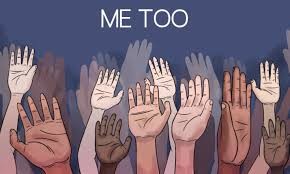
A viral hashtag brought millions of voices together and forced the world to confront sexual harassment, but lasting change remains an unfinished task.
On October 15, 2017, a simple hashtag began travelling across social media, carrying stories that had remained unspoken for years. Women began sharing experiences of sexual harassment and assault, often describing incidents they had never discussed publicly. Some spoke about encounters at workplaces, others about abuse by people they trusted, and many about the fear of speaking out against individuals who held positions of power.
Within hours, #MeToo was appearing on timelines across countries, drawing responses from people who had never met one another but recognised something familiar in each other’s experiences. The scale of the response was unexpected. What might have been another trending topic became a worldwide conversation about sexual misconduct, workplace culture, gender inequality and the cost of remaining silent. Women from different professions, backgrounds and age groups joined the discussion. Actors, journalists, office workers, students and ordinary social media users shared their experiences, while others expressed support for survivors who had decided to speak publicly.
The movement’s power lay in its simplicity. Two words allowed people to communicate experiences that could otherwise be difficult to explain. A post did not necessarily require a detailed account or a public accusation. For many, simply acknowledging that they, too, had experienced harassment became a way of challenging the isolation that often accompanies such experiences. Yet the movement was about more than individual stories. As testimonies accumulated, they raised a larger question: if so many people had experienced sexual misconduct, why had it remained so easy for the problem to be ignored?
When individual experiences became a collective voice
Before #MeToo dominated social media, sexual harassment was hardly an unfamiliar subject. Laws existed in several countries, organisations had policies against misconduct, and public discussions about women’s safety had continued for decades. Yet formal protections did not always translate into safe environments, and having a law against harassment did not mean that victims felt able to report it. For many, speaking up carried consequences that extended far beyond the original experience. A complaint could threaten a person’s employment, professional reputation, financial security or relationships. Women working in competitive industries could fear losing assignments or opportunities.
Younger employees might hesitate to challenge senior colleagues who controlled promotions and recommendations. Those dependent on an employer for their livelihood could find the prospect of reporting misconduct especially difficult. Social attitudes added another barrier. Survivors could face questions about their clothing, behaviour, decisions or reasons for not reporting an incident earlier. Instead of concentrating on the conduct being described, conversations often turned towards judging the person who experienced it. Shame and the possibility of not being believed could discourage people from seeking help. The rapid spread of #MeToo disrupted this pattern by making individual experiences visible alongside thousands of others. What might once have appeared to be an isolated incident became part of a broader discussion about recurring behaviour, unequal authority and institutional failure.
The movement travelled across borders
As the hashtag spread, its meaning was shaped by local circumstances. In some countries, the discussion centred on entertainment and corporate workplaces. Elsewhere, it intersected with debates about political authority, educational institutions, domestic abuse, social stigma and the treatment of survivors within legal systems. The movement’s international reach was not simply a matter of people copying a social media trend. It created opportunities to examine how deeply rooted assumptions about gender and authority operated in different societies. In India, the wider #MeToo conversation gained particular prominence in 2018, when women across media, entertainment, publishing and other professional fields began sharing accounts of sexual misconduct.
Their disclosures prompted public debate about workplace hierarchies, the treatment of complaints and the consequences faced by people who challenged influential colleagues. The discussion was significant in a society where women’s experiences of harassment could be dismissed as routine inconveniences or treated as matters best kept private. Professional respectability and family reputation could complicate decisions to speak publicly, while the possibility of legal action or online abuse could create additional pressure. The Indian conversation also revealed that workplace harassment could not be understood only through the relationship between an individual accused of misconduct and the person making a complaint. It raised questions about colleagues who remained silent, organisations that failed to respond, professional networks that protected influential members and institutions that lacked confidence in their own grievance procedures.
The cost of speaking out
The public image of a movement often focuses on the moment a person decides to speak. Less attention is given to what happens afterwards. Coming forward can mean revisiting a painful experience, answering questions about personal decisions would previously have been tolerated. These changes can influence daily life, even when they do not produce headlines. But awareness can fade, and policies can become symbolic if they are not enforced. Training sessions and formal committees are useful only when employees understand how to access them and believe that complaints will be taken seriously. The existence of a policy does not prove that a workplace is safe. and confronting people who disagree with the account. Survivors may face hostility online, strained professional relationships or pressure to withdraw their complaints.
Some may find themselves repeatedly asked to explain why they did not speak earlier, even when the delay was connected to fear, dependence or uncertainty about the available options. The consequences can be particularly difficult when the person accused holds greater professional or financial power. An employee may worry about losing a job, while a student may fear the effect of a complaint on future opportunities. In workplaces where professional networks are tightly connected, the possibility of being excluded from future assignments can carry longterm consequences. Public disclosure is not the only legitimate response to harassment, nor should it become an expectation placed on survivors. Some people may prefer to report through formal channels, seek confidential support or take no immediate action. Others may decide that speaking publicly is necessary because they believe existing systems have failed them.
The World after #metoo
Years after its most visible surge, the conversation around sexual harassment continues, even when the hashtag is no longer dominating social media. The issue now sits alongside wider debates about workplace equality, digital abuse, consent, institutional responsibility and the representation of women in positions of authority. Some changes are difficult to measure. A colleague may think twice before making an inappropriate remark. A manager may recognise that a complaint cannot be dismissed as a personal disagreement. An employee may feel more confident in challenging behaviour that India’s experience illustrates this distinction.
The 2013 law provides a framework for preventing and addressing sexual harassment at work, but implementation depends on whether institutions meet their responsibilities and whether workers can use the mechanisms available to them. Informal workers and people in insecure employment may face particular barriers to obtaining help. The movement also cannot be separated from the wider conditions shaping women’s lives. Harassment is connected to unequal authority, economic dependence, social stigma and the expectation that women should adapt their behaviour to avoid other people’s misconduct. Telling women to dress differently, travel cautiously or avoid certain workplaces cannot substitute for preventing harassment.
How many more movements Will it take?
The question carries a sense of exhaustion. If a global movement could make millions of people speak, attract international attention and force institutions to respond, why does the problem remain? Perhaps because movements can challenge silence, but they cannot complete the work of social l change on their own.
A hashtag can connect people who have never met. It can reveal patterns, generate pressure and make it harder for influential individuals or organisations to ignore public concern. It cannot independently investigate complaints, enforce workplace rules, fund survivor support or ensure that a person who reports harassment can continue working without fear. Those responsibilities belong to institutions and societies beyond the lifespan of a social media campaign. The next stage of change requires workplaces where complaint procedures are independent and accessible, investigations are fair, retaliation is addressed and consequences do not depend on an incident attracting public attention. It requires education about consent and boundaries, along with a willingness to challenge behaviour before it escalates.
It also requires legal protections to be implemented in practice rather than left on paper. Men have a role in this process, not merely as observers of a conversation about women’s safety but as colleagues, managers, friends and family members who can question harmful behaviour and challenge the normalisation of harassment. Support is most meaningful when it is reflected in everyday conduct and institutional decisions. There is also a need to recognise that women are not a single, uniform group. Their experiences differ according to their working conditions, financial independence, social position and access to support. A solution that works for an employee in a well-resourced organisation may not be sufficient for someone working without a formal contract or an accessible complaints mechanism.
The unfinished Work of being heard
The significance of #MeToo lies in the space it created between private experience and public recognition. It challenged the assumption that silence meant consent, that harassment was inevitable or that the reputation of an influential person mattered more than the concerns of those who worked with them. It also demonstrated that collective action does not require everyone to share the same story.
People joined the conversation from different backgrounds and with different experiences, united by the belief that sexual misconduct should not be dismissed simply because speaking about it is uncomfortable. The movement’s achievements should neither be exaggerated nor dismissed. It brought attention to conduct that had often remained hidden, encouraged survivors to speak and pushed questions of accountability into workplaces and public debate. At the same time, it exposed how difficult it is to translate awareness into consistent, lasting change. The years since 2017 have shown that visibility is an important beginning, not a final outcome. A movement can make it harder to ignore a problem, but the responsibility to address it remains with the institutions and people who shape everyday life.
The need for change will not disappear simply because a hashtag stops trending. It will diminish only when people can work, study and participate in public life without being expected to tolerate harassment, when complaints receive fair consideration and when speaking out does not carry a greater cost than the behaviour being challenged. #MeToo made millions of people realise that their experiences were not isolated. The unfinished task is to ensure that the next person who faces harassment does not have to depend on a global movement to be taken seriously. The question, then, is not how many more movements the world needs. It is how much change society is willing to make before another movement becomes necessary.