
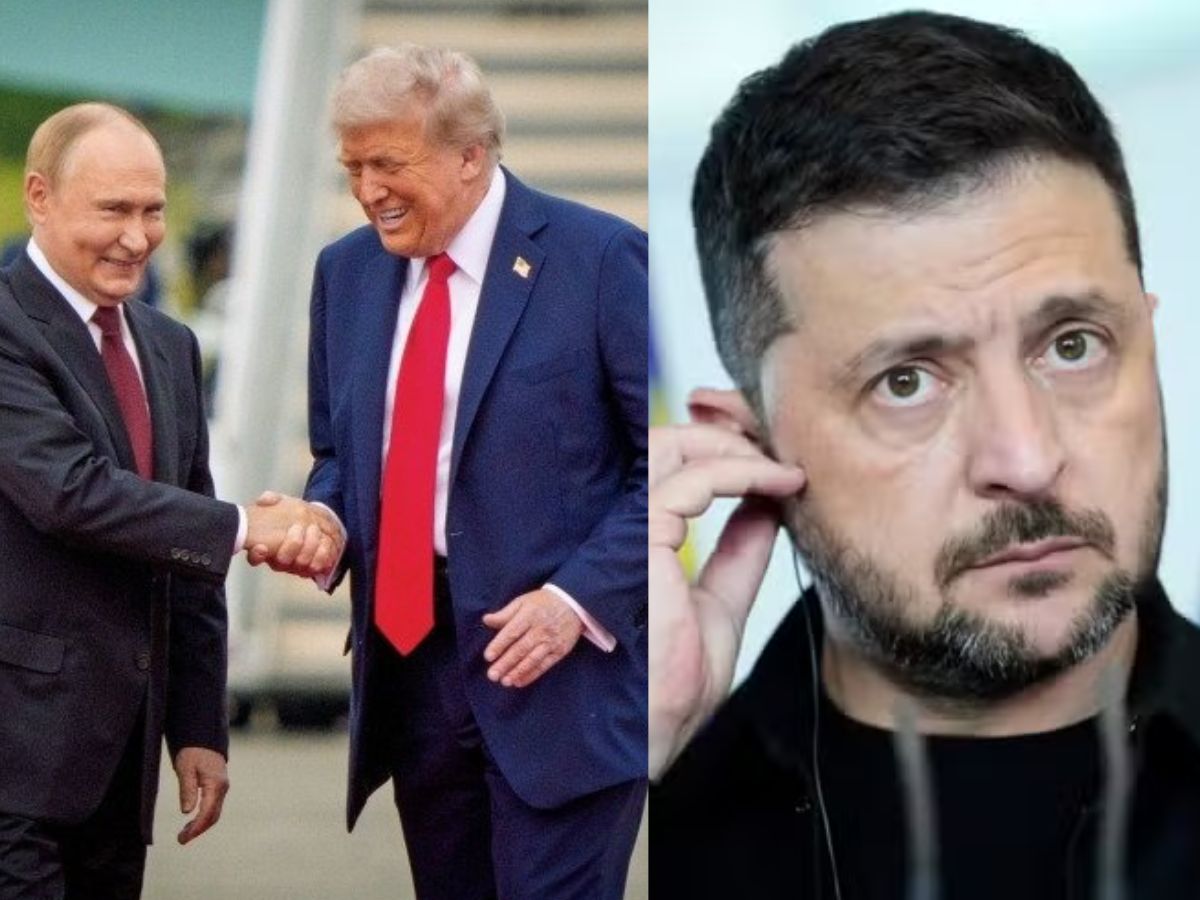
As the reports suggest a likely trilateral summit between Russian President Vladimir Putin, Ukrainian President Volodymyr Zelenskyy, and US President Donald Trump. Sources as suggested by Axios hint that Trump is planning the probable meet with Putin and Zelenskyy. As this probable meeting approaches, the political atmosphere throughout Europe and the US is charged up with anticipation and doubt. Such a historic gathering may recast not just the course of the Russia-Ukraine conflict but also determine global diplomatic conventions for decades to come.
The Build-Up: A Delicate Diplomatic Dance
The pressure for a trilateral summit mounted after Trump and Putin had a face-to-face meeting in Alaska, their first one-on-one since Trump’s return to the White House. The negotiations, which were spread over several hours, were aimed at negotiating a path to peace in Ukraine. Accounts suggest Trump offered, in accordance with Putin’s long-term demands, that Ukraine relinquish all control over the Donbas region, territories not yet occupied by Russia—as part of a broader ceasefire and security guarantees.
Zelenskyy and European leaders were informed of these talks. Zelenskyy, firmly against outright territorial compromises, keeps open the door to discussion at a trilateral summit, calling for firm security assurances. The Ukrainian leader will first meet Trump in Washington, and if fruitful, the three-way summit with Putin might then take place as early as August 22.
Stakes and Demands: ‘Surrender Donbas’
Putin’s central demand is for the withdrawal of Ukraine from the entire Donbas region, both Donetsk and Luhansk. In exchange, he has shown a readiness to stop Russian attacks in other contested areas like Zaporizhzhia and Kherson, if his conditions are fulfilled. Trump, post-Alaska, seemed to go back on his previous stand demanding a ceasefire and instead shifted direction toward demanding a complete peace deal, more in tune with Russia’s overall objective for a negotiated peace.
But the Ukrainian government, whose position is solidly supported by its constitution and popular opinion, still refuses to negotiate territorial concessions as a route to peace. Zelenskyy threatens that giving up Donbas would set precedents for other Russian expansion.
International Dimensions
European leaders have expressed backing for the trilateral format but with profound suspicion of Putin’s motives, apprehensive that any agreement could legitimise Moscow’s territorial advancement. The pressures are piling up on Zelenskyy and Trump alike to get tangible security guarantees for Ukraine and guarantees for wider European stability.
Implications
If this summit takes place, it might speed the way towards a close of open hostilities. However, any agreement on ceding Ukrainian land will set off controversy regarding sovereignty, international law, and what constitutes the West’s reaction to aggression. Even as Putin, Trump, and Zelenskyy move towards direct negotiations, the acceptability of such a compromise is hotly debated.
Summing up, the suggested trilateral session is a turning point that can put an end to years of dispute, or deepen the divides for years ahead, depending on whether the sides are able to close their extensive strategic differences.