
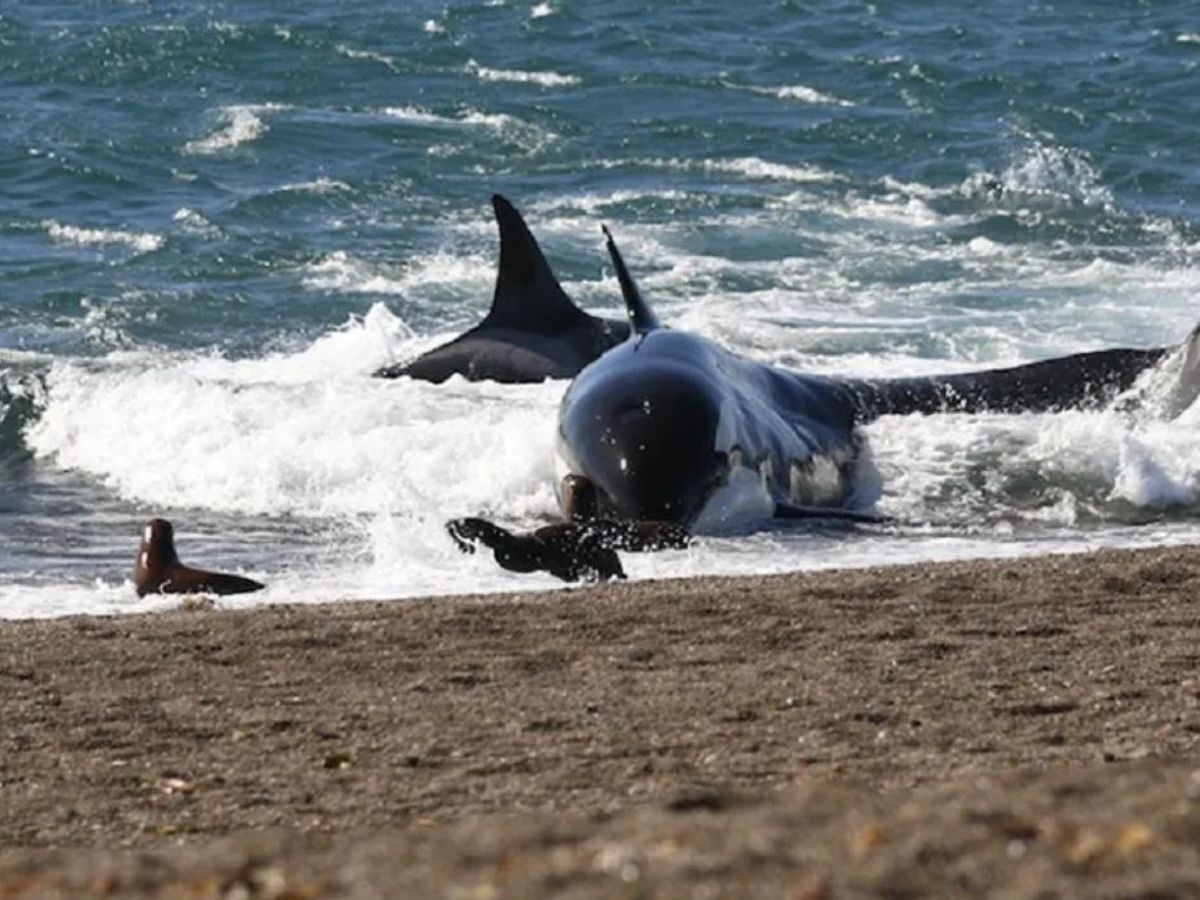
A grim and unprecedented discovery on the coast of southern Argentina has stunned the scientific community. Twenty-six orca killer whales washed up dead on a beach in San Sebastián Bay, marking a rare global event and the first mass stranding of its kind on the Atlantic coast of the Tierra del Fuego Province. This incident is only the third such occurrence of a mass orca stranding in recorded history.
How Were the Whales Discovered?
The alarming event began when a passerby initially spotted two dead orcas on the shore. They immediately alerted researchers from the National Scientific and Technical Research Council (CONICET) and the Southern Center for Scientific Investigation (CADIC). When scientists arrived at the remote location to investigate, they made a much more devastating find. They soon learned that the two initial whales were part of a larger group of 26 dead orcas from the same family, with many others located in hard-to-reach nooks and crannies along the bay.
What Makes These Orcas So Unique?
Scientists were particularly surprised because these were not the typical orcas commonly seen. CONICET spokesperson Mónica Torres explained that these animals belong to a poorly understood “ecotype D,” which is like a distinct species within the orca group. Their rarity made the mass stranding even more significant for marine biologists. The number of specimens was the primary shock; researchers had been monitoring the area for over a decade and had never encountered anything on this scale.
What Clues Are Scientists Investigating?
A crucial initial finding was the absence of external injury marks on the whales. This ruled out common causes of death like ship strikes or entanglement in fishing nets. According to investigators, since all the whales had the same level of decay, they probably got stranded and died together. Experts will now study their organs to check for diseases, toxins, or injuries.
Also Read: What is the Great California ShakeOut? Inside California’s Massive Earthquake Preparedness Day
What is the Leading Theory So Far?
While the official cause of death remains undetermined, researchers are considering environmental factors. Mónica Torres explained that San Sebastián Bay has very high tides—sometimes reaching nearly 56 feet. She said animals entering during high tide or when the tide goes out too fast could get stuck if they don’t know the area. This suggests the orcas may have been caught by the fast-falling water.