
New Delhi:
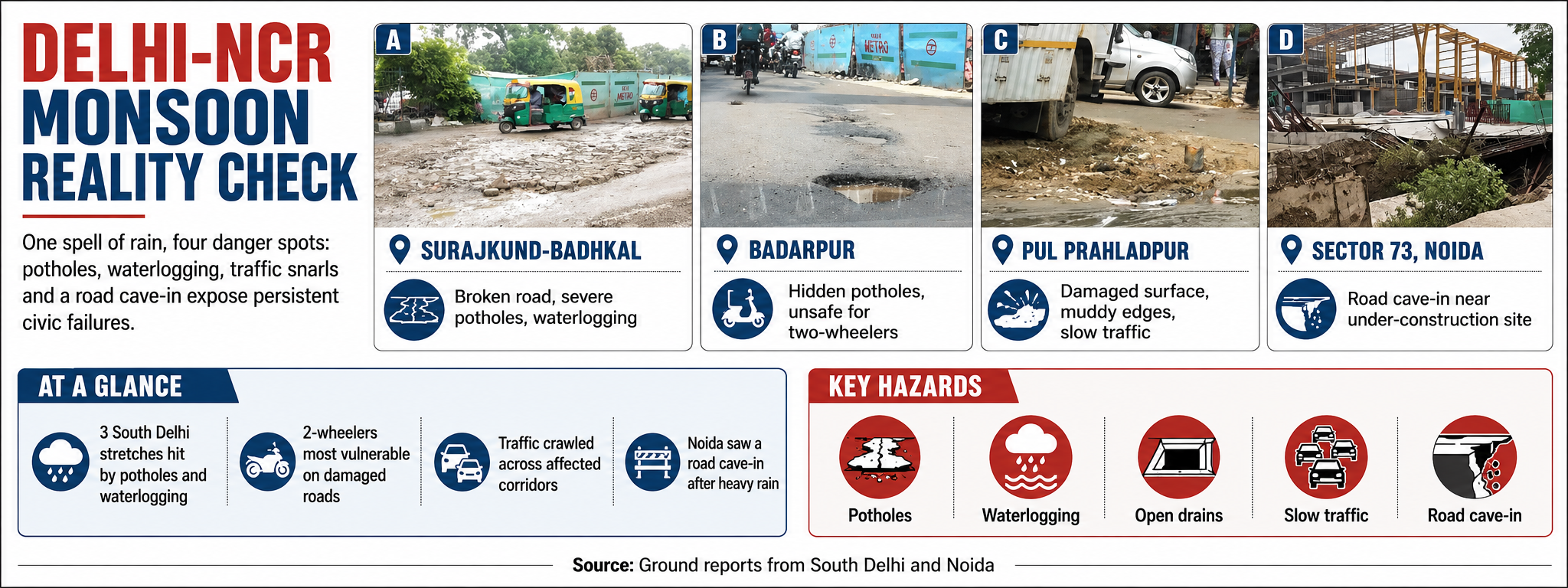
A NewsX ground survey across South Delhi’s Pul Prahladpur, Surajkund-Badhkal Road and the Badarpur-Mehrauli corridor found a recurring pattern of damaged roads, open drains and slow-moving traffic, even a day after the rain had subsided.
At Pul Prahladpur, motorists navigated cratered roads where potholes remained concealed beneath muddy water, forcing vehicles to crawl and creating long queues during peak hours. The poor road surface also kicked up dust as traffic inched forward.
The situation was equally grim on Surajkund-Badhkal Road, where waterlogged stretches near a bus stop forced commuters onto the carriageway after footpaths became unusable. Open drains lay exposed alongside the road, while deep potholes hidden beneath stagnant water posed a constant risk to buses, auto-rickshaws and two-wheelers. A bus was seen stranded amid waterlogging, further worsening congestion.
On the Badarpur-Mehrauli Road, narrowed by ongoing metro construction, large potholes and damaged road surfaces slowed traffic to a crawl. During the ground report, a scooter rider lost balance after hitting a pothole concealed by rainwater and fell on the road. The rider escaped without serious injuries as fellow commuters rushed to help, but the incident underscored the risks faced daily by two-wheeler users.
The drive also found several stretches where motorists had little room to avoid potholes because of ongoing construction, resulting in continuous traffic bottlenecks and increasing the likelihood of accidents.
The infrastructure concerns extend beyond Delhi. In neighbouring Noida, continuous rainfall triggered a road cave-in in Sector 73, Sarfabad, near an under-construction commercial project. Parts of a service road and a Noida Authority-built drain collapsed, while an electricity transformer and utility infrastructure reportedly sank after water accumulated in the basement of the construction site. A retaining wall of the under-construction building also gave way, prompting concerns over the stability of nearby structures.
The latest incidents come amid widespread monsoon-related disruptions across Delhi-NCR, where rain has been linked to multiple fatalities and repeated reports of waterlogging, road cave-ins and damaged civic infrastructure.
For residents, the scenes have become a familiar feature of every monsoon. Despite recurring complaints over drainage and road maintenance, commuters continue to negotiate flooded roads where hidden potholes, damaged surfaces and collapsing infrastructure pose daily risks to life and property.
STANDALONE
Lutyens’ safe, rest of Delhi sinks (Exclusive)
NEW DELHI: The monsoon has once again exposed Delhi’s sharp civic divide, with well-maintained roads and functioning drains in Lutyens’ Delhi contrasting sharply with waterlogged streets, broken roads, open drains and unsafe neighbourhoods across several other parts of the capital.
As part of its ground campaign on civic apathy, NewsX reported from different parts of Delhi to assess the impact of recent rain. While the high-security administrative zone around Lutyens’ Delhi appeared largely clean, green and well-maintained, reports from other areas showed familiar signs of monsoon distress — submerged stretches, potholes, fallen trees, flooded campuses and commuters struggling through damaged roads.
Reporting from Lutyens’ Delhi, NewsX correspondent Atul Ranjan pointed to wide roads, clean footpaths, smooth traffic movement and maintained green cover, noting that such civic upkeep is rarely visible in the parts of Delhi where ordinary residents live.
The discussion also highlighted how the problem is not limited to Delhi. Similar scenes of waterlogging, poor drainage and damaged infrastructure are witnessed each monsoon across several Indian cities, raising questions over planning, maintenance and accountability.
Political analyst Nikhil Jain said the crisis repeats every year because governments are not held accountable beyond short-lived outrage. He said Delhi now has the BJP in key civic and administrative positions, including the municipal corporation, state government and Centre, yet basic problems such as waterlogging and road maintenance continue to persist.
Senior advocate Adish Agarwal argued that municipal officials must be held personally responsible when negligence leads to loss of life. He said civic bodies are legally bound to maintain roads, drains and drainage systems, and added that criminal cases could be pursued in cases involving deaths caused by negligence.
The broader concern remains unchanged: for residents outside the capital’s privileged administrative zone, rain is not merely a weather event. It often brings flooded homes, broken roads, unsafe streets and a recurring threat to life — a pattern that returns every monsoon despite repeated promises of civic preparedness.