
Tehran:
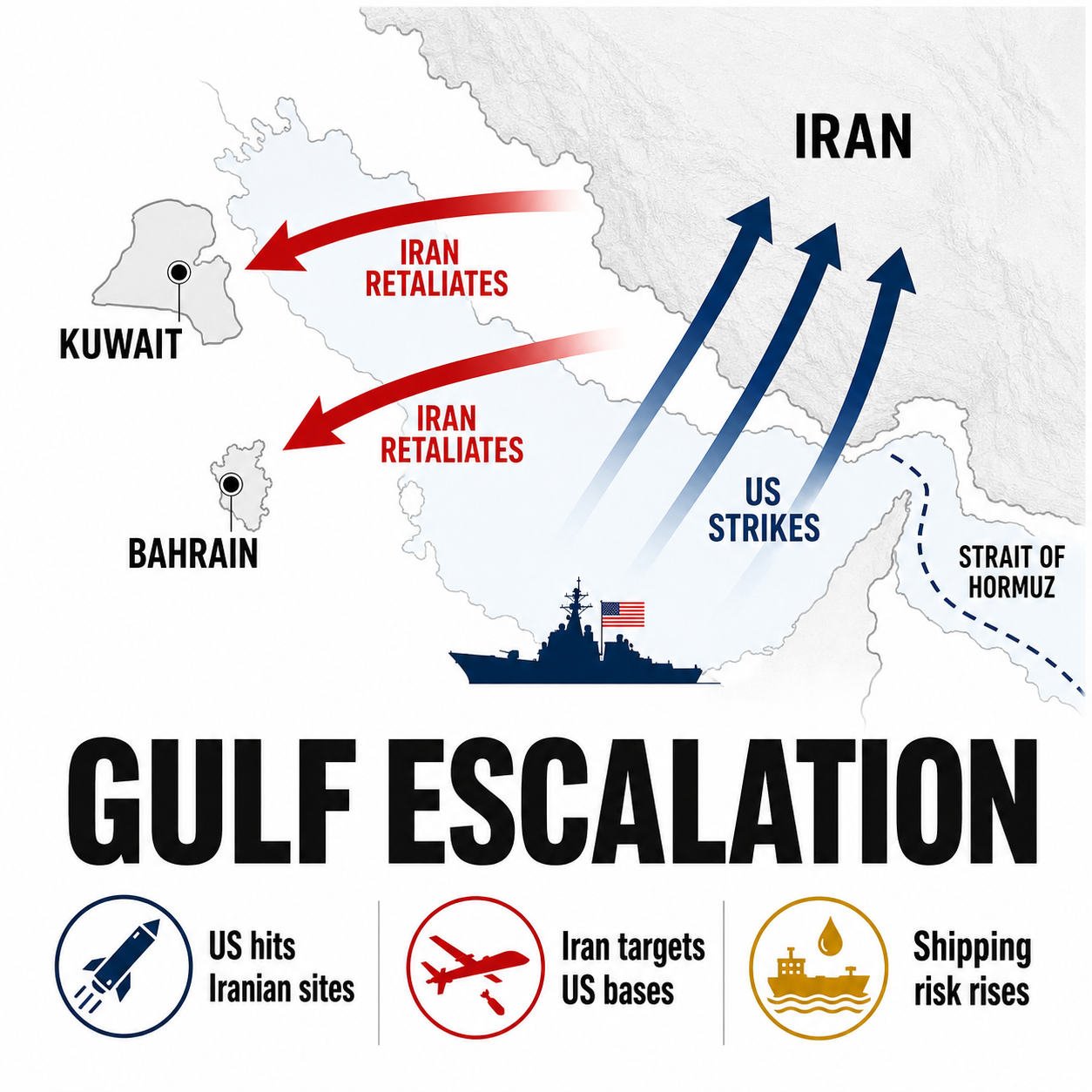
Iran’s Islamic Revolutionary Guard Corps (IRGC) confirmed the attacks, saying it targeted the US Ali Al Salem airbase in Kuwait and the US Fifth Fleet facility at Port Salman in Bahrain. The IRGC described the operation as a “decisive response” to what it called renewed US aggression.
Bahrain condemned the attack, saying it violated its sovereignty and undermined “opportunities for de-escalation and stability in the region”. Kuwait also denounced the strikes, calling them “repeated heinous Iranian aggressions” and a “flagrant violation” of its sovereignty.
The escalation came after US forces struck Iranian military targets at Sirik, Bandar-e Lengeh and Qeshm Island. US Central Command (CENTCOM) said American navy and air force units hit 10 Iranian military targets in and around the Strait of Hormuz, including surveillance infrastructure, communication systems, air defence sites, drone storage facilities and mine-laying capabilities.
CENTCOM said the strikes were carried out after Iran allegedly launched a drone attack on the Panama-flagged tanker M/T Kiku near the Strait of Hormuz. The vessel was carrying more than two million barrels of crude oil when it was hit. Britain’s UKMTO maritime security agency said the tanker sustained damage to its bridge, while all crew members were reported safe.
Iran’s Foreign Ministry condemned the US strikes on its southern coastal monitoring and surveillance facilities, calling them “brutal attacks” and a violation of both the UN Charter and the ceasefire Memorandum of Understanding signed earlier this month. Tehran said the strikes showed Washington did not value its own commitments and vowed to defend Iran’s sovereignty and territorial integrity.
US President Donald Trump said Tehran had violated the ceasefire and warned that continued breaches could force Washington to “militarily complete the job”. In a post on social media, he said that if such a situation arose, “the Islamic Republic of Iran will no longer exist”.
The attacks drew sharp criticism from across the region. Qatar condemned the strikes on Bahrain and Kuwait and urged all sides to spare the region the consequences of unjustified attacks. The UAE called the attacks a “blatant violation” of Kuwait and Bahrain’s sovereignty and a threat to their security and stability. Jordan described them as a dangerous escalation and a breach of international law, while Oman called for restraint, dialogue and diplomacy.
Speaking in Iraq on Sunday, Iranian Foreign Minister Abbas Araghchi said the Strait of Hormuz would remain under Iran’s oversight for the next 30 days and warned against outside interference. He said any new developments would worsen the situation and delay the restoration of full capacity through the waterway.
The Strait of Hormuz remains central to the US-Iran MoU, which extended the ceasefire and gave both sides 60 days to negotiate an end to the conflict. The agreement requires Iran to make arrangements for the safe passage of commercial vessels through the strait, a key waterway through which about 20 per cent of the world’s oil passes.
The latest round of strikes has raised fears that the ceasefire could collapse, with regional powers warning that further military action could push the Gulf into a wider conflict.