
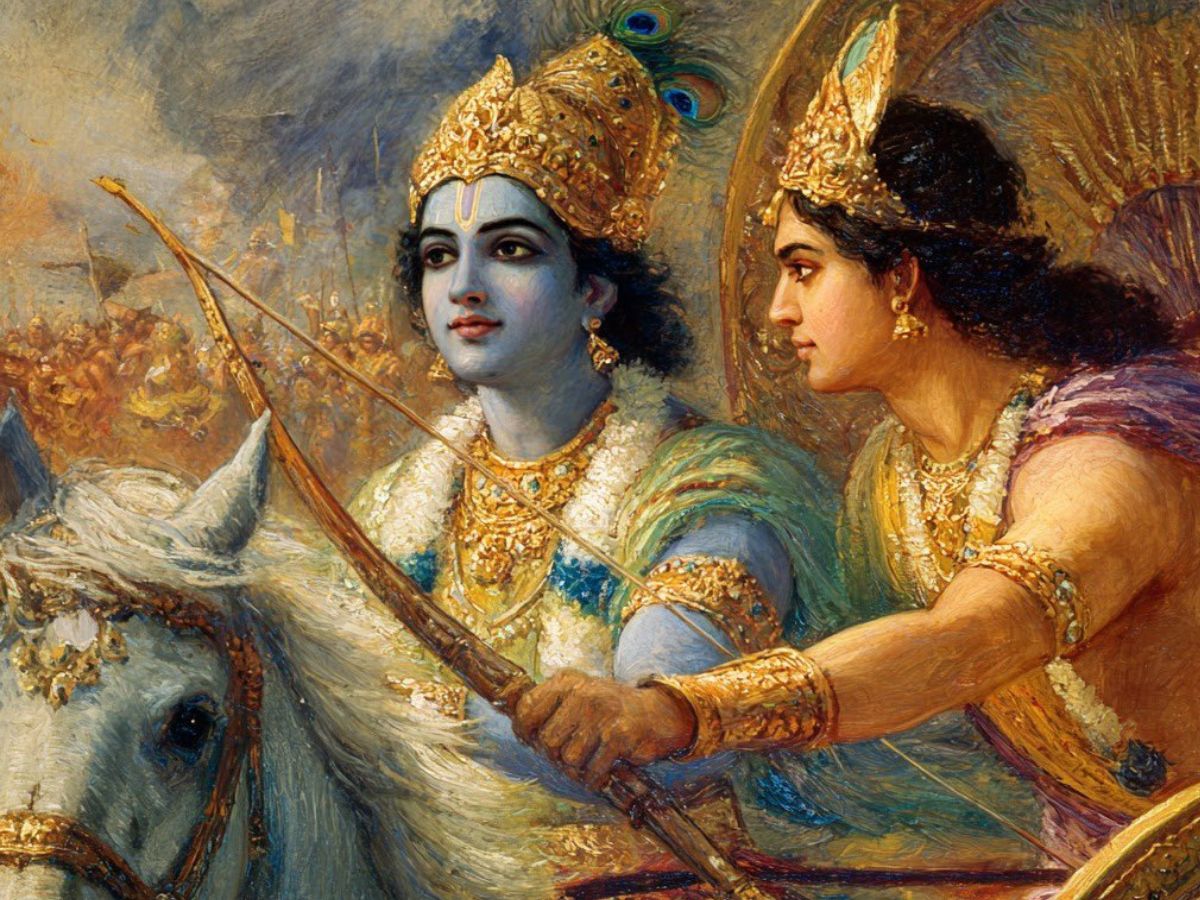
The Bhagwat Geeta, one of the most worshipped epics of India, continues to guide people across the world with its timeless wisdom. Its teachings irrespective of religion, caste or gender. Its offerings teach us practical lessons for life, work, and personal growth. At its heart, the Gita emphasizes performing one’s duty without attachment to results (Karma Yoga), maintaining balance in joy and sorrow, and realizing that the soul is eternal while worldly experiences are temporary.
Duty Over Results: The Message of Karma
One of the most famous verses of the Gita says:
“कर्मण्येवाधिकारस्ते मा फलेषु कदाचन।
मा कर्मफलहेतुर्भूर्मा ते सङ्गोऽस्त्वकर्मणि॥”
(Translation: You have the right to perform your duty, but not to the fruits of your actions. Do not expect for the results and be consistent for your efforts.
This verse reminds us to focus on sincere effort rather than obsessing over rewards. In today’s fast-paced world, where success is often measured by outcomes, this teaching is a powerful reminder that inner satisfaction comes from doing our duty with dedication, without being anxious about results.
Joy and Sorrow Are Temporary
In the another shloka, Lord Krishna says:
“मात्रास्पर्शास्तु कौन्तेय शीतोष्णसुखदुःखदाः।
आगमापायिनोऽनित्यास्तांस्तितिक्षस्व भारत॥”
(Translation: O son of Kunti, the appearance of happiness and distress, like the arrival of winter and summer, is temporary. They come and go, and one must learn to endure them without being disturbed.)
This verse teaches resilience. Just as seasons change, moments of joy and hardship come and go. Many times, we celebrate happiness thinking it will last forever, or we break down in pain believing it is permanent. Krishna reminds us that both are temporary, and the real strength lies in facing them calmly.
The Path to True Peace
In the another shloka the Gita says:
“विहाय कामान्यः सर्वान्पुमांश्चरति निःस्पृहः।
निर्ममो निरहंकारः स शांतिमधिगच्छति॥”
(Translation: The person who has abandoned all desires for sense satisfaction, who lives without attachment, free from false ego and possessiveness, attains true peace.)
Here, Krishna highlights that real peace does not come from satisfying endless desires. Desires are limitless, and chasing them only creates restlessness. Instead, when a person gives up unnecessary cravings, ego, and attachment to ownership, they find inner calm. True peace is born when actions are done as service to a higher purpose, not merely for personal gain.
Why These Teachings Matter Today
The Gita’s message is not limited to spiritual seekers it applies to everyone. Whether in studies, work, relationships, or personal struggles, these lessons teach us to act responsibly, remain balanced, and cultivate detachment from outcomes. By controlling our desires and dedicating our actions to a higher goal, we can achieve clarity, strength, and peace even facing enormous challenges.