
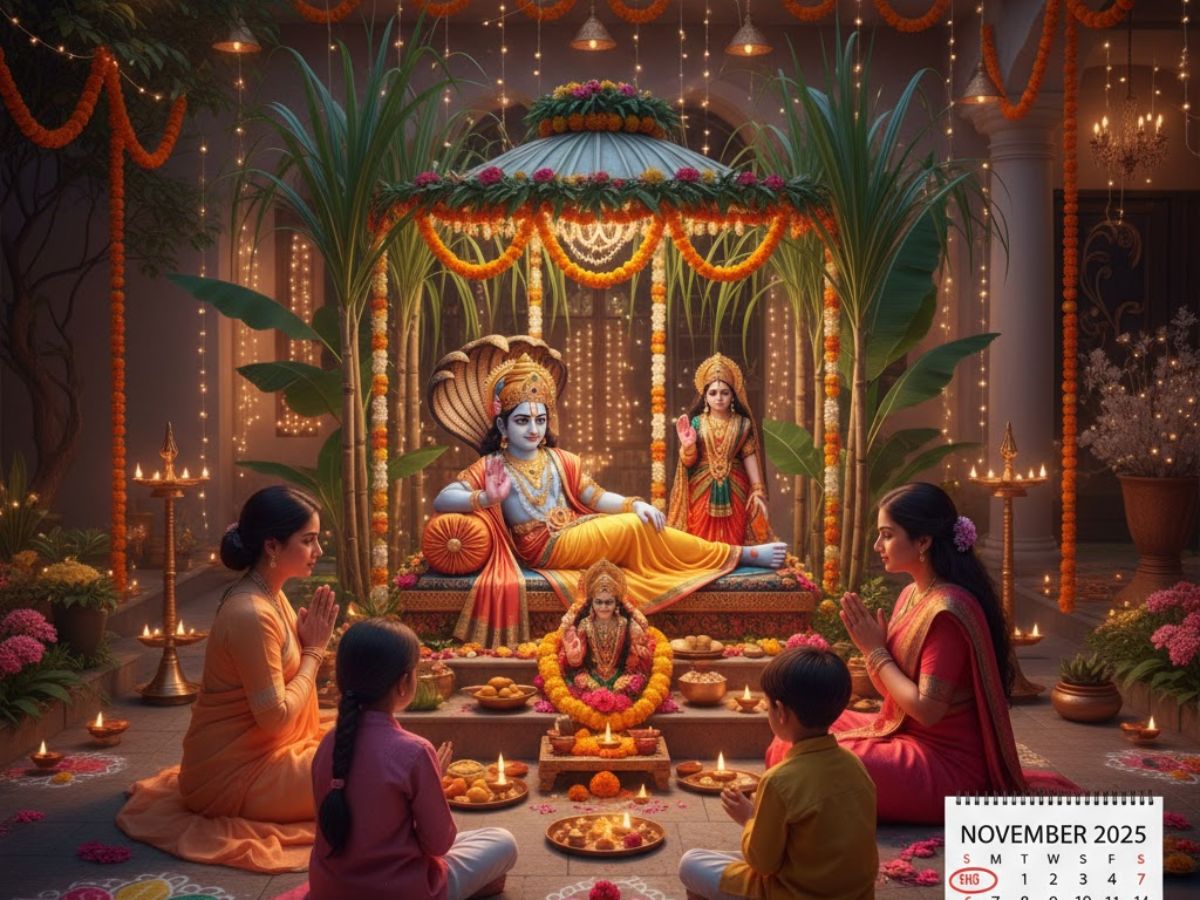
After a long wait, Dev Uthani Ekadashi, or Prabodhini Ekadashi, will be observed on Saturday, November 1, 2025. Observed on the eleventh day of the bright fortnight of Kartik month, this festival carries deep spiritual meaning. It commemorates Chaturmas, the time when Lord Vishnu awakens from his four-month glorious repose. The doors of heaven are said to open on this day, signifying the restoration of favorable circumstances and good fortune.
What is the Deeper Meaning of This Day?
Why is this day considered a celestial new beginning? According to ancient scriptures, on the Ekadashi of the Shukla Paksha in the month of Ashadha, Lord Vishnu reclines into a state of Yogic sleep in the Ksheer Sagar. He reawakens precisely on the Kartik Shukla Ekadashi. This entire period of four months is called Chaturmas, a time when the gods are believed to be resting and major auspicious ceremonies like weddings are put on hold. Dev Uthani Ekadashi is the spiritual “New Year’s Day,” heralding a fresh start filled with positivity and divine blessings.
The Significance of the Vrat: What Does Fasting Achieve?
What can a devotee gain by observing this vrat? The fast of Dev Uthani Ekadashi is regarded as highly sacred and rewarding. According to belief, sincere fasting, worship, and prayer on this day help a person achieve the four key goals of life — Dharma (righteousness), Artha (prosperity), Kama (desire), and Moksha (salvation). It is seen as a divine moment to realign one’s spiritual and material journey with the grace of an awakened Vishnu.
What to Do on Dev Uthani Ekadashi 2025
Rituals on this holy day are said to draw wealth. The year is particularly significant since it unites potent yogas like Dhruva, Vriddhi, and Ravi Yoga. Devotees should follow particular customs in order to resonate with these holy forces. The primary one is fasting in honor of Lord Vishnu and Goddess Lakshmi, either entirely or through fruit consumption. Ritual worship of Lord Vishnu, the Shaligram, and the Tulsi plant is also essential. Many also observe the tradition of performing Tulsi Vivah on this day.
Charity, or daan, is a cornerstone of the observance. To receive the full blessings of Lord Vishnu and Goddess Lakshmi, devotees must follow certain restrictions. Non-vegetarian food, onion, garlic, and any form of intoxicant should be strictly avoided. One should also refrain from negative actions such as lying, arguing, or speaking harshly, as these are believed to offend the divine energies of the day.
What to Avoid on This Sacred Day
What actions could inadvertently invite displeasure? For the complete grace of Lord Vishnu and Goddess Lakshmi, devotees are advised to follow specific restrictions. Consumption of non-vegetarian food, onion, garlic, or intoxicants is strictly forbidden. Negative actions like lying, fighting, or speaking violently should also be avoided because they are believed to violate the heavenly vibrations of this holy day.
This sacred day encourages spiritual focus rather than physical labor. Therefore, devotees should avoid digging, cutting trees or plants, and any form of strenuous work. Even though it marks the start of the wedding season, holding a wedding or Griha Pravesh ceremony on Ekadashi is considered inauspicious. Such celebrations are recommended to begin on Dwadashi, the following day.