
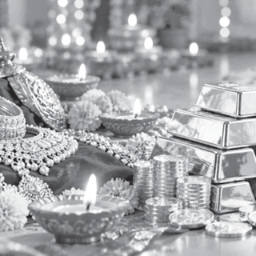
When I see the markets all dressed up in lights, the crockery shops abuzz with business like no other, the electric light-fittings sell like hotcakes, I wonder if this is all Deepawali means to some. Deepawali, the festival of lights, could mean crackers, diyas, prayers, rituals, shopping, gifting, cleaning up, decorating the house, wearing festive Indian clothes, gorging on sweets and savouries, card parties, gambling, drinking, brisk business, etc.
Each of us has our own thing to look forward to in this festival, which is perhaps everyone’s favourite. For some business and merchant communities, like Marwaris and Gujaratis, Deepawali day is when they close their old financial books and open new accounting ledgers for the Vikram Samvat year. They pray to Goddess Lakshmi for financial growth and to Ganesha to clear roadblocks in their trade and work.
A lot of people indulge in heavy gifting, especially those who are a part of the corporate and business world. Many people clean every nook and cranny of their house in the run-up to Diwali. This means stripping the closets of all the forgotten books, magazines, clothes, crockery, linen, quilts, etc., cleaning the ceilings of cobwebs, carpets and corners of dust, mites, etc. I used to make Rangolis and paint Lakshmiji’s Charan, but now I have handed this over to my children.
Lighting Diyas at the entrance has always been a treat. My mother would say that on Diwali, Goddess Lakshmi visits only those homes that are clean, sparkling and decorated. With childish innocence, we cleaned up our home till it shone. I realise now how she ensured that every inch of the house got cleaned at least once annually, and in a fun way! It never felt like work.
All neglected tasks of home maintenance came to the fore. Leaking roofs and moisture in cupboards caused by the monsoon were fixed during Diwali cleaning! The traditional Indian oil lamps caused insects to die and cleansed the atmosphere; something that candles can never really do.
Deepawali is a five-day festival. The first day of the festivities is called Dhanteras. Our scriptures say that during the Samudra Manthan, Lord Dhanwantari emerged from the ocean on this day. He emerged holding an Amrit kalash in one hand and the knowledge of Ayurveda in the other.
The Amrit kalash (pot of nectar) symbolises immortality. The knowledge of Ayurveda symbolises good health and balance of the body, mind and soul. In recent years, Dhanteras has been reduced to just a day on which we buy metals. But if we look deeper, we realise that real wealth is not in material possessions. Health is wealth. When our body, mind and soul are aligned in thought, word and deed, there is a balance in life.
That balance brings happiness, peace and prosperity. According to people’s spending power, people buy gold, silver, steel, copper or clay utensils. Some buy ornaments and vehicles too. This results in the entire economy taking a turn so that even the humblest trader earns an extra buck! While this is great, this Diwali let’s look into our health parameters and work on correcting whatever is amiss. Let’s work on acquiring the real wealth of health and wisdom on Dhanteras.
The second day of the festival is Narak Chaturdashi or Choti Diwali. It’s the day Lord Krishna annihilated the demon Narakasura. Popular belief encourages one to take an oil massage to overcome the fatigue of Diwali preparations and prepare for Deepawali pooja.
The third day is Amavasya and is Diwali. The scriptures say that when Goddess Lakshmi emerged from the ocean, Lord Vishnu married her and she was designated the Goddess of wealth and prosperity. To manage all the wealth that she was made custodian of, she needed someone to help manage it.
So Kubera was made her assistant. But whenever Lakshmi wanted to disburse that wealth or gift it to her devotees, Kubera would resist because, basically, he was a miser. This made Goddess Lakshmi upset because she was, by nature, benevolent and wanted to shower her blessings in the form of wealth and prosperity on her devotees. When she shared her helplessness with Vishnu ji, he advised her to have a treasurer. He suggested that she appoint Ganesha as her treasurer.
Ganesha was very wise and said, “Mother, I will keep guiding you on how you should be giving your blessings. Please do not doubt my intentions. Whatever I say, you must agree.” Goddess Lakshmi looked upon Ganesha as her adopted son, so she agreed to go by whatever he said. Ganesha thus became the treasurer, and Kubera was watered down to the position of a mere custodian.
And Goddess Lakshmi was the happiest because she could now disburse her wealth as she wanted to and had the added advantage of the good advice of Ganesha. While Vishnu ji is in Yog Nidra during this period up to Dev-Uthani Ekadashi, Lakshmi ji visits her devotees, and Ganesha escorts her. Lord Ganesha is worshipped for heralding auspiciousness. So Lakshmi and Ganesha are worshipped together on Deepawali day.
The Ramayana says that Lord Rama returned to Ayodhya after fourteen years of exile along with Sita ji and Lakshman ji on this day. Being a no-moon night, people illuminated the pathway to Ayodhya with oil lamps to welcome their beloved Rama ji. They distributed sweets out of sheer joy at His return. The jubilation led to song, dance and festivity. There were no crackers then.
The fourth day is celebrated as Govardhan Puja and Vishwakarma Day. Lord Krishna had lifted the Govardhan Parvat on His little finger to shelter the cowherds, milkmaids, cattle, etc. from the deluge caused by Indra. Craftsmen worship the divine architect Vishwakarma and their tools on this day and do not work with their tools. We can think of it as a day to rest after the hustle and bustle of Diwali.
The fifth day is Bhai Dooj. Lord Yama visited his sister Yamuna with gifts on this day. The tradition continues with brothers visiting their sister’s homes with gifts. Maybe with so much happening on Diwali, it’s hard for men to visit their married sisters, so the day has been earmarked!
Well! Whatever Diwali means to us, let’s look deeper into the soul of the festivities. While cleaning our homes to invite Ganesha and Lakshmi in, let’s sweep out negativity and greed. While decorating our home, let’s imbibe contentment and devotion. Cleansing our persona is important because the Lord resides only in pure hearts.
And when we light lamps in the mandir and all over the house, let’s light one in the temple of our hearts too, so that the light radiates from the temple of our hearts. Have a divine and safe Deepawali!