
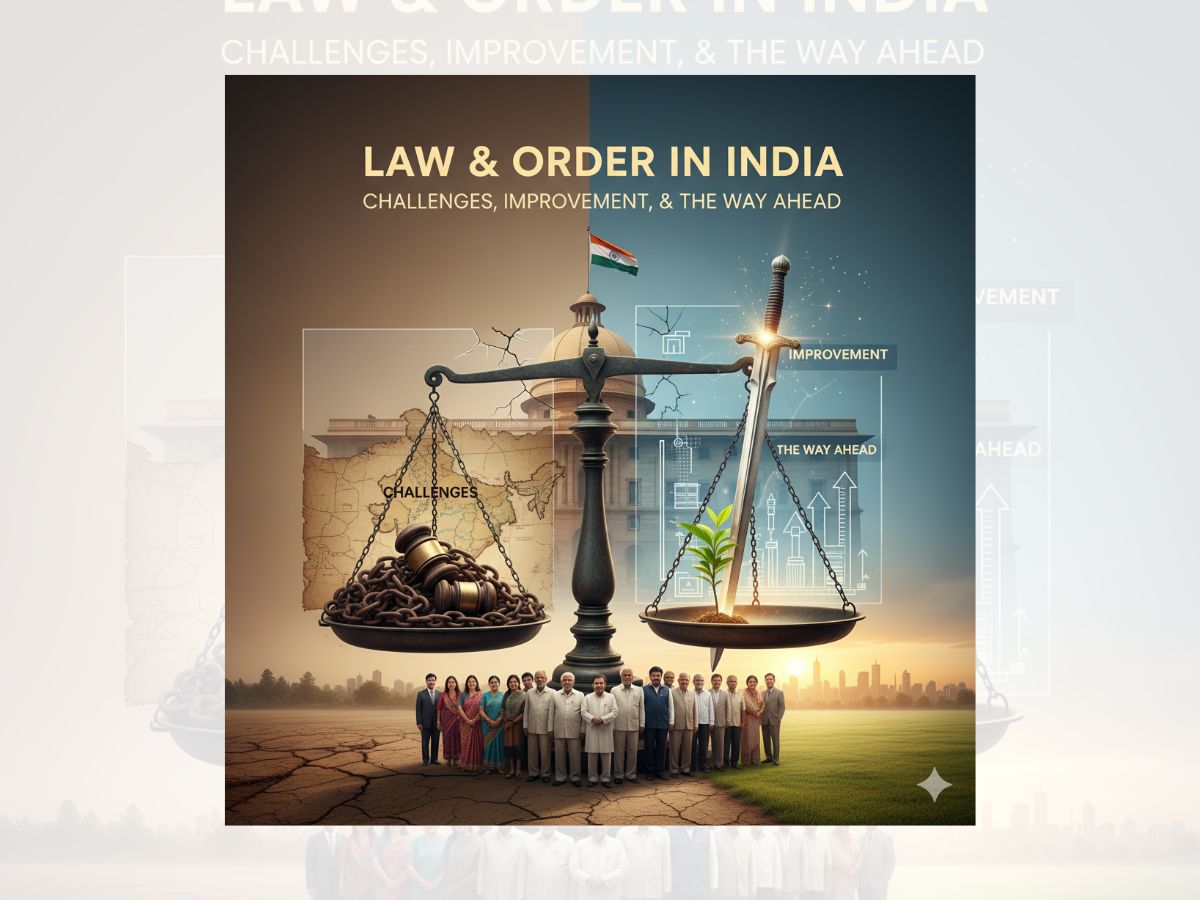
India’s law and order apparatus, essential for the stability and prosperity of the nation, has seen significant improvement in recent times. The police are at the forefront of ensuring internal security, settling disputes, and enforcing the rule of law. Nonetheless, even as some impressive progress is being made in modernisation and training, ingrained problems persist to undermine public trust, and a nuanced picture of emerging capabilities with underlying impediments is forthcoming.
Recent Improvements in Policing
Over the last decade, India’s police force has made leaps in embracing technology, enhancing cybercrime wings, and developing forensic support. Digital FIR registrations, crime-tracking, and helplines for rapid response have been adopted by several state police forces. Specialised training programs to combat terrorism, communal clashes, and organised crime have led to enhanced skill levels at the investigative level. Community policing efforts such as the outreach by Delhi Police among senior citizens and women have further exemplified changes towards proactive policing.
Public Hesitation and Regular Gaps
However, these are regularly clouded by deep-seated issues. A large chunk of India’s people still dither before contacting the police. There are many reasons: negative attitudes towards police conduct, a past history of delayed response, and, most hurtfully, corruption. Incidents of demands for bribes in the course of availing basic services and a top-down, authoritarian manner of dealing with people during their contact make the average individual apprehensive. Several independent surveys indicate that citizens prefer not to file complaints lest they are harassed, lest they are not acted upon, or lest they are extorted.
Bribe Culture and Authoritative Attitudes
Everyday corruption, from low-level bribes for traffic challans to more substantial extortions in criminal inquiries, creates pervasive distrust. The uniformed official, representing authority, too often means an arresting presence, not a reassuring one. This style keeps the public at arm’s length and defeats the very purpose of accessible justice.
Reforms Required: Professional Expertise
Experts contend that only meaningful reform can begin with the internal culture. Suggestions made include stronger anti-corruption law enforcement within the force, routine sensitivity and rights-based training, and having independent police complaint authorities in all states. Open investigations into complaints against police officers, performance-based incentives, and safeguarding whistleblowers are also termed as imperatives. Increased female officer recruitment, interaction with society, and investment in mental health services for staff would make the environment more sympathetic.
Institutionalising Change: The Path Ahead
Institutionalising such changes necessitates concerted, enduring political will and responsibility. Specialists suggest phasing out police reforms initiating them in metropolitan regions and incrementally spreading them to districts, all under the watch of independent monitors. Expansion of investment in police facilities, promotion of public feedback channels, and use of technology for open processes can narrow the gaps in trust.
Constructing a successful, people-centric police force is at the heart of India’s ambition for inclusive, equitable governance. Increased trust between police and society isn’t merely about order, it is about building the foundational values of the world’s largest democracy.