
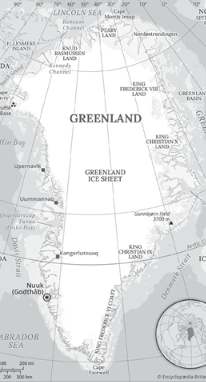
Few places reveal the strange relationship between geography and power as vividly as Greenland. For decades, its vastness and remoteness seemed to place it at the edge of world politics. Yet the same geography that made Greenland appear distant has repeatedly drawn powerful states towards it. A new security agreement between Washington, Copenhagen and Nuuk has revived that old paradox, with Donald Trump claiming “permanent control” over the island’s security. What looks new is, in fact, part of a much longer story.
During the Second World War, Washington recognised Danish sovereignty over Greenland while securing extensive rights to establish and operate American defence facilities there. The Cold War deepened that relationship, turning Greenland into a northern outpost in the defence of North America and the North Atlantic. The American presence was therefore never an accident of Trumpian imagination. What is new is the language. Earlier American diplomacy could distinguish between sovereignty and strategic access. Trump has somehow managed to make the distinction sound almost impolite. Yet history alone does not explain why Greenland has acquired such renewed attention.
Its geography has remained fixed while the systems surrounding it have multiplied. The island now sits at the intersection of Arctic and North Atlantic security, emerging maritime routes, critical-mineral supply chains, climate science and communications infrastructure. Its ice sheet makes it an unparalleled natural laboratory; its position gives it a bearing on shipping and surveillance; its resources have acquired significance as major economies seek more resilient supplies of strategic minerals. Even computing could eventually enter the equation. A cold climate can reduce cooling requirements for energy-intensive data centres, although such a future would depend on reliable power, connectivity and investment. Greenland is becoming less a remote possession of the Arctic than a junction in several emerging networks.
That transformation gives the military question a different weight. Russia has turned the Arctic into a more heavily militarised theatre, reinforcing its northern military infrastructure, submarine capabilities and strategic presence. For NATO, Greenland therefore cannot be considered in isolation from the Greenland-Iceland-UK gap, the maritime approaches to Europe and the routes through which North American reinforcements move towards the continent. Britain has increasingly described the High North as a critical frontier, with particular attention to Russian ships and submarines, undersea cables and critical infrastructure. Denmark, meanwhile, is strengthening cooperation with its European partners on Arctic security. The old map of the North Atlantic is acquiring new military meaning. Russia, however, is only half the transformation.
China introduces a slower and broader competition. Beijing’s Arctic interests encompass shipping, scientific research, energy, critical minerals and infrastructure, while growing Russian-Chinese cooperation has added another dimension to Western calculations. China does not need a military base in Greenland to matter. Access to resources, infrastructure, technology and supply chains can generate influence without a flag being planted on a runway. The significance lies not simply in what China might build, but in how investment, ownership and access could shape the economic architecture emerging around the Arctic. Russia makes Greenland’s military geography urgent; China makes its economic geography harder to ignore. It is against this background that the new agreement becomes more intelligible.
Washington is seeking to ensure that Greenland remains firmly embedded within the Western security architecture and that strategic competitors cannot establish comparable positions there. Denmark and Greenland have sought to accommodate that security imperative while insisting that sovereignty remains intact. The arrangement is therefore less a departure from the historical relationship than an attempt to rewrite its operating terms for a more contested Arctic. But the manner in which this settlement has arrived matto praise when the rules are being applied to somebody else. Greenland asks what happens when the sermon meets the strategic imperative. Even the irony has a historical pedigree: in 1941, American officials were careful to secure extensive defence rights while explicitly affirming Danish sovereignty. ters almost as much as its substance. Greenland became a source of transatlantic friction after Trump’s tariff threats and demands concerning the island; disagreements over the American approach to Iran subsequently exposed further differences between Washington and European capitals.
The Greenland agreement may reduce one immediate source of tension, but it cannot erase the larger question of how an alliance functions when its most powerful member increasingly defines security in terms that its allies must then accommodate. Trump has a curious talent for turning the private grammar of alliance diplomacy into a public spectacle. The striking part is not that America wants Greenland secure. It is that, after months of making allies wonder whether sovereignty itself was negotiable, Washington now asks them to celebrate the restoration of a security arrangement whose necessity was never really in doubt. That raises a larger American question. For decades, Washington has preached sovereignty, territorial integrity, self-determination and a rules-based international order as restraints on the arbitrary exercise of power. Greenland offers an uncomfortable test of that vocabulary.
The issue is not whether American security concerns are legitimate; they plainly are. Nor is the new arrangement equivalent to an annexation of Greenland. It is not. The harder question is whether principles remain universal when strategic necessity becomes sufficiently compelling. The rules-based order is easiest There is, however, a danger in discussing Greenland only through the calculations of Washington, Moscow, Beijing, Copenhagen or NATO. Greenlanders are not occupants of a strategic chessboard. They are the people who will live with the consequences of decisions about military facilities, mines, ports, telecommunications, foreign investment and environmental risk. If minerals are developed, who finances the projects and captures their value? If infrastructure is expanded, who owns it?
If American security guarantees become more extensive, what obligations accompany them? And if independence remains a political aspiration, what economic structure would sustain it? Independence is a political aspiration. It is also an economic balance sheet. That balance sheet matters because strategic attention can be both an opportunity and a source of dependence. Greenland may gain investment, infrastructure and security from its new importance, but it must also negotiate the terms on which those benefits arrive. Replacing one form of dependency with another would not necessarily amount to greater autonomy. The real measure of self-determination is not simply who holds the flag, but who possesses enough institutional, financial and political capacity to decide what happens beneath it.
This is where Greenland’s significance extends beyond the Arctic. The island illustrates a wider problem in international politics: formal sovereignty does not automatically produce equal bargaining power. Smaller states and territories can remain legally sovereign while negotiating with powers whose resources, markets and military capabilities dwarf their own. Greenland does not establish a new rule of international law. It does, however, expose an old asymmetry in unusually stark light. Greenland has spent much of modern history being described by others: as a military outpost, an Arctic frontier, a storehouse of resources, a laboratory for climate science, or a piece of geography whose importance exceeds its population. Its circumstances are changing, but the central question remains remarkably simple. Can Greenland translate the growing value of its geography into greater capacity to shape its own future? The answer will depend not merely on who offers security, investment or infrastructure, but on whether Greenlanders possess the political and economic agency to decide the terms. Geography may have made Greenland important. It should not determine who gets to speak for it.
*Apurva Rakesh Pandey is an alumnus of the University of Allahabad and an analyst and writer on International Relations and Strategic Affairs.