
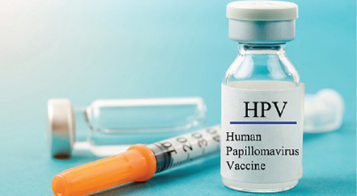
A few days ago, my wife, a biotechnology gold medallist, exceptional biology teacher, and disciple of science returned from work with an unsettling story. At her workplace, amid routine professional conversations, the topic had turned to the national rollout of the HPV vaccine. One of her colleagues, an educated professional and mother, confided that she was reluctant to allow her daughter to receive the vaccine. The reason was not access. It was not cost. It was not even medical contradiction. It was something she had “heard”: that the vaccination drive was a covert population-control measure; that it would make girls infertile; that it could render them “impotent.” My wife recounted the exchange with disbelief not because misinformation exists, but because it had surfaced so casually in an “informed” workplace. The episode was a reminder that vaccine hesitancy is no longer confined to the margins of society. It circulates in offices, in housing societies, in WhatsApp groups and at dinner tables. It travels effortlessly across class, language and geography. In that moment, it became clear that India’s challenge is not merely to distribute vaccines efficiently, it is to build public understanding about HPV Vaccine before doubt hardens into distrust.
A Preventable Disease, A Persistent Fear
Human papillomavirus (HPV) is responsible for nearly all cases of cervical cancer and contributes to several other anogenital and oropharyngeal cancers. India bears one of the highest cervical cancer burdens globally. Thousands of women die each year from a disease that modern medicine is capable of preventing. The science behind HPV vaccination is robust. Large-scale clinical trials and post-marketing surveillance across multiple countries have consistently demonstrated its safety and efficacy. Like Australia provided compelling evidence of what sustained immunisation can achieve. Through high vaccine coverage and organised screening programmes, Australia is on track to virtually eliminate cervical cancer as a public ience-building.
Beyond a single vaccine
Health problem within decades. Yet science alone does not inoculate societies against suspicion. The HPV vaccine is important for health, but conversations about it can be sensitive due to misinformation related to teenage sexuality, fertility concerns, and parental protection. In contexts where conversations about sexual health remain culturally delicate, in many a taboo, misinformation finds receptive ground. A rumour linking a vaccine to infertility does not merely question a medical product; it touches upon lineage, family continuity, and social identity. In such terrain, scientific data must compete with deeply embedded anxieties.
The Architecture of the Modern rumour
The colleague’s concerns did not arise from peer-reviewed journals. They were shaped by forwarded messages, selectively edited videos and confident assertions delivered without citation. This is the architecture of the contemporary rumour: emotionally resonant, easily shareable, and structurally resistant to correction. Public health responses often follow a reactive model. Once misinformation gains traction, authorities issue clarifications. Experts appear on television panels. Fact-checking portals debunk viral posts. Press releases attempt to restore disturbed equilibrium. But cognitive science suggests that once misinformation has been internalised, subsequent corrections rarely erase its influence entirely, a phenomenon widely described as the “continued influence effect.” Even when individuals accept factual corrections, the original claim may continue to shape intuitive judgment. By the time officials begin firefighting, the blaze may already be smouldering in countless private conversations.
From firefighting to fireproofing
This is where pre-bunking becomes indispensable. Pre-bunking, grounded in inoculation theory within social psychology, operates on a preventive logic. Rather than waiting for misinformation to spread, it prepares individuals in advance by explaining the types of misleading claims they may encounter and the rhetorical strategies those claims employ. For instance, parents might be informed during routine immunisation counselling: “You may come across claims that the HPV vaccine affects fertility or is part of a populationcontrol agenda. These narratives often rely on anecdotal accounts rather than large-scale scientific studies. The vaccine has undergone extensive clinical evaluation and continues to be monitored through national and global safety systems.” Such anticipatory guidance does not silence scepticism. Instead, it strengthens discernment. When individuals subsequently encounter misinformation, they recognise its structure and intent. The rumour loses some of its novelty and with it, its persuasive force. The shift is subtle but transformative: from reacting to misinformation to pre-empting its psychological appeal.
Trust as public infrastructure
India’s vaccination history includes episodes that have shaped public memory and institutional trust. Debates surrounding clinical trials and regulatory transparency continue to echo in contemporary discourse. For many citizens, scepticism reflects experience rather than ignorance. Pre-bunking must therefore be coupled with visible transparency. Publishing accessible adverse-event data, communicating uncertainties honestly and inviting community dialogue are essential to sustaining credibility. Trust cannot be commanded; it must be constructed through consistent openness. Frontline health workers ASHAs, nurse midwives and school health staff remain central to this effort. Their interpersonal credibility often exceeds that of distant policymakers. Equipping them with structured pre-bunking communication tools transforms routine immunisation encounters into opportunities for resilThe HPV vaccine rollout is more than a public health campaign; it is a test case for India’s engagement with science in the digital era. Misinformation is not confined to immunisation. It attaches itself to climate policy, antimicrobial resistance, emerging technologies and electoral processes. If misinformation is treated as an episodic inconvenience, responses will remain perpetually reactive. If it is recognised as a structural risk factor a kind of informational pathogen then preventive strategies become central. Pre-bunking is not propaganda. It is civic education about how misinformation works. It strengthens democratic deliberation by enabling citizens to distinguish between evidence and manipulation.
Returning to the conversation
That evening conversation, as my wife described her exchange, what lingered was not outrage but responsibility. She resolved to speak again with her colleague gently, respectfully, armed with credible evidence. It was a small act, but emblematic of how public health unfolds: not only through policy documents and procurement contracts, but through everyday dialogue. Cervical cancer is now largely preventable. The real risk is not scientific failure, but communicative failure. To achieve the promise of HPV vaccination, India must move from fighting rumours to preventing the spread of misinformation in society. Reactive mythbusting will always trail misinformation. The more durable remedy is prebunking, preparing citizens to recognise misleading claims before they take hold. Embedding media and information literacy in school curricula is central to this effort. Teaching students how to evaluate sources, understand how misinformation spreads, and verify health claims builds long-term resilience. Prebunking does not tell young people what to think; it equips them with the tools to think critically. It is about ensuring that scientific evidence, communicated with transparency and respect, prevails over fear and that prevention, not misinformation, shapes India’s pubic health.
*Dr. Rubal Kanozia is Founder, IDEL Lab (Interventions Design and Effects Lab) Head, and Associate Professor, Department of Mass Communication and Media Studies Director, Community Radio Station (CRS) Central University of Punjab, Bathinda Robin Jindal is Ph.D. Scholar, Interventions Design and Effects Lab (IDEL), Department of Mass Communication and Media Studies, Central University of Punjab, Bathinda, Punjab,