
The rapid development of Artificial Intelligence (AI) has transformed political communication, social media campaigning and public debate in India. From digitally altered photographs to realistic AI-generated videos, political parties and their supporters increasingly use technology to communicate messages, criticise opponents and attract public attention. However, the growing use of AI in political communication has also raised serious questions about misinformation, defamation, freedom of expression and individual dignity.
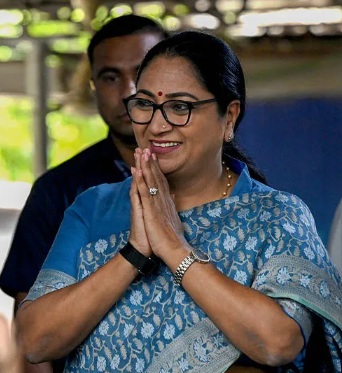
A recent controversy involving Delhi Chief Minister Rekha Gupta has brought these concerns into sharp focus. On November 6, 2026, the Delhi High Court directed the removal of certain AIgenerated videos, images and social media posts allegedly depicting Gupta in a demeaning and defamatory manner. The content, which was reportedly circulated through social media accounts associated with the Aam Aadmi Party (AAP), portrayed the Chief Minister as a liquor vendor, hawker and delivery agent. Some of the material also referred to a purported scheme titled “Har Har Rekha or Ghar Ghar Theka”.
The controversy has generated an important discussion about the relationship between political satire and personal dignity. It also raises a broader question: when does humorous political criticism cross the line into defamatory digital manipulation? The court’s intervention demonstrates that although political leaders must remain open to public scrutiny and criticism, the use of artificial intelligence does not automatically protect offensive or potentially defamatory content under the banner of satire.
THE REKHA GUPTA AI VIDEO CONTROVERSY
The controversy centres on AI-generated videos and images allegedly circulated through social media platforms, including posts associated with AAP’s official and verified accounts. According to the details reported during the proceedings, the content depicted Delhi Chief Minister Rekha Gupta in different situations associated with the sale and distribution of liquor. One portrayal allegedly showed her as a liquor vendor, while another depicted her alongside Delhi Deputy Chief Minister Parvesh Sahib Singh pouring liquor and ice cubes. The material also reportedly associated Gupta with a fictional initiative called “Har Har Rekha or Ghar Ghar Theka”.
These portrayals became the subject of a defamation suit filed by the Chief Minister. Gupta approached the Delhi High Court seeking protection against the publication, circulation and dissemination of the allegedly defamatory AI-generated material. Her legal representatives argued that the videos and images were degrading, offensive and damaging to her personal reputation and dignity.
The case is particularly significant because AI technology can create highly realistic representations of individuals without their participation. A person can appear to perform actions or make statements that never actually occurred.
DELHI HIGH COURT’S INTERVENTION
On November 6, 2026, Justice Manoj Jain of the Delhi High Court directed the removal of six URLs containing the disputed AI-generated material. The court observed that political parties have the democratic right to criticise government policies, administrative decisions and political leadership. Nevertheless, such criticism cannot become a justification for portraying individuals in a manner that attacks their dignity and reputation.
One of the important observations attributed to the court was that satire may hurt an individual’s feelings, but it cannot be allowed to inflict an irreparable injury upon personal dignity. The court also distinguished between legitimate political disagreement and offensive personal portrayals. It observed that criticism of government decisions is a recognised part of democratic politics, whereas creating degrading representations of a Chief Minister through AI-generated videos cannot automatically qualify as permissible political satire.
It is important to note that this was an interim judicial intervention. The proceedings are continuing, and the final determination of the defamation claims remains a matter for the court.
POLITICAL SATIRE: AN ESSENTIAL PART OF DEMOCRACY
Political satire has historically played an important role in democratic societies. Through cartoons, comedy programmes, caricatures, humorous speeches, theatrical performances and social media content, citizens have used humour to question those in power. Satire can make complicated political issues accessible to ordinary people. It can expose contradictions, highlight administrative failures and encourage public discussion about government policies.
In India, political humour has a long history. Newspaper cartoons, street performances, television comedy and internet memes have all contributed to political conversations. A political leader’s decisions, public statements, promises and administrational performance are legitimate subjects of satire.
For example, a satirical video questioning the implementation of a government scheme, highlighting an infrastructure problem or comparing an election promise with its actual implementation can contribute to democratic accountability.
There is a difference between criticising a political decision and digitally manufacturing a misleading representation of a person. When AI-generated content creates the impression that a public representative has participated in activities that did not occur, questions of authenticity, reputation and potential defamation arise.
The central issue is therefore not whether political satire should be permitted. It is how democratic societies should distinguish legitimate criticism from harmful digital fabrication.
FREEDOM OF EXPRESSION VERSUS INDIVIDUAL DIGNITY
One of the most important questions emerging from the case concerns the constitutional balance between freedom of expression and the right to dignity.
Article 19(1)(a) of the Indian Constitution guarantees citizens the right to freedom of speech and expression. This protection is fundamental to democratic participation, political disagreement and public criticism. However, freedom of expression is not absolute. Article 19(2) permits reasonable restrictions on specified grounds, including defamation, public order and other constitutionally recognised interests.
At the same time, the Supreme Court has recognised the importance of dignity and privacy as components of the right to life and personal liberty under Article 21.
These constitutional principles create a framework in which political speech must be protected while recognising that individuals also have legitimate interests in their reputation and dignity. The challenge is to ensure that restrictions on expression do not become instruments for suppressing uncomfortable political criticism. Equally, the language of political humour should not become an automatic defence for every form of manipulated content.
POLITICAL PARTIES AND RESPONSIBILITY IN THE AI ERA
Political parties have increasingly adopted digital platforms as essential tools for public communication. Social media enables political organisations to communicate directly with citizens, distribute campaign material and respond to opponents. Memes, short videos, animated clips and humorous content have become common elements of political communication.
However, the availability of AI technology also creates new responsibilities. Political organisations must consider whether the material they publish is authentic, clearly labelled as fictional or likely to mislead viewers. They must also recognise that content distributed through verified accounts can carry considerable public influence.
The Rekha Gupta case raises questions about responsibility at several levels:
-
Content creators: Individuals producing AIgenerated political videos should consider whether their work is clearly fic
-
Political organisations: Parties should exercise care when publishing or sharing manipulated audiovisual material through official accounts.
-
Social media platforms: Digital platforms must respond appropriately to lawful judicial directions and develop effective mechanisms for addressing harmful manipulated content.
-
Citizens: Social media users should verify the authenticity and original context of controversial videos before sharing them.
Responsibility cannot be transferred entirely to artificial intelligence. AI systems may generate content, but human beings make decisions about what to create, publish and distribute.
THE ROLE OF SOCIAL MEDIA PLATFORMS
Social media platforms have become major channels for political debate in India. Their ability to distribute content rapidly has transformed how political narratives develop. A video uploaded by a political account can reach thousands or millions of viewers within a short period. Even after its removal, copies may continue circulating through other accounts, messaging applications and online communities.
This creates difficulties for individuals seeking legal remedies. The court’s direction to remove the six identified URLs reflects the importance of timely intervention when potentially defamatory material is spreading online.
Nevertheless, content moderation also requires careful consideration. Platforms must distinguish between manipulated material that creates misleading factual impressions and legitimate parody, commentary or artistic expression. Overly broad removal policies could restrict political discussion, while inadequate moderation could allow harmful fabricated content to circulate unchecked.
WAY AHEAD
The AI-generated video controversy involving Delhi Chief Minister Rekha Gupta has brought an important constitutional and technological debate into the public spotlight. The case should not be interpreted as a rejection of political satire or criticism. Rather, it highlights the importance of examining how satire is created, what it communicates and whether it crosses into misleading or defamatory representation.
The future of democratic debate will depend on maintaining an appropriate balance between freedom of expression, technological innovation, accountability and individual rights.
Ultimately, political satire should remain a meaningful instrument of democratic criticism. But in an era when artificial intelligence can manufacture convincing digital realities, humour, authenticity and responsibility must be considered together. The challenge for Indian democracy is to protect the freedom to criticise those in power without allowing technological manipulation to undermine the dignity and credibility of individuals.
Dr.S. Krishnan is an Academician and an Experienced Journalist based in Jaipur. Ms. Shobha Chauhan is an advocate in Rajasthan High Court, Jaipur. The views are personal.