
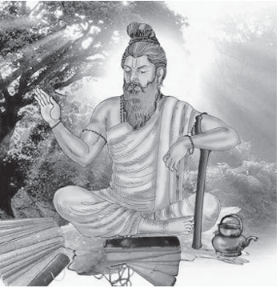
There is a simple rule in public life: those who believe they will face no consequences often speak the loudest against the weakest. Criticism, when directed equally at every tradition, institution and community, is a sign of a healthy democracy. But when criticism becomes selective—when one civilisation’s traditions are repeatedly placed under a microscope while uncomfortable questions about others are avoided—it stops being intellectual inquiry and becomes political convenience. This is precisely the problem with the latest political attack on the Manusmriti. On August 22, 2026, while interacting with women students at his Chhatron Ki Goonj programme in Pune, Congress leader Rahul Gandhi criticised what he called the “Manusmriti mindset”, urged women to “smash patriarchy” and argued that women belong to themselves, not to their fathers, husbands or sons.
He referred specifically to verses describing women’s dependence on male relatives and called such ideas shameful. His larger argument— that women deserve dignity, autonomy and equal opportunity—is not objectionable. Indeed, these are values that any democratic society should uphold. The problem arises when Manusmriti is selectively presented as the embodiment of Hindu thought and Hindu civilisation. Because if Manusmritiis to be invoked, why should only one side of the text be quoted? The same Manusmriti contains the celebrated verse: “Yatra naryastu pujyante ramante tatra devata.”(Manusmriti, 3.56) Its meaning is unequivocal: “Where women are honoured, divinity blossoms there; where women are not honoured, all actions remain unfruitful.” The verse places the honour of women at the centre of social and spiritual well-being. So, if one wants to discuss the Manusmriti honestly, both dimensions must be acknowledged. One may criticise particular verses or social prescriptions that appear incompatible with modern constitutional values. But one cannot take selected passages, declare them representative of the entire Hindu tradition, and then ignore passages that emphasise the dignity and honour of women. That is not scholarship. It is selective quotation.
The deeper issue is therefore not whether Manusmriti can be criticised. It certainly can. The issue is whether political criticism is being used to create a particular image of Hindu Dharma among young Indians. And this is where Congress must answer a difficult question: Why is criticism of Hindu texts so politically easy, while reform of other personal-law traditions has historically been far more complicated? Advocate Zeba Zoariah put the question sharply on X: “Why is Manusmriti easy to question, but Muslim personal law politically uncomfortable?” That question deserves a serious answer—not evasion. The same Congress that now speaks passionately about patriarchy has, at different moments, taken positions that demonstrate how complicated its apwants to use it as a political symbol while speaking to India’s Gen Z, he also owes that generation intellectual honesty. Tell them about the verses he criticises—but also tell them about “Yatra naryastu pujyante”. Tell them about the complexities of Hindu texts rather than presenting one selective interpretation as the whole truth.
India’s young generation does not need political caricatures of its civilisation. It needs the confidence to question its traditions, understand them and, where necessary, reform them—without being taught to despise them. proach to reform can be. Congress opposed the Triple Talaq Bill in Parliament, with its members raising objections to the legislation and its provisions. If women’s autonomy is the principle, then that principle cannot depend upon which community is involved. If patriarchy is objectionable, it should be challenged everywhere. If women must have autonomy, that autonomy should be defended irrespective of religion. If personal laws are examined through the constitutional principles of equality and dignity, then every personal-law system should face the same standard of scrutiny.
Why should Hindu traditions alone repeatedly become the convenient target? Hindu civilisation is also far too vast to be reduced to the Manusmriti. Its intellectual universe includes the Vedas, Upanishads, Itihasas, Puranas, Darshanas, Smritis, Bhakti traditions, and countless regional schools of thought. Its history contains debate and disagreement, reform and reinterpretation. To portray this entire civilisation through a handful of verses from one text is historically simplistic. It should also be mentioned that Hindu Dharma is perhaps the only living dharmic tradition that has continuously reinterpreted and reformed its practices and concepts according to the changing times. That is why it can be considered one of the most dynamic and modern spiritual traditions while remaining deeply rooted in its philosophical and scientific values.
Hindu Dharma has also traditionally revered women as manifestations of the Divine. During Durga Puja and on many other occasions, we see the practice of Kumari Puja, in which young girls are worshipped as manifestations of the Goddess. Have other religions practised anything comparable in such a direct and ritualised manner? Yet Hindu Dharma continues to be portrayed as inherently patriarchal by sections of intellectuals and political figures. Rahul Gandhi is perfectly entitled to criticise the Manusmriti. But if he The real test of secularism is not whether one can criticise Hinduism loudly. The real test is whether one has the courage to apply the same standard to everyone. Selective criticism is not reform. Selective outrage is not feminism. And quoting only half a tradition is not intellectual honesty. The author is Jagran Josh Awardee 2023. He is a columnist and writer, who has authored five books. The views are personal.