
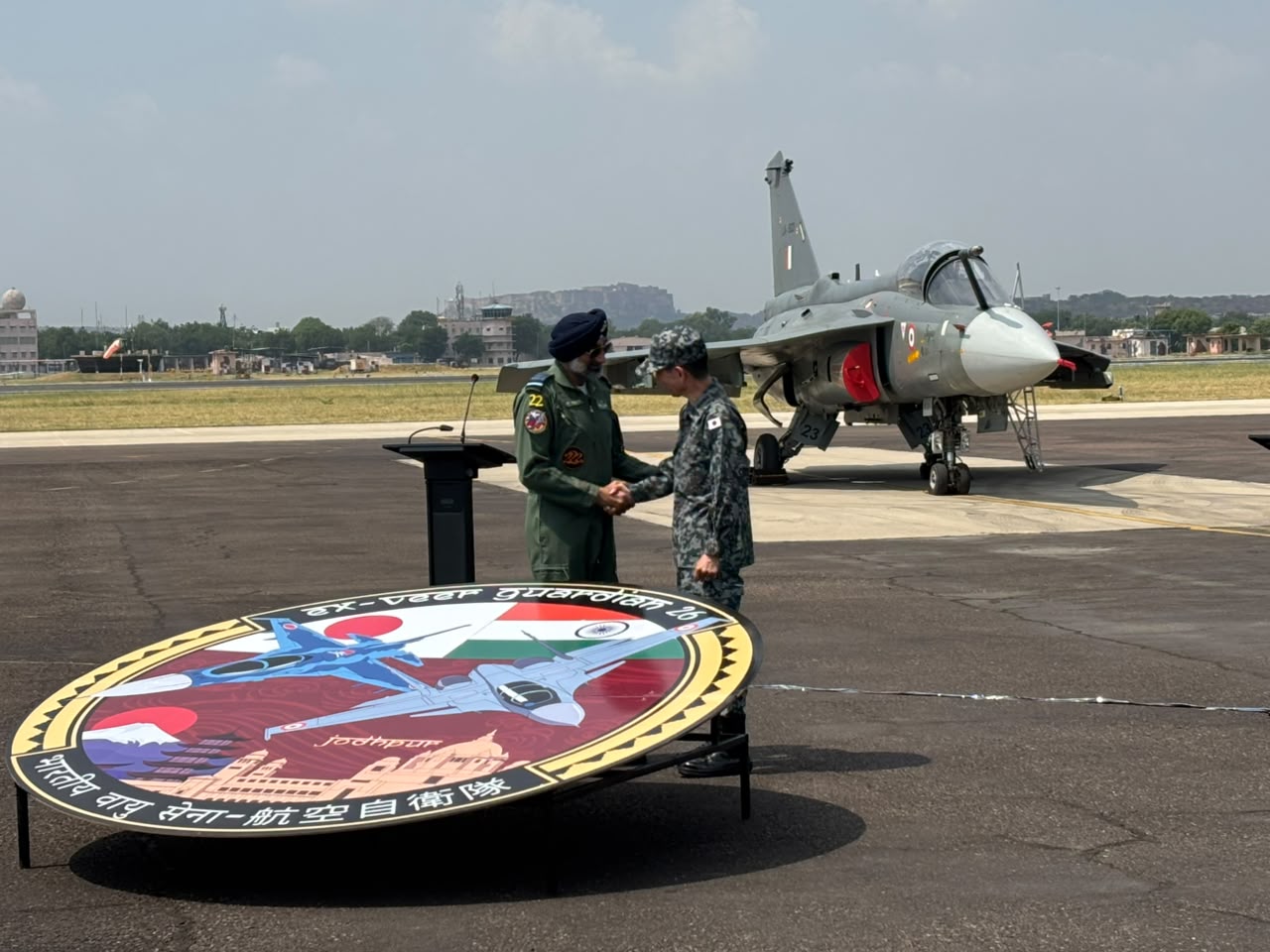
It was not the sound of another military exercise. It was the roar of fighter jets over Jodhpur. It was a reflection of the growing airpower partnership between India and Japan as the two countries came together with their combat aircraft and operational experience for Exercise Veer Guardian 2026.
The exercise was held at Jodhpur Air Force Station and included Indian Air Force and Japan Air Self-Defense Force, conducting aerial training to enhance interoperability and bolster professional relations. But one moment was unlike all the others: the two air chiefs flying together in India’s home-grown Tejas fighter plane.
The significance of the moment went beyond the flight itself. General Takehiro Morita, Chief of Staff of the JASDF, experienced the Tejas from the cockpit, offering a first-hand look at India’s indigenous fighter aircraft. Following the sortie, he described the experience as a symbol of trust, confidence and friendship between the two air forces.
For the Japanese Air Self-Defense Force, Veer Guardian 2026 also marked a first: its F-2A fighter aircraft operated from Indian soil during a bilateral exercise. The Japanese aircraft travelled from Tsuiki Air Base to Jodhpur, joining Indian Tejas, Su-30MKI and Rafale fighters in the 14-day exercise, which began on September 9 and concluded on September 22.
The exercise was not limited to flying operations. Mission planning conferences, professional exchanges and interactions involving engineering and aerospace safety formed part of the programme, allowing personnel from both air forces to learn from each other’s operational practices.
The deployment of Japanese fighter aircraft to India represents a practical expansion of the defence relationship between New Delhi and Tokyo. While diplomatic and military cooperation has developed over the years, exercises such as Veer Guardian bring that partnership directly into the operational environment.
As the aircraft returned to the ground at Jodhpur, the exercise left behind more than photographs of fighter jets in formation. It offered both air forces an opportunity to build familiarity, exchange experience and strengthen the professional relationships that underpin future cooperation. For India, the presence of Japan’s F-2A fighters alongside the IAF’s frontline fleet added another chapter to the country’s growing engagement with partner air forces.