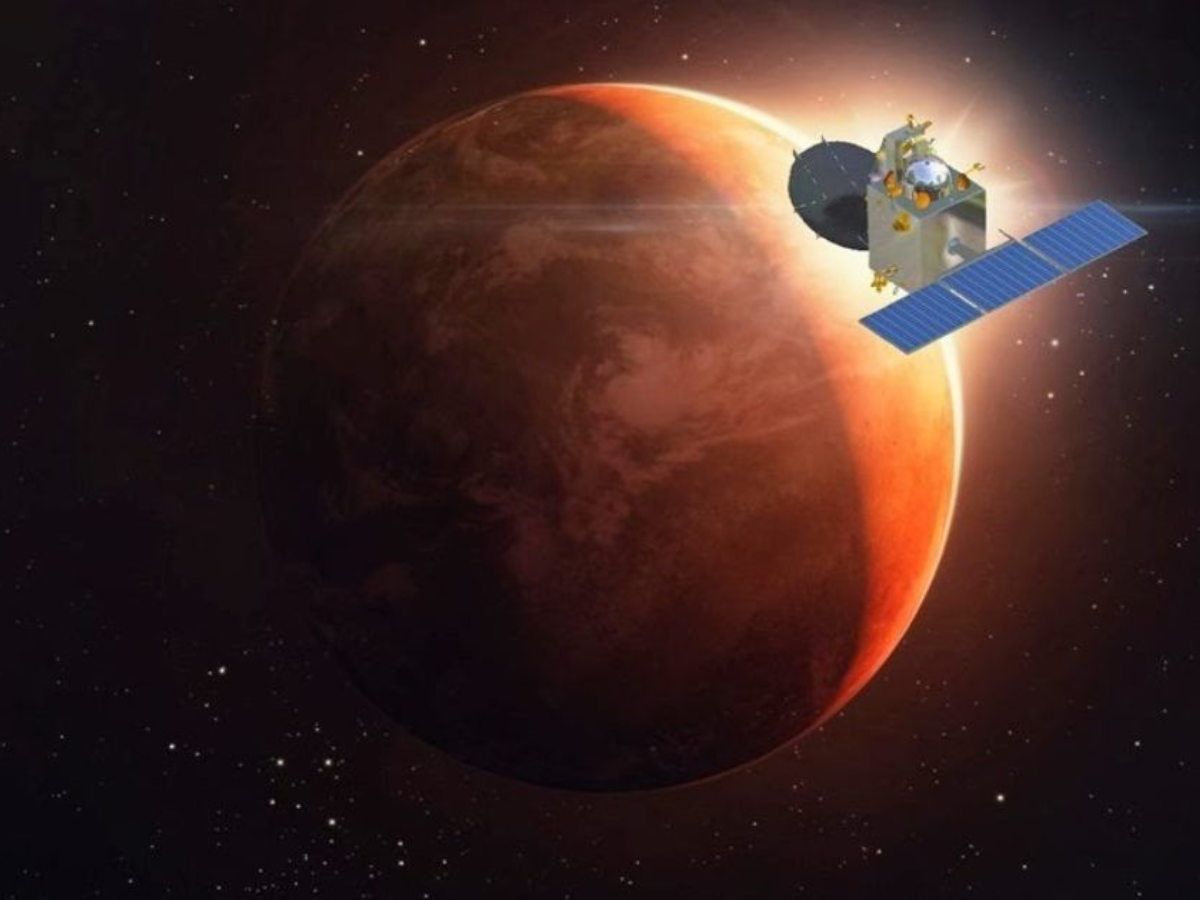
India’s Mangalyaan-2 mission will attempt the nation’s first Mars landing, combining orbiter, lander and possibly a rover for 2030 (Photo: NASA)
A decade plus since creating history with its first-ever Mars mission, India is now poised for the next giant leap in space. According to reports, the Indian Space Research Organisation has officially announced its Mangalyaan-2 mission to accomplish a first-ever landing on Mars.
Slated for a launch in 2030, the ambitious mission promises to push India's technological capabilities to new heights. ISRO Chairman Dr. V. Narayanan confirmed the announcement during a recent address, underlining the continued commitment of the nation toward interplanetary exploration.
The MOM was originally launched on November 5, 2013, and placed India in the global spotlight. It made India the first Asian nation to enter Martian orbit and the only country to achieve this feat on its maiden attempt.
Operating for over seven years, MOM collected invaluable data on the Red Planet's atmosphere, mineral composition, and surface features before communications were lost in 2022. Its success laid the groundwork for the more ambitious Mangalyaan-2 mission.
ALSO READ: Why the Moon Seems Huge: The Science of the Moon Illusion
with its predecessor, which stayed in orbit, Mangalyaan-2 is expected to make a soft landing on Mars. It could be designed with an orbiter and a lander, with a small rover added to scout out the Martian surface.
The advanced propulsion, navigation and landing technologies that ISRO is working on will be needed because of the planet's thin atmosphere to ensure a precise touchdown. As officials said, the mission is not just about orbiting Mars but about achieving India's first successful planetary landing.
ALSO READ: Bezos’s New Glenn Rocket to Launch Mars Mission & Attempt Earth Return
Preliminary studies and design activities related to the mission have already commenced at ISRO's Space Applications Centre and Vikram Sarabhai Space Centre.
ISRO is also open to foreign collaboration in this project regarding scientific payloads and in the sharing of data, on the lines of its earlier missions like Chandrayaan-3 and the NISAR cooperation. These will contribute to an enhancement of India's capability in autonomous deep-space navigation, surface imaging and geochemical analysis.
If successful, Mangalyaan-2 would place India among a select group of nations capable of Mars landings, joining the United States, China, and the former Soviet Union. The 2030 launch is not only a technological milestone but also a salute to the legacy left behind by the pathbreaking Mangalyaan mission.
As the preparation progresses, the world will be looking at India as it tries to stretch its interplanetary reach and redefine its role in global space exploration.
ALSO READ: What Is a Supermoon 2025? The Science Behind the Moon’s Close Approach to Earth
Disclaimer: This article is for informational purposes only; mission details and launch timelines may change as per ISRO’s official updates.