
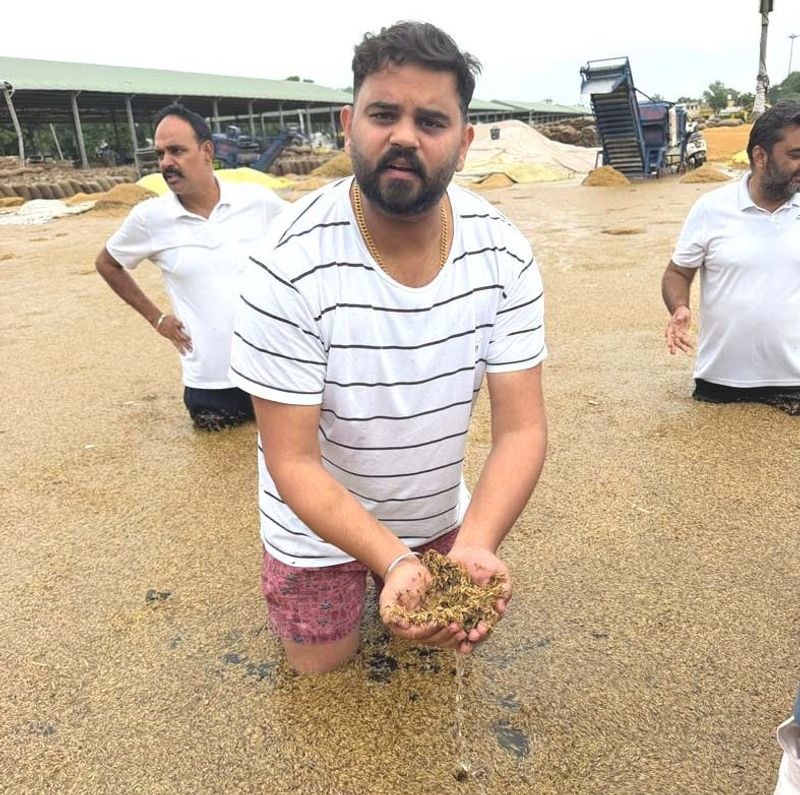
Waterlogged mandis, soaked grain and harvesting delays raise concerns over losses as Punjab heads towards the 2027 Assembly elections
Unseasonal rain across Punjab on Sunday has compounded farmers’ concerns at a critical stage of the paddy season, with harvested grain getting soaked in mandis, standing crops facing the risk of damage and harvesting operations disrupted by adverse weather.
The situation has brought the preparedness of the Punjab government’s procurement machinery under scrutiny, with farmers worried about the condition of their produce, delays in procurement and the possibility of financial losses. The crisis also comes amid concerns over storage space and the pace of lifting of procured grain.
The India Meteorological Department issued a warning of isolated heavy rainfall in Punjab and neighbouring regions for Sunday. The impact of the rain was visible in several grain markets, where paddy was lying in the open and water accumulated in market yards. The extent of crop damage will require a proper field assessment.
Farmers caught between rain and procurement delays
In Bathinda grain market, 795 metric tonnes of paddy had arrived since procurement began on October 5. Of this, 370 metric tonnes had been purchased, while 425 metric tonnes remained unpurchased. Only 30 metric tonnes of the purchased crop had been lifted by Sunday morning, according to a report in The Tribune.
Farmer Gurmail Singh from Gulabgarh village complained that his produce had been lying in the mandi despite his arrival the previous Saturday. He said the grain was dry when he brought it in but had become wet following the rain. Farmers also raised concerns about inadequate lighting and delays in procurement.
The situation was also worrying in Fazilka and Ferozepur, where reports described waterlogging and paddy exposed to rain. In Jagraon, water accumulated in the grain market and paddy kept in the open was drenched.
For farmers, the immediate concern is whether the grain will meet procurement quality standards after getting wet. Increased moisture can mean additional drying and waiting, while prolonged exposure to water can affect grain quality. Any rejection, delay or price reduction could add to their financial burden.
The impact is not limited to grain already harvested. Standing crops are also vulnerable to persistent rain and strong winds. Farmers in the Ludhiana region have warned that flattened crops can be harder to harvest and that excess moisture may affect grain colour and quality. The delay could increase harvesting costs and postpone the next stage of agricultural operations.
Govt assures procurement, but farmers want action
Punjab Food and Civil Supplies Minister Lal Chand Kataruchak visited grain markets in Bathinda and Muktsar on Sunday and assured farmers that the government would procure every grain. He said the state had set a procurement target of 180 lakh metric tonnes this season and that timely procurement and payments remained priorities.
However, a farmer from Jandwala Charhat Singh village alleged that his produce from three acres had been washed away because of inadequate arrangements. The minister said the damage caused by rain would be managed, while the actual scale of losses remains to be assessed.
The immediate test for the government will be to ensure effective drainage, adequate protective covers, speedy procurement, timely lifting and transparent assessment of losses. Farmers will also expect clarity on how rain-affected grain will be handled if its moisture content or quality becomes a barrier to procurement.
Bikram Singh Majithia’s political attack
The rain damage has created another opportunity for the opposition to question the Punjab government’s handling of the agricultural season.
Bikram Singh Majithia said, “We will meet the Governor of Punjab because the farmers are being exploited by the AAP government. Paddy is not being procured at MSP, and farmers could commit suicide due to these losses. Action should be taken against Punjab Chief Minister Bhagwant Mann and the Minister of Food and Civil Supplies for Punjab.”
He criticised the government’s failure to make proper arrangements, warning that this could harm agriculture and, consequently, the economy of Punjab.
“Purchases are being made at low prices by private players. An investigation should be conducted into where the money is being looted. The financial distress of farmers in Punjab is due to the wrong policies of both the AAP government and the central government,” Majithia added.
His response is particularly relevant because Punjab is approaching the 2027 Assembly elections, when farmers’ concerns, procurement performance, minimum support price and rural livelihoods are likely to remain key political issues.
The government’s assurance that every grain will be purchased will now be judged against the experience of farmers standing in waterlogged mandis, waiting for their produce to be purchased or lifted.
A test ahead of the 2027 elections
The rain has brought the gap between official assurances and farmers’ experiences into focus. The immediate question is not only how much paddy has been damaged, but whether the state’s procurement system can prevent further losses and ensure that farmers receive the assured price for their produce.