
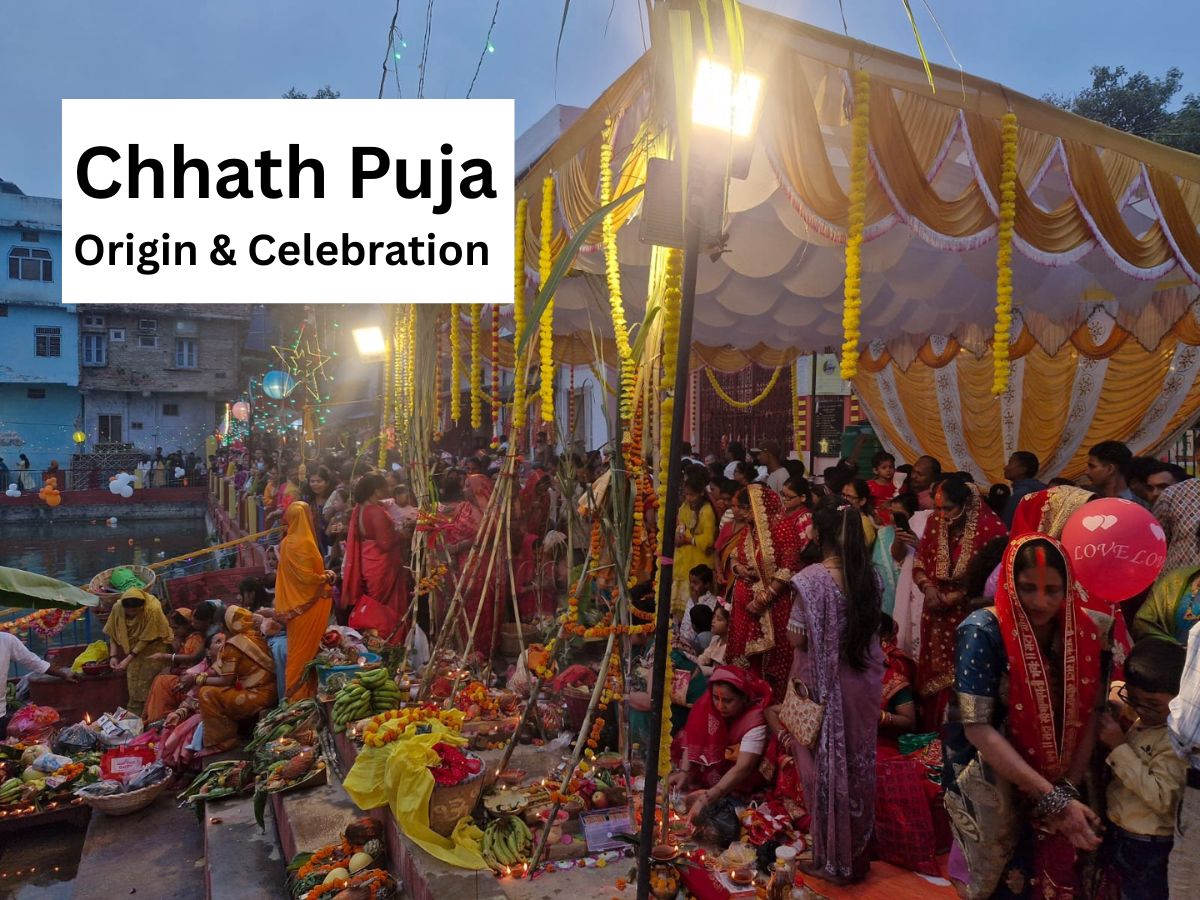
Chhath is a holy Hindu festival dedicated to Lord Surya (the Sun God) and Chhathi Maiya, observed mainly in Indian states Bihar, Jharkhand, Eastern Uttar Pradesh, and by Nepalese and Indian diaspora overseas. Characterised by auspicious rituals and intense faith, Chhath is distinctive for worshipping both the rising and setting sun—something no other world festival does.
Why We Celebrate Chhath: Ancient Origins and Meaning
The origins of Chhath Puja go back a long way into ancient Hindu culture and Vedic scriptures. The festival is about the life-giving power and healing energy of the sun, which is said to give life to living things on earth. Surya Dev and Chhathi Maiya are prayed to by devotees for long life, prosperity, and good health.
Chhath Rituals- Purification, Discipline, Devotion
Chhath Puja is celebrated over four days of strict observance:
- Nahay Khay: Worshippers bathe in sacred rivers or ponds, purify their houses, and start the cleansing process.
- Kharna: Fast is observed throughout the day and broken only at night after praying to Mother Earth with simple traditional offerings.
- Sandhya Arghya: On the third day, devotees gather by water sources to pray and give prasad to the western sun as a symbolic gesture of thanksgiving for the blessings of life.
- Usha Arghya: During the last morning, devotees end their fast after praying to the eastern sun and offer prasad to neighbours and relatives as a symbol of harmony, unity, and hope.
Excessive fasting is practiced, such as a Nirjala Vrat (dry fast), symbolising purity and self-control. The ceremonies are conducted with environmental sensitivity: only organic ingredients and offerings are employed, highlighting compatibility with nature.
Chhath: Social and Spiritual Significance
Chhath is not a celebration of religion alone- it is a festival of equality, solidarity, and union, uniting whole families and communities alike, gender and status notwithstanding. The festival inculcates gratitude, self-control, respect for nature, and the strength of communal prayer.
Worship of the Sun, Elevating Life
We celebrate Chhath to thank for the sun’s life-giving force, to pray for health and prosperity, and to reestablish the age-old connection between mankind and nature. Its rigorous adherence, environmental ethos, and lovely rituals distinguish Chhath as one of Hinduism’s most symbolic and life-altering festivals.