
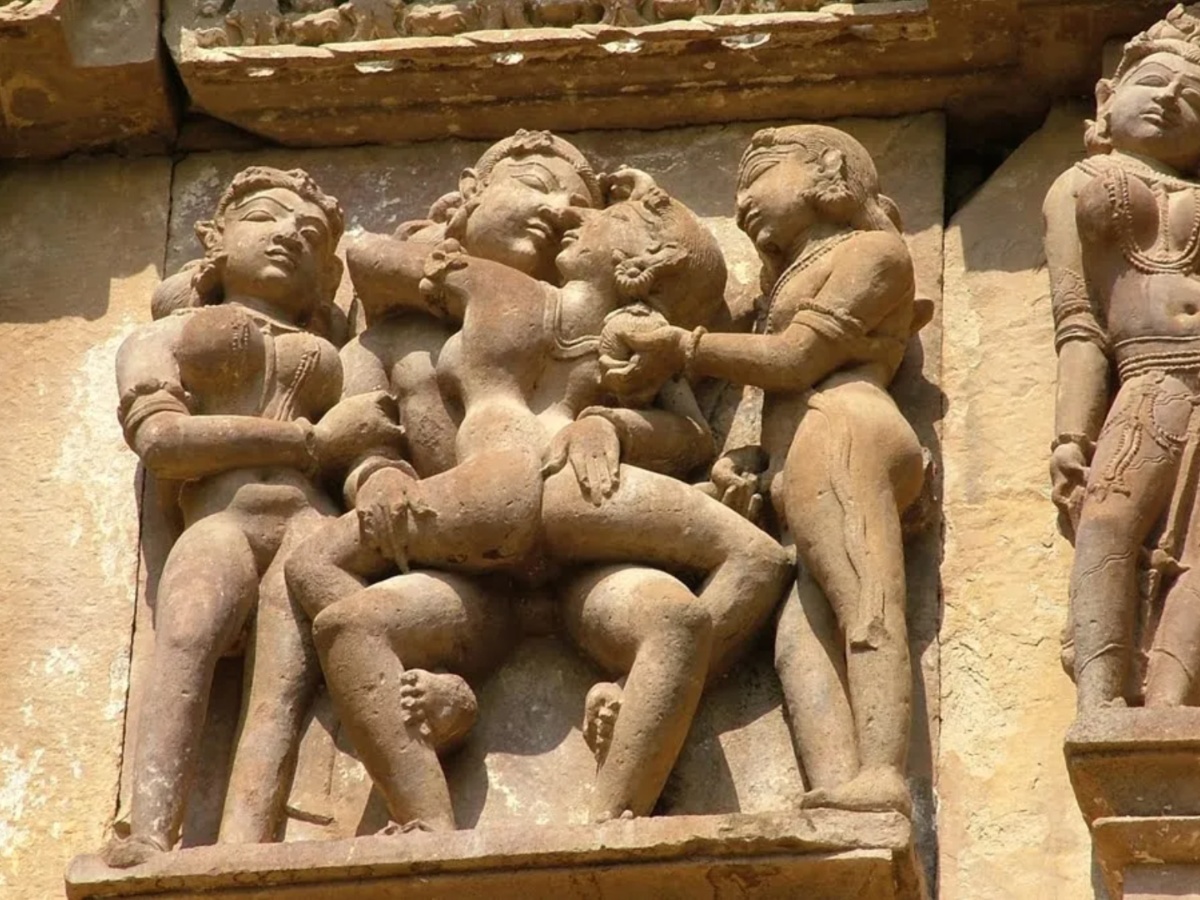
Long time before modern love gurus and relationship coaches emerged, India had Maharishi Vatsyayana — the man who authored the world’s most iconic guide on love, attraction, and intimacy and he wrote the Kamasutra, a groundbreaking text that decoded the complexities of human relationships.
Despite writing a treatise on sex and sensuality, Maharishi Vatsyayana lived a celibate life, dedicating himself entirely to study and philosophy where his work continues to influence global thinking on love and emotional connection even today.
The Man Behind the Kamasutra
Maharishi Vatsyayana was much more than the mind behind the Kamasutra, and he lived in the sacred city of Banaras (Varanasi) and mastered the Vedas, ethics, and religion. His deep understanding of human behavior, combined with his spiritual grounding, made him a revered thinker in Indian tradition. He approached the topic of love not as a voyeur but as a philosopher.
A Visionary Ahead of His Time
In an era where open conversations on intimacy were criticized upon, Maharishi Vatsyayana encouraged dialogue and also considered sex, attraction, and emotional bonding essential to human life and treated them as natural subjects for discussion.
His Kamasutra was not just about physical union it was a guide to love, lifestyle, compatibility, and personal happiness.
How He Researched the Kamasutra
Historical accounts suggest that Vatsyayana visited brothels, spoke to courtesans, and observed relationships closely and he wanted to understand desire in its social and emotional context but yet, he never crossed the line into participation. His study remained scholarly, and his purpose was to educate, not to indulge.
A Legacy Beyond One Book
Though the Kamasutra made him famous, Vatsyayana also authored the Nyaya Sutra, a philosophical text on logic and metaphysics where this shows his wide intellectual range and he viewed liberation, knowledge, and personal fulfillment as interconnected.
Renowned scholar Wendy Doniger, where in her book Redeeming the Kamasutra, argues that his work should not be reduced to erotica but instead, she frames it as a philosophical and sociological document that explores deeper truths about the life and love.
But even centuries later, Maharishi Vatsyayana’s bold and progressive ideas continue to inspire and his ability to treat sexuality with dignity and depth marks him as a revolutionary — truly ahead of his time.