
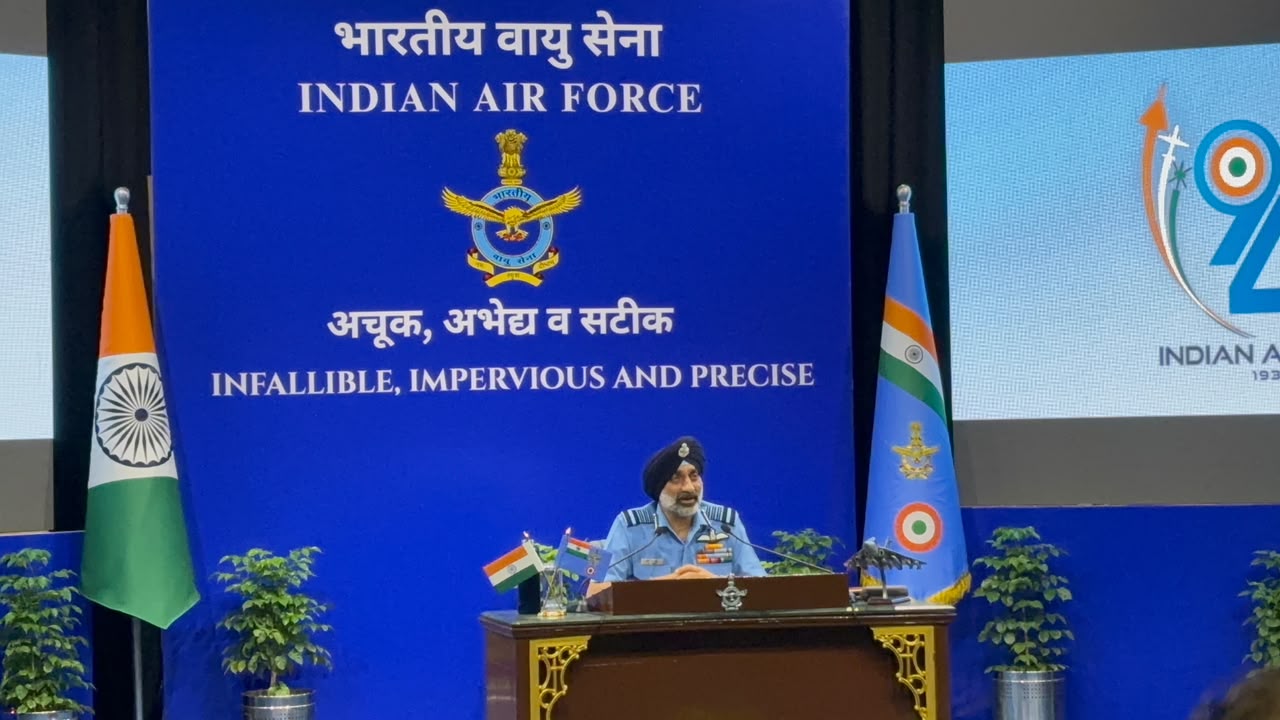
IAF Chief Flags Fighter Squadron Shortfall, Warns Delays Are Hurting Air Force
Indian Air Force Chief Air Chief Marshal AP Singh has raised concerns over the declining strength of the IAF’s fighter fleet, warning that delays in the induction of new aircraft are affecting the force’s ability to arrest the shortfall in combat squadrons.
Speaking at his annual media briefing ahead of Air Force Day, Singh said the IAF currently has around 29–30 fighter squadrons, against an authorised strength of 42. He stressed that the force needs to induct roughly two fighter squadrons every year, requiring an annual production and induction rate of about 36–40 aircraft.
The immediate concern is the delayed induction of the LCA Tejas Mk-1A, which is central to the IAF’s plans to strengthen its fighter fleet. The first contract for 83 aircraft was signed in 2021, but deliveries have been delayed due to issues including engine availability and subsequent testing, radar, weapons and software integration.
Singh has also called for a more focused approach to defence acquisition, arguing that India needs fewer projects with tighter and achievable delivery schedules rather than programmes that remain delayed for years. The concern is not limited to Tejas, with several major aviation programmes expected to play a role in rebuilding the IAF’s combat strength.
The IAF is looking towards Tejas Mk-1A, Tejas Mk-2, additional Su-30MKI aircraft and the Advanced Medium Combat Aircraft (AMCA) as part of its long-term modernisation plan. Singh has indicated that timely execution of these programmes will be critical to reversing the decline in fighter squadron numbers.
The Air Chief’s remarks underline the operational importance of not just sanctioning defence projects, but ensuring that aircraft and systems reach the armed forces within realistic and firmly defined timelines.