
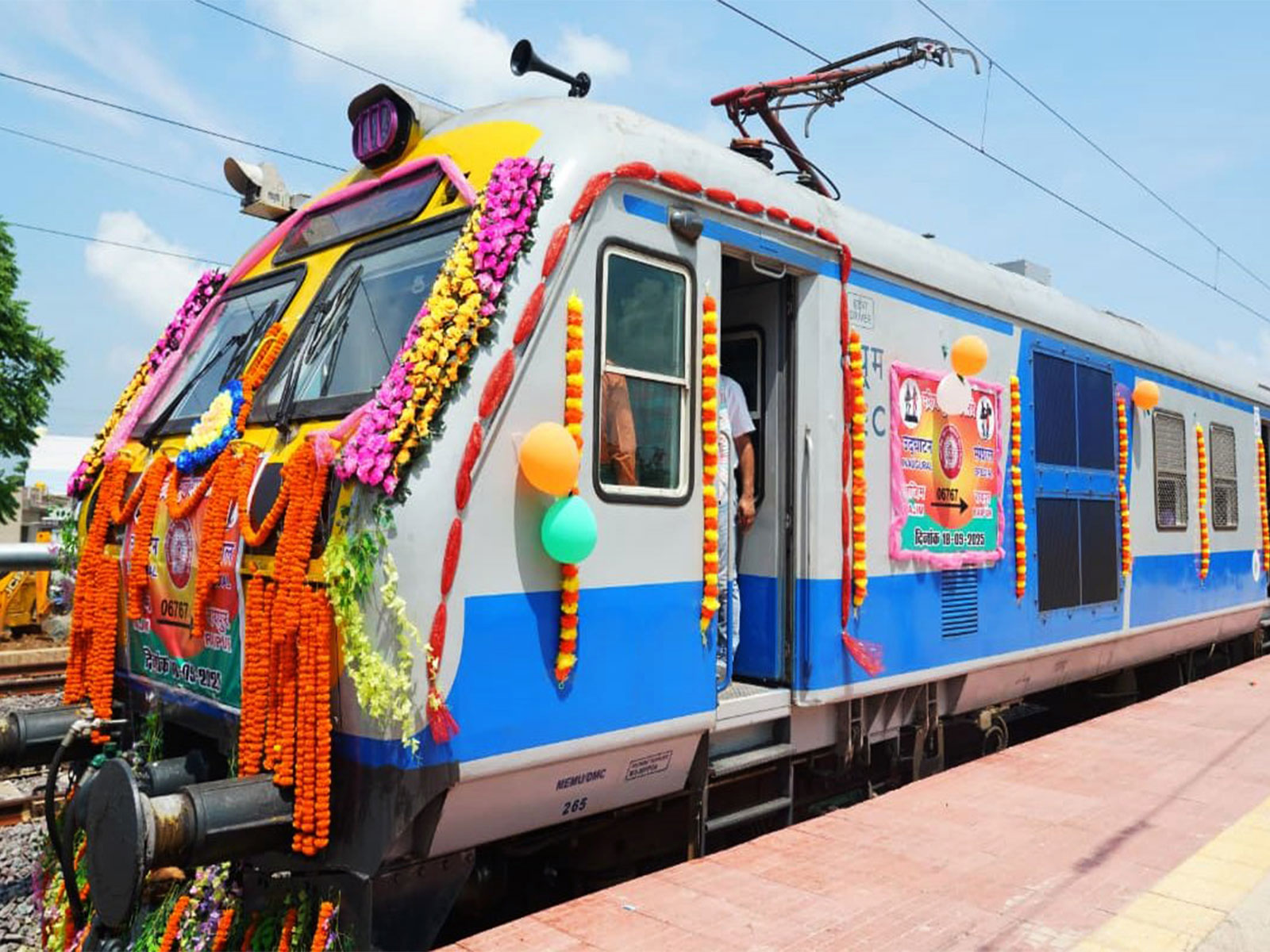
New Delhi: The Cabinet Committee on Economic Affairs (CCEA), chaired by Prime Minister Narendra Modi, on Wednesday approved four railway multi-tracking projects with an estimated investment of Rs 9,450 crore, along with the four-laning of the Muzaffarpur-Sitamarhi-Sonbarsa section of NH-22 in Bihar at a capital cost of Rs 3,590.73 crore. The combined investment of over Rs 13,040 crore is aimed at strengthening rail and road connectivity, decongesting key corridors, improving logistics efficiency and boosting regional economic activity.
The four railway projects, spanning around 410 km across West Bengal, Odisha, Andhra Pradesh and Tamil Nadu, include a 173-km fourth line between Kharagpur and Bhadrak (Ranital), a 75-km fourth line between Bhadrak and Haridaspur, a 90-km third and fourth line between Gummidipundi and Gudur, and a 72-km third and fourth line between Cuttack and Paradeep (Badabandha).
The proposed multi-tracking works are expected to substantially enhance railway capacity, facilitate smoother train operations and improve the reliability of both passenger and freight services. The projects will extend improved rail connectivity to around 6,448 villages across eight districts, covering a population of nearly 60 lakh.
The expanded railway network will also provide better access to a number of major tourist, religious and cultural destinations, including Kuldiha Wildlife Sanctuary, Bhitarkanika National Park, Chandipur Beach, Pulicat Lake, Nelapattu Bird Sanctuary, Talsari-Udaypur, Panchalingeswar Temple, Dhabaleswar Temple and the Buddhist heritage site of Lalitgiri, among others.
The identified railway routes are also critical for transporting commodities such as coal, iron ore, cement, iron and steel, containers, automobiles and foodgrains. The capacity enhancement is expected to generate additional freight-handling potential of around 76 million tonnes per annum.
According to the government, the greater reliance on railways will help lower logistics costs while contributing to the country’s environmental objectives. The projects are estimated to save around 13 crore litres of oil and reduce carbon dioxide emissions by nearly 65 crore kg, an environmental benefit comparable to planting approximately 2.60 crore trees.
The railway projects have been planned under the PM Gati Shakti National Master Plan, with an emphasis on integrated infrastructure planning, multimodal connectivity and improved logistics efficiency. They are expected to facilitate the seamless movement of passengers, goods and services.
Separately, the CCEA approved the upgradation of the 82.578-km Muzaffarpur-Sitamarhi-Sonbarsa stretch of NH-22 in Bihar to four-lane standards. The project will be executed under the Hybrid Annuity Mode (HAM) at an estimated capital cost of Rs 3,590.73 crore.
The highway holds strategic and economic importance as it provides a vital link between Sonbarsa on the India-Nepal border and Muzaffarpur, where it connects with NH-27, a key component of the East-West Corridor.
The four-laning is expected to ease traffic congestion in densely populated areas, including Muzaffarpur, Muksudpur, Runni Saidpur, Thumma, Dumra, Bhutahi and Sonbarsa. The corridor has been designed for a maximum speed of 100 kmph and an average operating speed of 80 kmph. The absence of at-grade median openings is expected to further improve road safety and facilitate uninterrupted traffic movement.
The project will comprise seven major bridges, including a 340-metre-long bridge over the perennial Bagmati River, three railway overbridges and two flyovers measuring 1,170 metres and 270 metres respectively.
The upgraded highway is expected to strengthen links between major economic centres, railway stations, industrial areas and logistics hubs. It will facilitate faster movement of agricultural produce and other goods while improving access to important religious and cultural destinations, including the Buddhist Circuit and Janaki Punaura Dham Temple.
Developed in line with the PM Gati Shakti National Master Plan, the project will improve connectivity to five identified economic nodes, including four industrial estates and a Mega Food Park. It will also strengthen access to four social nodes, including Baba Garibnath Temple, Mata Janki Temple and Punaura Dham, besides the aspirational districts of Muzaffarpur and Sitamarhi.
Muzaffarpur and Sitamarhi railway stations have also been identified as key logistics nodes that are expected to benefit from the improved road connectivity.
The upgraded corridor will further strengthen links with NH-31 and NH-122, industrial hubs such as Barauni and river-based logistics facilities along the Ganga. It is also expected to facilitate smoother cross-border movement of passengers and cargo through the nearby Bhithamore Land Port.
The government said the infrastructure projects will help reduce travel time, improve road safety and fuel efficiency, lower vehicle operating costs and strengthen regional mobility. Together, the initiatives are expected to provide a major boost to trade, agriculture, logistics and broader socio-economic development across the regions covered.