
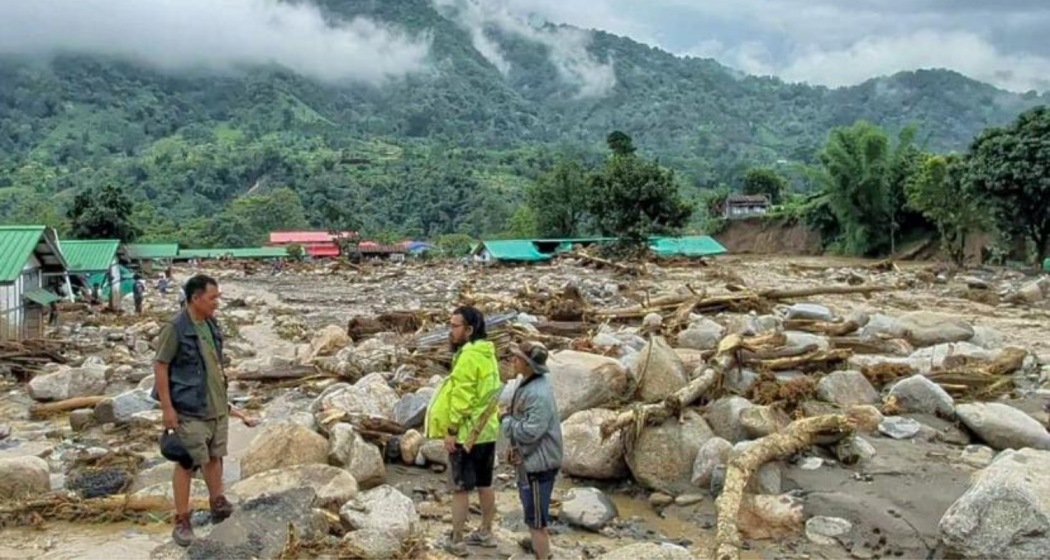
Relentless monsoon rains have caused widespread destruction across Arunachal Pradesh and downstream Assam, triggering flash floods, landslides, and major infrastructure damage. As of late June 2026, the disaster has exposed the Northeast’s growing vulnerability to extreme weather, with heavy rainfall in Arunachal Pradesh rapidly swelling rivers and flooding low-lying areas of Assam. Rescue operations are underway, high alerts remain in place, and state governments are working with central agencies as heavy rain continues.
The crisis intensified around June 24 after heavy rainfall, including 72.8 mm recorded within a few hours in Keyi Panyor district, triggered flash floods. In the Yazali circle of Papum Pare district, near the NEEPCO project colony in Possa village, floodwaters swept through residential areas, damaging or destroying at least 15-18 quarters. One woman was initially reported missing, and rescue teams later recovered bodies as the death toll in Arunachal Pradesh rose to at least three. Landslides also blocked roads, stranded travellers, and cut off connectivity in several districts. The Roing-Anini road in Lower Dibang Valley suffered severe damage.
The situation worsened on June 28 when a massive landslide at the Siji-Magi Block Point in Lower Siang district completely blocked the Siji River, known downstream in Assam as the Gai Nadi. The blockage created a natural dam, raising fears of a sudden flash flood if it collapsed. District administrations issued urgent advisories asking residents living along both riverbanks to evacuate low-lying areas, shift livestock to higher ground, and stay away from riverbanks. A dramatic video showed a biker narrowly escaping after debris from the landslide swept across the road. As of June 29-30, the blockage remained in place, although some water recession had been observed. Authorities continued to maintain high alerts because of ongoing rainfall.
In Assam, the worst impact has been reported from border districts, especially Dhemaji. Heavy upstream runoff from Arunachal Pradesh, including more than 220 mm of rainfall recorded in Pasighat within 24 hours, caused rivers to overflow and flood villages and farmland. Recent updates show that more than 15,000-16,000 people across dozens of villages in Dhemaji have been affected. Across Assam, floods have impacted around 45,000 people in hundreds of villages spread across seven districts. A railway bridge between Archipathar and Simen Chapari stations was damaged by erosion and floodwaters, forcing the suspension of train services. Authorities arranged alternative bus transport as villages became isolated, bridges were washed away, and erosion threatened homes.
The Assam State Disaster Management Authority (ASDMA) and the state government have issued high alerts for Dhemaji, Lakhimpur, Biswanath, and Sonitpur districts. People have been advised not to use small boats on the swollen Brahmaputra and its tributaries. Chief Minister Himanta Biswa Sarma and state ministers have carried out field inspections and directed officials to take immediate anti-erosion measures. The Indian Army and the Indian Air Force (IAF) are conducting rescue and relief operations, airlifting stranded people and delivering essential supplies. Union Home Minister Amit Shah has also reviewed the situation with state leaders and assured full support from the Centre.
The floods follow a recurring pattern in the Brahmaputra basin, where heavy orographic rainfall in the hills of Arunachal Pradesh quickly leads to flooding downstream in Assam. Experts say deforestation, fragile Himalayan geology, and climate change-driven monsoon patterns have increased the risks. The India Meteorological Department (IMD) has forecast continued heavy to very heavy rainfall, keeping authorities on high alert.
People in the affected areas continue to face severe hardship. In Arunachal Pradesh, survivors have described how floodwaters destroyed homes and livelihoods within minutes. In Dhemaji, residents said delayed evacuations led to losses of cattle and crops. Relief camps have been established, but reaching remote hilly and riverine areas remains difficult. Similar monsoon disasters have affected the wider Northeast in previous years, causing hundreds of deaths and affecting millions of people annually.