
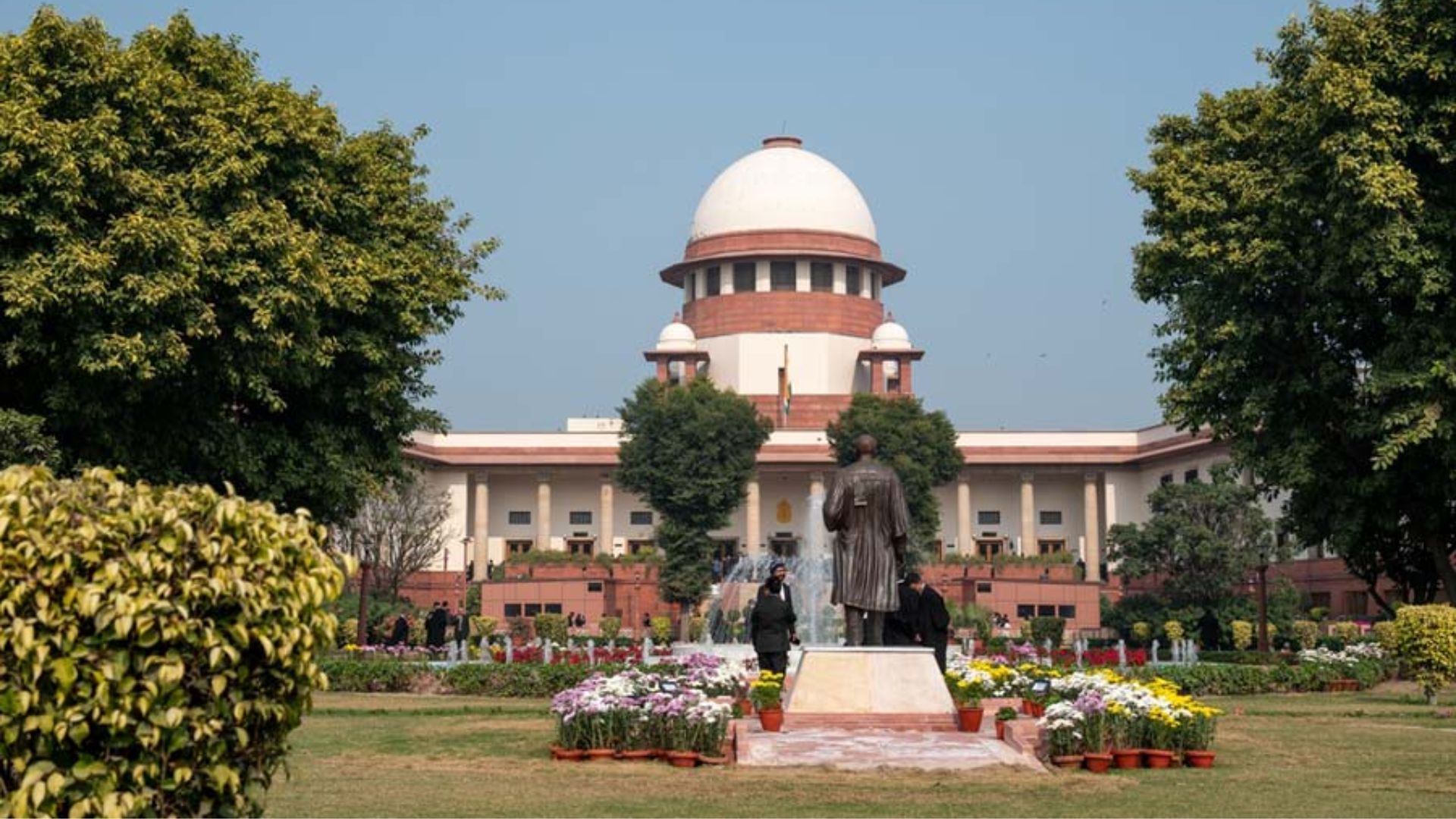
The Supreme Court of India backed a legal provision that requires prior permission before investigating public servants, saying it plays a key role in protecting honest officials from political harassment after a change in government.
What Is Section 17A?
The court discussed Section 17A of the Prevention of Corruption Act, 1988, which was added in July 2018. This section clearly states that no “enquiry or inquiry or investigation” can be started against a government official for actions taken in the line of duty without approval from the competent authority.
Justice K.V. Viswanathan, while addressing this point during the hearing, said that “honest officers who do not toe the line after a change in government will be protected.” He is part of the Bench led by Justice B.V. Nagarathna.
Petition Challenges Section 17A
The case was brought forward by the Centre for Public Interest Litigation (CPIL), a non-profit organisation, represented by senior advocate Prashant Bhushan. He argued that Section 17A undermines the very purpose of anti-corruption laws, as government bodies — who themselves may be accused — are given the power to approve investigations.
Bhushan said that only about 40% of Central Bureau of Investigation (CBI) cases receive prior sanction under this law. He pointed out that many state governments routinely deny approval, which hampers accountability. He suggested handing the sanctioning power to an independent authority instead.
He argued that “the government becomes a judge in its own cause,” and called for Section 17A to be struck down as unconstitutional.
Court Suggests a Balanced Approach
However, the Bench said it would not rush to reject the entire provision. Justice Viswanathan commented, “There are officers who give their life and soul to the country. How do we ensure that they do not become prey to frivolous prosecution for their official actions or recommendations made in the line of duty?”
Justice Nagarathna also stressed the need to avoid extremes. She remarked, “Honest officers must be protected while dishonest ones must be investigated. The former must not do their work with a Damocles sword hanging over their heads.” She added that if bureaucrats constantly fear prosecution, it could lead to “complete policy paralysis.”
She further explained that a law cannot be declared unconstitutional just because it is misused, saying, “The implementation of a provision on the ground is quite different from the question of its constitutionality. Ultimately, a balance has to be struck.”
Government Defends the Provision
Appearing for the Union government, Solicitor General Tushar Mehta and Additional Solicitor General Aishwarya Bhati argued in favour of Section 17A. They said that without this protection, anyone with a personal grudge could use NGOs to file false cases against public servants.
When Justice Viswanathan expressed concern that governments may protect their “blue-eyed boys and girls” by denying sanction, Mr. Mehta admitted, “That is true in all three branches of governance.”
He added that such instances could be handled by courts on a case-by-case basis, and warned against the judiciary stepping into the legislature’s role. He said, “He [Bhushan] cannot ask the Supreme Court to assume legislative functions.”
Final Decision Awaited
After hearing all arguments, the Supreme Court reserved its judgment, meaning the final verdict will be announced at a later date. The outcome is expected to shape the future of anti-corruption procedures and the balance between accountability and protection for public servants.