
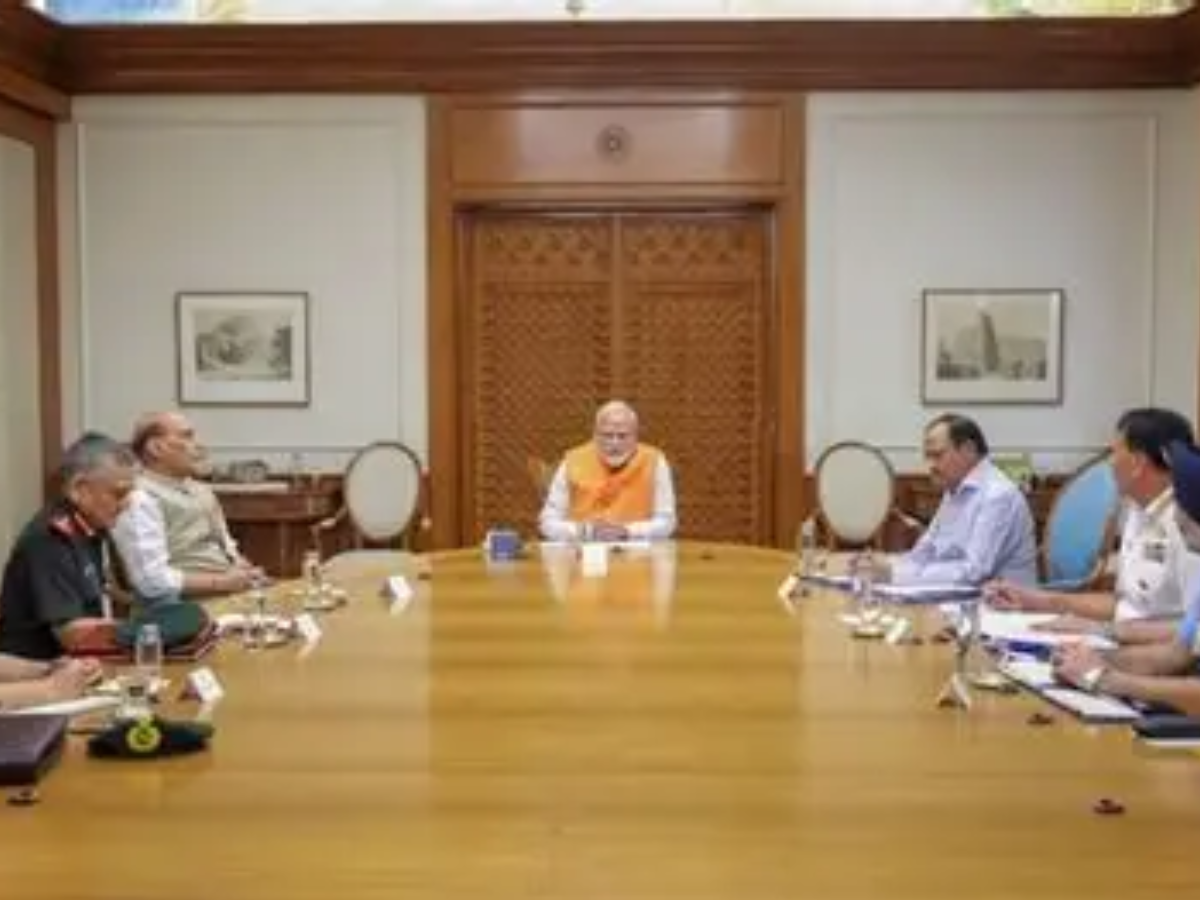
Air Chief Marshal Amar Preet Singh General Upendra Dwivedi and Admiral Dinesh Tripathi might well be different personalities; nevertheless, they share one undeniable commonality: the courageous ability to speak bluntly before the political leadership whenever national security is jeopardized.
ACM Singh is the ultimate test pilot. He “lives for the moment” and has little regard for political sensitivities. General Dwivedi is firmly steeped in Army traditions, most at ease among his troops, yet unhesitant to follow up with action. In contrast, Admiral Tripathi is unapologetically forthright, a naval strategist who barely stopped short of launching a strike on Karachi port on May 10 only for last-minute diplomacy to step in.
National Security Core
Where this military leadership reports to a formidable security team constituted by Prime Minister Narendra Modi, Defense Minister Rajnath Singh, NSA Ajit Doval, and Chief of Defense General Anil Chauhan. Each an expert in walking the strategic tightrope unclenched by bold decisions or their consequences.
In a most direct acknowledgment during the tense days of May 7-10, PM Modi praised the armed forces for their decisive action. Turning to Admiral Tripathi after calling off the BrahMos missile strike against Karachi, he was heard saying: “Your turn will come.” He remained resolute, even at the risk of provoking retaliatory action from Pakistan towards Gujarat.
ALSO READ: ‘Victory in Mind’: Army Chief Mocks Pakistan’s Claim After Operation Sindoor
May Conflict: Air, Land and Sea Impact
Some analysts dismissed ACM Singh’s remarks as hyperbole; however, intelligence sources confirm that Pakistan suffered significant losses, including F-16s destroyed on the ground, radar stations systemically shut down, and command networks disrupted. Precision artillery from the Indian Army compelled Pakistan to withdraw from positions along the LoC, whereas the Navy’s very presence forced the enemy’s vessels into safe havens like Gwadar.
Pakistani forces panicked and abandoned stations near the Line of Control because they were so afraid of the Indian Army’s M777 Excalibur shells and Warmate loitering ammunition.
Among other notable events was a long-range strike via the S-400 on a Pakistani AEW&C aircraft that effectively crippled airborne surveillance capabilities.
Road Ahead
While some critics insist that US pressure stopped the final wave of strikes, one BrahMos missile hit Bholari airbase on May 10, with mission objectives successfully completed. Given the nexus of Pakistan’s upper brass with past terror incidents, Indian intelligence expects fresh threats to emerge in the near future. Should that materialize, Indian Navy and Admiral Tripathi may be bestowed that decisive moment promised to them.
ALSO READ: Why Has the Modi Government Pulled Back the Income-Tax Bill 2025? Here’s What the Govt Says