
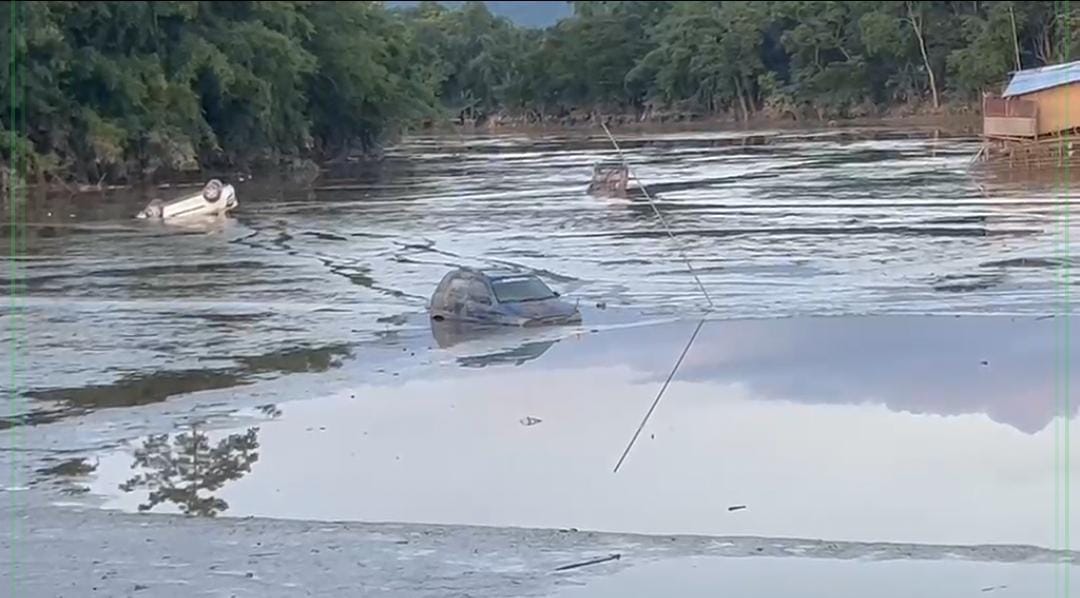
The death toll from this year’s monsoon floods in Assam rose to 68 on Monday, even as floodwaters started receding across the worst-affected districts of Upper Assam.
Charaideo remains the worst-hit district in the latest ASDMA assessment, with nearly 1.9 lakh affected people, followed by Sivasagar with over 1.5 lakh and Jorhat with around 1.4 lakh. The flood situation has improved from its peak earlier in the week, when more than seven lakh people across nine or more districts were affected and more than 850 villages were submerged. At present, only the Dhansiri (South) at Numaligarh continues to flow above the danger level.
State Parliamentary Affairs Minister Pijush Hazarika earlier told the Assam Assembly that the scale of flooding in Sivasagar, Charaideo and Jorhat was unprecedented, describing it as the worst in more than 60 years. Residents and local reports have also called it the most severe flood in 50 years or longer in living memory for many villages.
Sivasagar Deputy Commissioner Mridul Yadav described the recent deluge as the worst flood to hit the district in the last five decades. Addressing a press conference on July 26, Yadav said nearly four lakh people across 301 revenue villages had been affected, causing extensive loss of life, property and livelihoods. He said villages under three revenue circles were impacted, with the Nazira and Sivasagar Assembly constituencies emerging as the worst-hit areas. The district administration has confirmed 30 flood-related deaths, while seven people remain missing. Search operations are continuing to trace those unaccounted for.
Unlike the slow-moving river floods commonly seen along the Brahmaputra, this disaster struck with exceptional speed. Heavy rainfall between July 18 and 20 over Nagaland’s hill catchments, where Mokokchung recorded 493% above normal rainfall and other districts also witnessed massive excesses, combined with intense local rain in Charaideo, which recorded 436% above normal rainfall, and Sivasagar. Chief Minister Himanta Biswa Sarma said the rain began around 3 pm on July 18, and by 7 pm widespread devastation had already begun, leaving almost no time for evacuation.
The India Meteorological Department clarified that the event did not meet the technical definition of a cloudburst, which requires 100 mm or more rainfall in an hour, although the impact was comparable. Rapid runoff from the steep, partially deforested Naga hills, already saturated by earlier monsoon rains, flowed into Assam’s plains. The swollen Brahmaputra blocked the natural drainage of tributaries such as the Dikhow, Disang and Dhansiri, creating a damaging backflow effect. Experts and officials have also pointed to deforestation, mining-related excavation and siltation in upstream areas as factors that accelerated runoff and raised riverbeds.
The floods have caused extensive human and economic losses. Embankments were breached at several locations, roads and bridges were washed away or damaged, and thick layers of silt and mud now cover homes and agricultural fields as the water recedes. Livestock losses have reached the tens of thousands, with more than 88,000 domestic animals and poultry affected at one stage. Tea estates in the Nazira belt of Sivasagar suffered heavy damage as workers’ quarters, hospitals, schools and factories were submerged. In one incident, a pregnant tea garden worker delivered her baby inside a factory after floodwaters cut off access to medical facilities.
Relief operations have continued on a massive scale. According to Yadav, around 20,000 people were evacuated from inundated villages through coordinated efforts by the State Disaster Response Force (SDRF), National Disaster Response Force (NDRF) and local volunteers. A total of 60 SDRF and NDRF rescue boats, along with 62 indigenous country boats, were deployed to rescue stranded residents and shift them to safer locations.
The Army, NDRF, SDRF, fire services, police and civil administration have also rescued hundreds across Upper Assam. The Indian Air Force carried out dozens of sorties to air-drop relief supplies to villages cut off by floodwaters. As per the latest figures, 354 relief camps and distribution centres in four districts are sheltering more than 37,700 displaced people, while essential supplies including rice, dal, salt and mustard oil continue to be distributed.
In Sivasagar, the district administration has established more than 50 relief camps and relief distribution centres to shelter displaced families. While the first phase of relief distribution has been completed, the second phase is underway. Yadav said distribution of the Chief Minister’s Special “CM Family Kit” will begin shortly. The kits will contain essential household items and daily-use commodities to help affected families resume normal life.
For villages still inaccessible by road, the administration has launched aerial relief operations. Nearly 10,000 kilograms of food and essential commodities have been airlifted by helicopters and distributed among around 2,000 families stranded in remote locations. Helicopter sorties will continue until road connectivity is restored, the Deputy Commissioner said.
With floodwaters gradually receding, restoration work has gained pace. JCB excavators and Falkland machines have been deployed to remove mud, sand and debris, restore road connectivity and ensure the movement of relief materials. Chief Minister Sarma has directed state ministers to visit affected areas and oversee rehabilitation work. Electricity, suspended in many places as a safety measure, is being restored in phases after inspections. The state BJP has launched a ₹12-crore drive to provide clothing, including traditional mekhela-chadors, to affected women and children. Union ministers have described the situation as “very serious,” noting that Prime Minister Narendra Modi has been monitoring developments closely.
The Health Department has intensified preventive measures to check post-flood disease outbreaks. Adequate stocks of medicines have been maintained to tackle illnesses such as diarrhoea, cholera and skin infections. A total of 38 medical teams have been deployed across more than 200 relief camps and affected localities to provide treatment, conduct health awareness campaigns and monitor water quality.
Although the immediate flood crisis is easing, the recovery is expected to be long and challenging. Farmers have suffered major crop losses during a crucial period of the agricultural season. Repairs to embankments, roads, bridges and railway links are expected to take months. Public health concerns, including water-borne diseases and the increased risk of snake encounters in receding floodwaters, remain significant. Many families who had never faced such severe flooding were caught unprepared, while traditional community support systems that once helped people cope with smaller floods have weakened in some areas.