
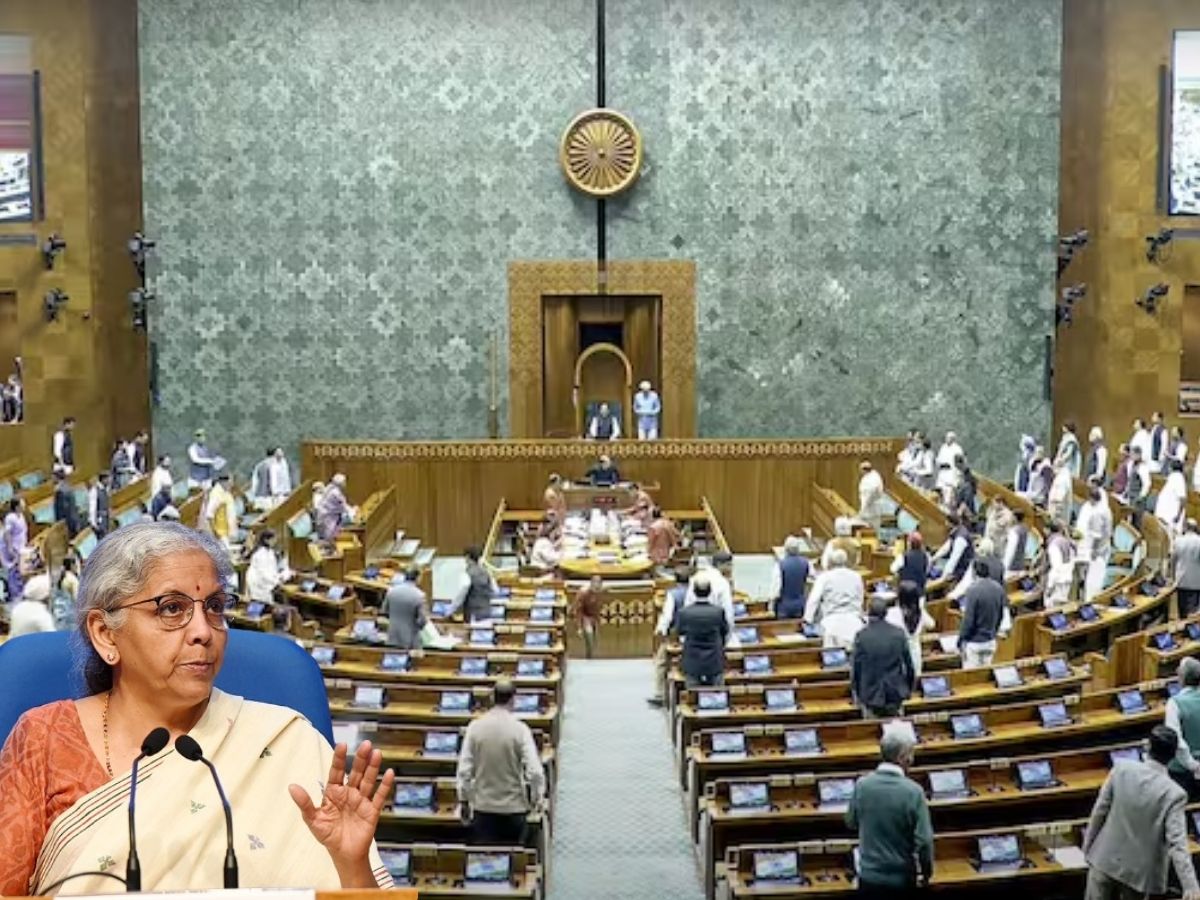
Parliament approved the Goods and Services Tax (Second Amendment) Bill, 2025, in continuation of the Winter Session, thereby aligning Manipur’s GST laws fully with India’s updated national GST system. This is not just a routine legal update, as the move is likely to impact lakhs of traders, small shop owners, service providers, and manufacturers in the state. This shall reduce disputes on taxation, make compliance easier, and also ensure that the basic structure of tax remains uniform all over the country.
The bill had first cleared the Lok Sabha and later returned from the Rajya Sabha without amendments. Since this is a Money Bill, it automatically became a law once it was passed by the Lok Sabha. That means all GST rules in Manipur now fully conform to the revised national GST framework.
GST Slab Restructuring: What It Means for Businesses
One of the key amendments is regarding the revision of tax rates under GST. The central government aims at a simpler structure comprising two major slabs, namely 5% and 18%. The reduction of tax categories is likely to facilitate easier invoicing and eliminate the confusion pertaining to the applicability of tax rates. With fewer slabs, businesses will have to spend less time classifying products under different GST brackets.
The majority of the amendments have focused on minimizing disputes relating to ITC and making return filing easier. Simplification has also been made in rules pertaining to credit notes, eligibility of ITC, pre-deposit for appeals, and filing of returns under GST. These changes would facilitate time-saving, avoiding errors, and reduction of litigation cases for businesspeople, especially small-scale enterprises.
Goods stored in SEZs and Free Trade Warehousing Zones shall not be considered as “supply” under GST. Hence, such products will not attract State GST. This is expected to support export-related operations and cut down past tax disputes, boosting warehousing activities.
Key Takeaways
-
The 56th GST Council meeting has introduced a new GST 2.0 structure, reducing tax slabs to 5%, 18%, and 40%, effective September 22, 2025, to make compliance easier and boost economic activity.
-
Several essential goods—such as dairy products, 33 critical medicines, and educational materials—now carry a 0% GST rate, and individual health and life insurance have been fully exempted.
-
Everyday-use items, agricultural products, and key medical equipment have been shifted to the 5% GST slab, while electronics, small cars, two-wheelers, and home appliances will now fall under the 18% slab.
-
“Sin goods,” including pan masala, aerated and caffeinated drinks, and luxury vehicles, will now attract the highest slab of 40% GST.
-
With the exception of tobacco, all these new GST rates will come into effect on September 22, 2025, accompanied by unified notifications covering exemptions, rules, and refund procedures.
-
This updated GST guide for 2025 explains the revised tax structure and lists product-wise rates to help businesses stay aware and compliant.
What GST Rate Means
A GST rate is the percentage of tax applied to the sale of goods or services under CGST, SGST, and IGST laws.
-
CGST and SGST each represent half of the IGST rate.
-
Every GST-registered business must issue invoices that show the GST charged on the taxable value of goods/services.
In simple terms, GST is calculated by multiplying the taxable value by the applicable GST percentage.
For example, if a GST of ₹1,800 is charged on a taxable amount of ₹10,000, the tax rate applied is 18% GST.
Stronger steps to prevent tax evasion
The government will introduce a product-based unique ID tracking system to deal with the problem of fake invoices and fraudulent ITC claims. Thus, every item will have some identifiable code, which would be difficult to replicate by any evader to create fake invoices. This shall increase transparency and thereby help protect the interests of honest businesses.
What Businesses Can Expect Going Forward A smaller number of slabs in GST will make generating invoices easier. The more clearly defined ITC rules and simpler return processes will lessen day-to-day compliance burdens. SEZs and warehousing units will enjoy lower tax pressure. And more importantly, with stronger tracking mechanisms, the overall market will be more transparent, thus giving genuine businesses a level playing field.