
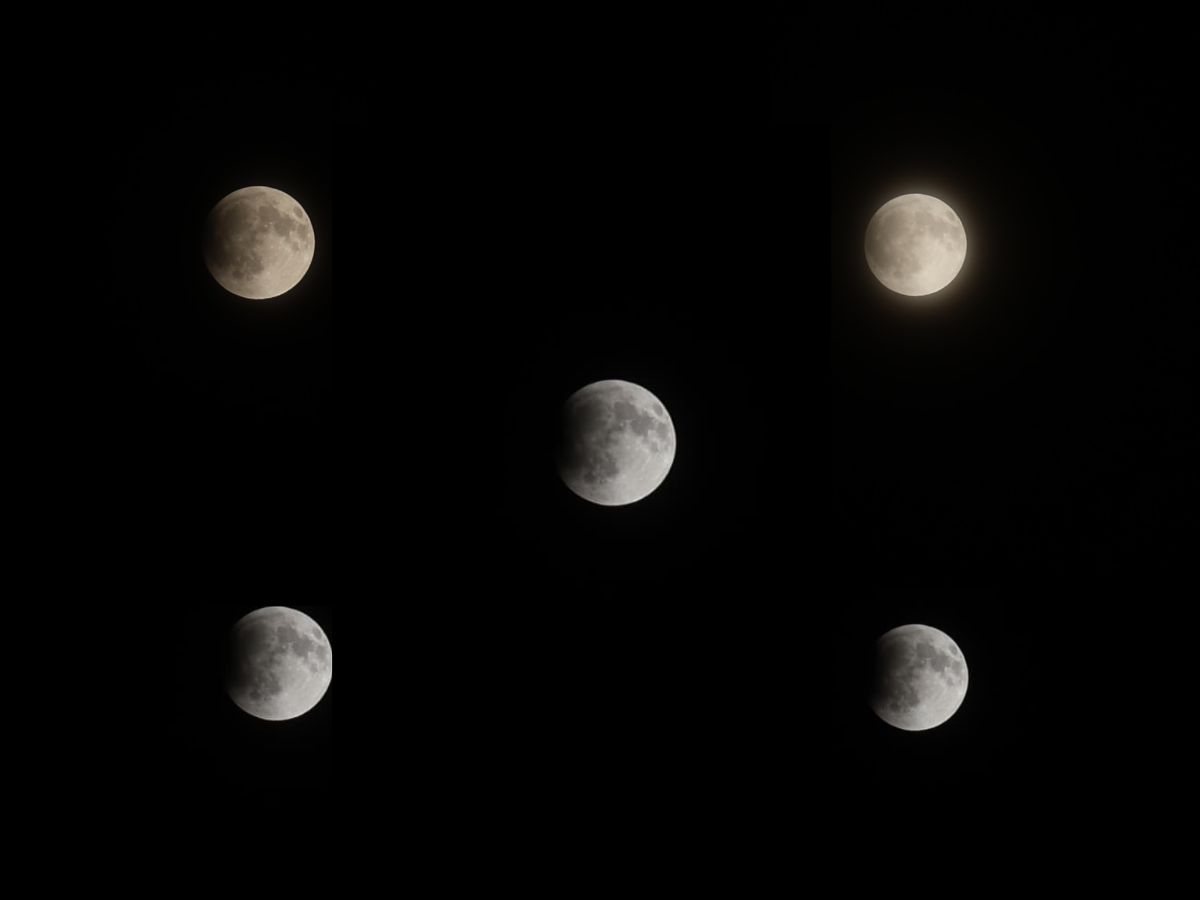
The celestial event of the year is now underway. Chandra Grahan, the last total lunar eclipse, has begun, covering the moon with a striking shadow.
This magnificent sight, which is observable throughout India and many other countries, is significant from an astrological and astronomical standpoint. We will bring you live updates as it unfolds.
What is Happening Right Now?
Officially, the moon has started its passage through the shadow cast by the Earth. The initial penumbral phase started subtly, but the visible, partial eclipse began at 9:58 PM IST, marking the moment the moon started to darken noticeably. The major event, the “Blood Moon” or total eclipse, is drawing near.
When are the Key Timings?
For viewers across India, the eclipse follows a precise celestial schedule.
The following are crucial times to be aware of:
- Visible Eclipse Begins: 9:58 PM IST (The moon enters the Earth’s dark umbral shadow)
- Total Eclipse (Blood Moon) Begins: 11:01 PM IST (The moon is completely engulfed, turning red)
- Peak of the Eclipse: 11:42 PM IST (The maximum point of the eclipse)
- Total Eclipse Ends: 1:23 AM IST (The moon begins to exit the darkest shadow)
- Eclipse Completely Ends: 1:26 AM IST (The moon fully exits the shadow)
The entire event, from the first subtle hint to the final departure, will last a breathtaking 3 hours and 28 minutes.
Where is the Eclipse Visible?
Tonight’s eclipse is not just an Indian event but a global spectacle. The full total lunar eclipse is visible to the naked eye across all of India. Internationally, it can be witnessed from:
- Antarctica
- Australia
- Asia
- Europe
- The Pacific and Indian Oceans
- Parts of the Eastern Atlantic
What is the ‘Blood Moon’?
Total eclipse is the most anticipated phase, during which the moon will change into a coppery-red “Blood Moon.” But what causes this?
This happens because while the Earth blocks direct sunlight from reaching the moon, our planet’s atmosphere bends and scatters the sun’s rays. Longer wavelengths (oranges and reds) are reflected onto the moon’s surface, producing the breathtaking crimson glow, while shorter wavelengths (blues) are filtered off.
What is the Sutak Kaal?
In Hindu traditions, the period before an eclipse is known as Sutak Kaal, a time considered inauspicious. The Sutak period started sooner, at 12:58 PM IST, for this lunar eclipse.
During this time, it is traditional to:
- Avoid undertaking any new auspicious work, journeys, or religious ceremonies.
- Refrain from cooking or consuming food.
- Close the doors of temples.
These are religious beliefs, and adherence is a matter of personal faith.
Also Read: Next Total Lunar Eclipse After 2025: Dates & Details You Should Know
What Can We Expect to See?
Viewers are in for a dynamic show. During the eclipse, the moon is anticipated to undergo three color changes:
- Initial Phase: A light, dusky dimming.
- Mid-Phase: A light orange hue.
- Total Phase: The full, deep red “Blood Moon.”
Whether using a telescope, binoculars, or the unaided eye, the eclipse is a stunning and safe spectacle. Take a step outside and observe this amazing cosmic dance by gazing up at the sky.
Note: This is a developing story. Updates may follow.