
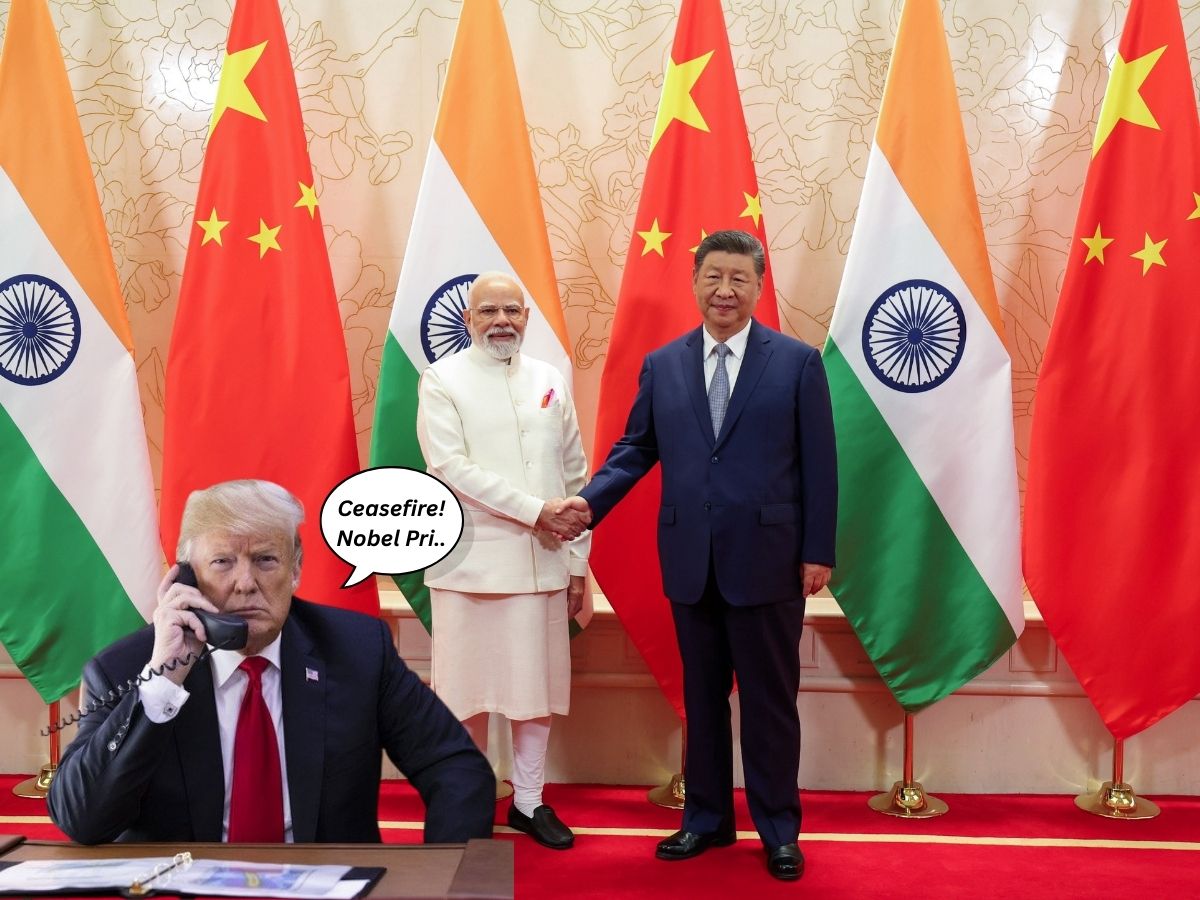
The unexpected outcome of recent US policies under President Donald Trump has been a fast-evolving bromance between India and China, ironically the diplomatic ‘ceasefire’ for which Trump’s aggressive narratives deserve the due credit. Amid tweets and trade threats, Trump’s administration branded India a “one-sided disaster” in economic ties, imposed punitive 50% tariffs on Indian exports, and openly denounced New Delhi’s purchase of Russian oil. Although meant to bully India into line, such actions instead triggered a strategic realignment: India and China joined forces to counterbalance U.S. pressure, with bilateral talks stepped up after decades of coldness.
ALSO READ | Semicon India 2025: PM Modi to Participate in CEO Roundtable Today
US ‘Bullying’ and the Evolving Dynamic
Rhetoric by Trump, referring to the U.S.-India trade relationship as “one-sided” and blaming India for sabotaging American interests has vitiated relations with New Delhi. Faced with tariffs, public rebukes, and the risk of marginalisation, Indian policymakers have r-calibrated priorities. Notably, Prime Minister Modi’s recent summit with Chinese President Xi Jinping and Russian President Putin showcased coordinated photo ops and statements emphasising Asia’s new multipolar order. This visible reset is widely interpreted as a response to Washington’s disregard, aligning two historic rivals against perceived U.S. ‘bullying’.
Experts observe that China regards the trade war as a chance, energetically wooing India with trade concessions, border management talks, and such gestures as reviving direct flights and relaxing export curbs. Modi, meanwhile, seems determined to demonstrate that India won’t be bullied into backing any one global power but will instead pursue strategic autonomy and diversified alliances.
ALSO READ | 8th Pay Commission: Which States to see Early Roll-out?
Trump’s Ceasefire- Unintentional but Effective
Ironically enough, it was Trump’s aggressive tactics that served to thaw tensions on the India-China frontier, with both sides now seeing mutual interest in regional stability and economic pragmatism. Direct flights have been resumed; border dialogues became more active; and earlier stalled discussions on technology, trade, and infrastructure have been restored. China’s ambassador openly branded the U.S. a “bully,” reflecting Beijing’s new conciliatory attitude towards New Delhi.
This new entanglement does not remove the history of hostility and suspicion, nor the intricacies of India’s role in the U.S.-led Quad and other international pacts. It does alter the equation, however, with Delhi and Beijing being able to tell Washington that other alliances are possible if American policies continue to be adversarial.
ALSO READ | Amid ‘US-Forced’ Sino-India Reset, Can Bharat trust China?
Hints at the Evolving World Order
What results is a multipolar environment- with India and China as pragmatic neighbours seeking to co-operate in the face of American aggression. As Delhi shows signs of being receptive to communication and Beijing eases up, the “ceasefire” is a lesson in geopolitics: bullying tactics might unite erstwhile enemies into cohorts, inadvertently giving rise to new alliances in Eurasia.