
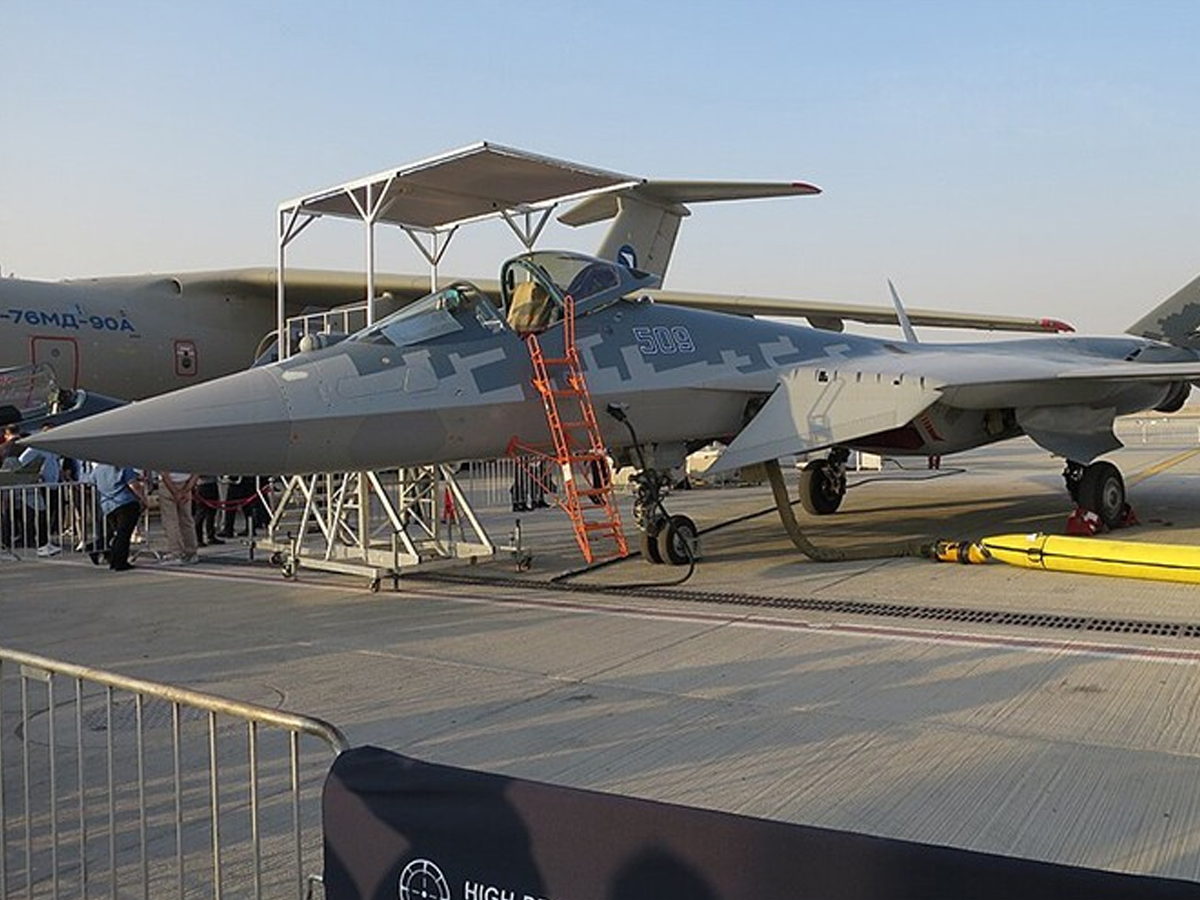
As New Delhi prepares for a major diplomatic visit by Russian President Vladimir Putin, Moscow has made a sweeping defence offer. Russian state-owned conglomerate Rostec told India that it would provide full access to the fifth-generation Su-57 stealth fighter jet technology — including engines, sensors, stealth materials, and production know-how.
According to the Rostec CEO, this proposal is “completely acceptable” to Russia if India demands it. Under the plan, India could first import the aircraft and then shift production to Indian soil in stages.
Su-75 Checkmate: A Lightweight Stealth Option on the Table
Alongside the Su-57 offer, Russia is reportedly offering the single-engine Su-75 Checkmate stealth fighter to India. Defence analysts believe that the Su-75 could fill India’s tactical requirement for a light/medium stealth aircraft at an affordable cost.
If accepted, local manufacture of Su-75 jets could not only meet India’s immediate air-power needs but also open the door for possible exports, similar to the export success of other Indo-Russian defense collaborations.
Why This Offer Matters: Technology, Sovereignty, and Strategic Edge
This proposal marks a rare instance where a major supplier offers full technology transfer rather than just the sale of hardware. For India, it could mean:
- Independence in building and maintaining advanced stealth jets.
- Access to critical components: engines, AESA radar, stealth coatings, and avionics, often restricted by Western nations.
- Long-term strategic self-reliance: indigenously produced fighters, less dependency on foreign suppliers.
Officials in Moscow emphasised that Russia stands ready to support India’s defence requirements with full transparency, even if India asks for more advanced systems like additional air-defence networks or stealth capabilities.
Indian Defence Needs: Where Su-57 & Su-75 Fit In
India has been developing its own stealth jet — the AMCA —, but that project faces long timelines and technical challenges. The Russian offer of ready-made Su-57 jets and potential Su-75 deliveries could fill the gap in the medium term. The Su-75, designed for light/medium tactical roles, could complement heavier jets like Su-57 or AMCA and offer flexibility for different mission profiles. Retired Indian Air Force officers note that combining a heavy stealth jet and a lighter counterpart makes strategic sense for India’s varied threat environment.
What’s Next: Diplomacy, Negotiations, and Strategic Decisions
The timing — just ahead of Putin’s visit to India in December 2025 — suggests that New Delhi and Moscow could finalise a framework agreement soon. India will need to evaluate several aspects: cost, transfer-of-technology conditions, maintenance infrastructure, and strategic autonomy. If accepted, this deal could reshape India’s air power and set a new benchmark for international defence technology cooperation.
For Russia, the proposal signals renewed trust and a desire to deepen long-term defence ties with India, especially as global geopolitics shifts and Western arms transfers become more restrictive.