
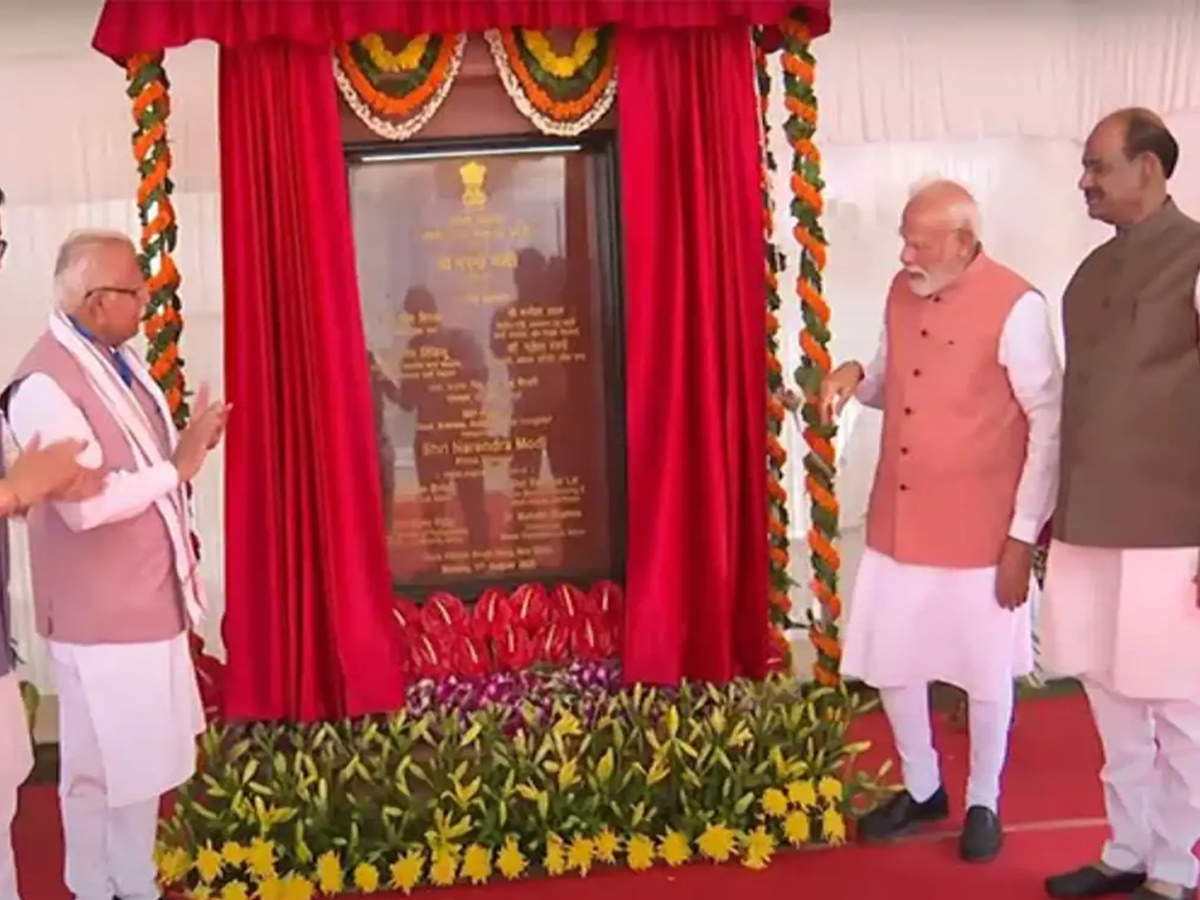
Prime Minister Narendra Modi inaugurated 184 newly built Type-VII multi-storey flats for Members of Parliament (MPs) at Baba Kharak Singh Marg in Delhi on Monday. The modern housing project aims to solve the acute shortage of quality residences for MPs while promoting sustainable urban living.
The government opted for vertical housing due to the limited land available in the national capital. This approach maximises land use while reducing long-term maintenance costs. Each flat offers around 5,000 square feet of carpet area, with separate sections for offices, staff quarters, and family living spaces.
A government release noted that these flats are not only spacious but also exceed the size of Type-VIII bungalows — the top category of government housing. The Times of India, citing a source, reported: “These flats have more space than the Type-VIII bungalows, which comprise the top category.”
PM Modi Highlights Symbolism, Cost Savings in New MP Housing Project
Prime Minister Narendra Modi said he had the privilege of inaugurating the new residential complex for Members of Parliament, with its four towers named after India’s great rivers — Krishna, Godavari, Kosi, and Hooghly.
He noted that while most would appreciate the symbolic naming, “some people will feel uncomfortable with Kosi as the name of a tower. They will not view it as a river, but rather through the lens of the Bihar elections.”
The Prime Minister assured that the new residences would allow MPs to work without housing concerns, as over 180 of them will now live together in the multi-storey buildings. Highlighting cost savings, he said ministries functioning from rented buildings cost the government nearly ₹1,500 crore annually, and a similar financial burden existed due to the shortage of MP housing.
Modi added that no new MP residences were built from 2014 to 2024, but under his government, the work was taken up as a mission, resulting in around 350 residences being constructed since 2014.
A Blend of Comfort and Functionality
The new residential complex has been designed as a self-sufficient facility with modern amenities to meet both personal and professional needs of MPs. A dedicated community centre within the premises will serve as a venue for social gatherings and official events.
ALSO READ: After Trump’s ‘Dead Economy’ Jibe, Modi Hails India as Fastest-Growing
The entire complex is Divyang-friendly, ensuring inclusivity in design. It is equipped with a robust security system for residents’ safety.
PM Modi’s Gesture and Interaction with Workers
As a sign of development and sustainability, Prime Minister Modi planted a Sindoor sapling on the property during the inauguration. Additionally, he engaged with sramajeevis, or laborers, who were essential to the building process.
The complex satisfies the National Building Code (NBC) 2016 and has a 3-star green rating from GRIHA. Advanced waste management systems, energy-efficient fixtures, and renewable energy systems are examples of environmentally friendly characteristics. These actions are intended to reduce operating expenses and conserve resources.
The government’s press statement states that monolithic concrete with aluminum shuttering technology is used to construct the buildings. Every structure was constructed by contemporary structural requirements and is earthquake-resistant.
MUST READ: ‘Your turn will come’: PM Modi to the Armed Forces Decisive Moves