
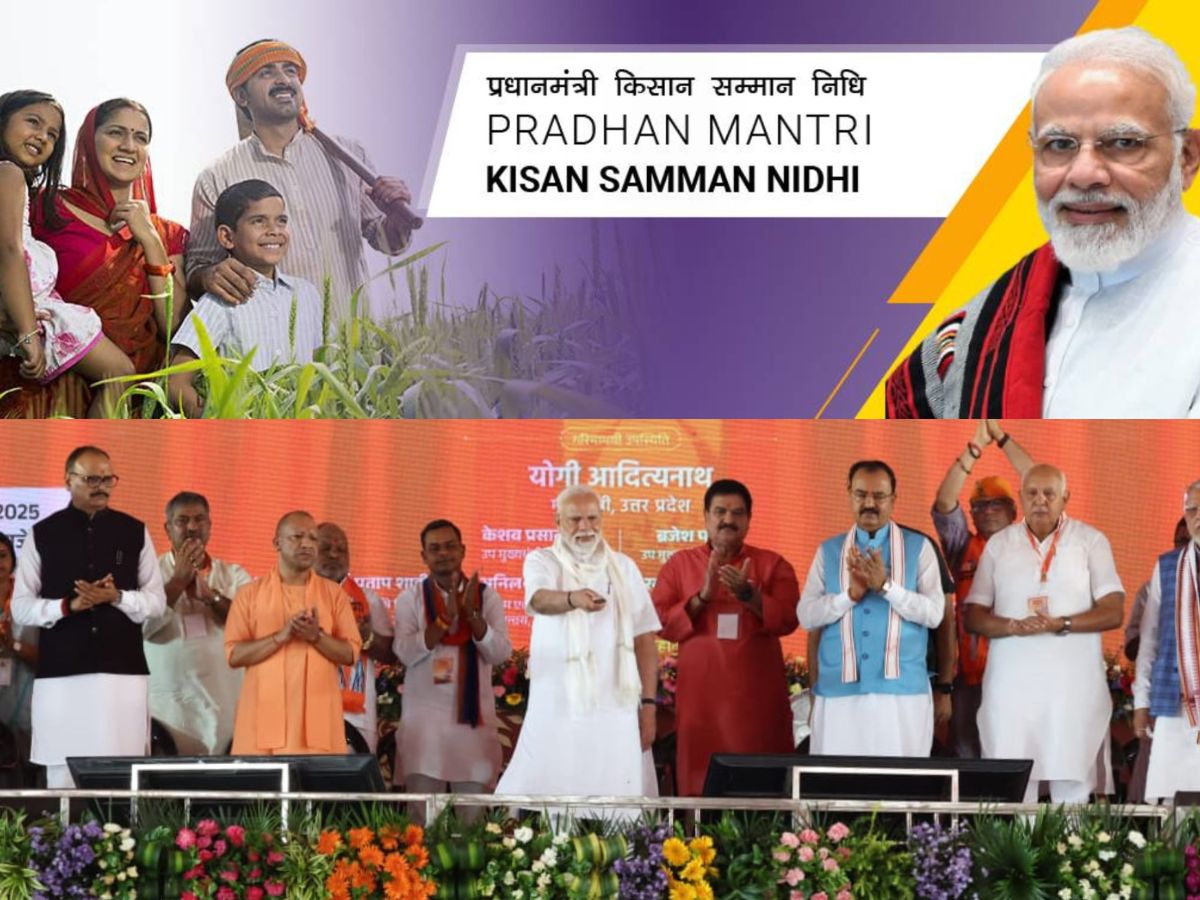
The Pradhan Mantri Kisan Samman Nidhi (PM-Kisan) Yojana is a Union Government’s flagship scheme introduced in February 2019 with the aim of providing money to crores of small and marginal farmers of the nation. In this scheme, the eligible farmers are given direct income support to address their farm and family expenditures in order to improve their livelihood and ensure farm sustainability. The scheme’s second (of three) instalment of the year and overall 20th instalment had been released last month.
Recent Developments and Expected
In August 2025, the government had released the 20th instalment of the PM-Kisan scheme, crediting over ₹20,500 crore directly into the bank accounts of over 9.7 crore farmers in India. The next instalment i.e. 21st instalment is to be released by the end of this year, around November-December. The scheme has transferred about ₹3.69 lakh crore cumulatively till date, reflecting its extensive reach and popularity among farming households.
Overview of PM-Kisan Yojana
For every eligible farmer family, a yearly financial gain of ₹6,000 is provided under the PM-Kisan scheme. The amount is paid in three equal instalments of ₹2,000 each to be transferred directly into the Aadhaar-linked bank accounts of beneficiary farmers via the Direct Benefit Transfer (DBT) mode. The program is geared mainly towards small and marginal farmers who constitute the backbone of India’s agrarian economy, extending timely finance to temper reliance on informal sources of credit and promote the acquisition of inputs like seeds, fertilisers, and pesticides.
ALSO READ | New GST Implementation Date: Check Latest Changes From Slabs to Sector-specific Rates
Eligibility and Registration Process
For benefits under the PM-Kisan Yojana, farmers need to possess cultivable landholdings under their names and should not be pensioners or income tax payers up to a given limit. The registration procedure is facilitated through the official PM-Kisan portal, on which farmers can apply by providing Aadhaar number, land documents, and bank account information. The scheme also includes features like e-KYC to authenticate beneficiaries and ensure support reaches actual farmers without middlemen.
ALSO READ | Voter Adhikar Yatra: Confidence or Arrogance? | Progress Report
Effect on Farmer Welfare
The PM-Kisan scheme is pivotal in supporting farmers’ incomes and enhancing farm productivity by facilitating timely access to capital. This helps curb their dependency on expensive informal credit, avoiding debt traps. Besides, the direct benefit transfer promotes financial empowerment and inclusivity, particularly for vulnerable farmers in agriculture. Agrarian large-population states like Uttar Pradesh, Madhya Pradesh, and Maharashtra have seen extensive beneficiary coverage, indicative of the wide outreach of the scheme.
Comparison with State-Level Schemes
Though PM-Kisan offers ₹6,000 per year, states have launched complementary schemes giving higher monetary support to farmers. Odisha’s KALIA scheme and Telangana’s Rythu Bharosa Scheme, for instance, give more money directly into the account of farmers, fulfilling area-specific requirements and complementing benefits under the central scheme. These state schemes complement PM-Kisan in extending support to farmers, making the safety net stronger in agriculture.
ALSO READ | Institutional Activity: DIIs and FIIs Tangled in Balancing Each-other
In short, the PM-Kisan Yojana is a path-breaking scheme offering timely and direct compensation to Indian farmers, facilitating a guaranteed source of income underpinning rural prosperity and farm sustainability. Through emphasis on transparency and inclusivity, the scheme remains a key instrument in India’s drive to empower its farming community and foster farm growth.