
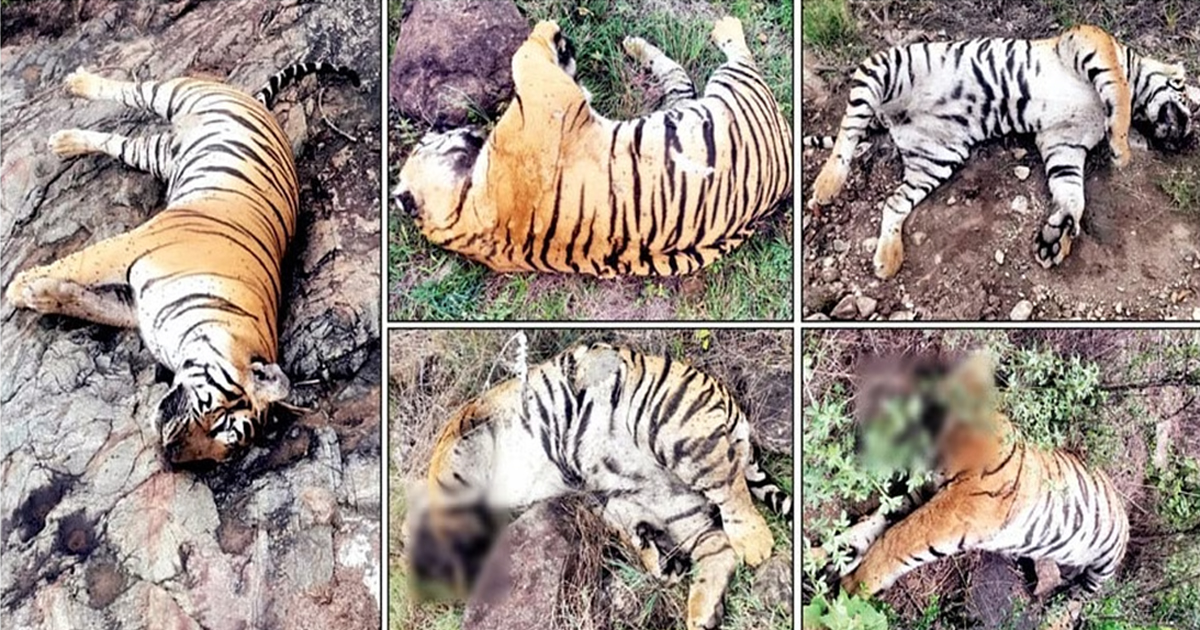
Days after the startling poisoning of five tigers at Male Mahadeshwara Hills (MM Hills) Wildlife Sanctuary, the Karnataka government has ordered forest officers to impose a total prohibition on livestock grazing within the protected forest region. The decision comes after expert recommendations in a report following an investigation into the incident that took place in June 2025.
Forest Minister Eshwar Khandre made the order on Tuesday, writing to the Additional Chief Secretary (Forest), requesting that it be done quickly.
“The adjacent state of Tamil Nadu has already implemented a full ban on grazing cattle within forest boundaries. Likewise, to protect the wildlife zones and prevent any further disputes, we wish to impose a ban on grazing within the forest,” Khandre said to TOI.
Livestock Endangers Wildlife Habitat and Escalates Conflict Probability
The letter by the minister mentioned several ecological grounds on which the ban had been imposed. Cattle, buffaloes, goats, and sheep grazing greatly impair the coverage of grass, denying herbivorous wildlife forage and increasing the probability of disease transmission from domestic animals to wild ones.
“If we let large herds of livestock graze within protected forests, it would not only affect grass cover within forests but also open the door to various ecological challenges that stand in the way of conservation. This would also deny herbivore animals their fodder,” he said.
Conservationists have long cautioned that unauthorized grazing is dangerous to the fragile equilibrium of forest communities. Infected domestic livestock, they contend, can serve as a vector for spread of contagious diseases among wild populations.
Prohibiting Grazing to Avoid Future Human-Wildlife Conflicts
Khandre also pointed out that overgrazing depletes green cover, which may cause soil erosion and disturb water flow to rivers. This, in turn, affects water and food availability for wild animals, pushing them towards human habitats and enhancing the chances of encounter.
“This lack of water and grass for wildlife will automatically find expression in possible human-wildlife conflict, leading to loss of lives and property. If shepherds lose their lives in such wildlife attacks, they are not even compensated by the department,” he added.
Cross-Border Grazing Contributes to Pressure on Forests
Khandre cited a 2022 Madras High Court ruling prohibiting cattle grazing in Tamil Nadu forest areas. Ever since, several villages bordering Karnataka have been shifting their herds across state borders into Karnataka forests, putting greater pressure on protected zones.
After the ban, some of the villagers who reside near the Karnataka border venture into the forests here to graze their cattle and other animals. For that reason, in the spirit of preserving the forests, we are proceeding with the enforcement of a ban,” the minister said.
The forest department will, over the next few days, release detailed guidelines to enable the implementation of the ban on grazing.