
People planning to drive into Delhi are being advised to check their vehicle’s emission standards. From Thursday, only vehicles with BS-VI engines will be allowed to operate in the national capital under Delhi’s strict anti-pollution rules. Fuel stations will also refuse fuel to vehicles that do not carry a valid Pollution Under Control (PUC) certificate.
Nearly 12 Lakh Vehicles to Be Affected
The new restrictions are expected to impact around 12 lakh vehicles entering Delhi every day from nearby cities such as Gurugram, Ghaziabad, Faridabad and Noida. Official data shows that more than four lakh vehicles from Noida, around two lakh from Gurugram, and nearly 5.5 lakh from Ghaziabad will be barred from entering the capital.
To enforce the rule, Delhi has installed automatic number plate recognition (ANPR) cameras at fuel stations. These cameras help identify vehicles that do not have valid PUC certificates.
Rules to Remain During GRAP Stage IV
The measures were announced on Tuesday by Delhi Environment Minister Manjinder Singh Sirsa. He said the restrictions will continue as long as Stage IV of the Graded Response Action Plan (GRAP) remains in force in the city.
Why the Government Is Tightening Pollution Norms
The decision comes as Delhi battles its annual winter smog crisis. As temperatures drop, pollutants remain trapped close to the ground, leading to a sharp decline in air quality. Officials say that in areas with heavy traffic, vehicles contribute up to 40 per cent of particulate pollution. Reducing the movement of high-emission vehicles during severe pollution periods is seen as essential to protect public health.
Massive Enforcement Drive Planned
To ensure compliance, around 580 police personnel will be deployed for vehicle checks across the city. They will be supported by 37 enforcement vans placed at 126 checkpoints. In addition, teams from the Transport Department, Municipal Corporation and Food Department will be stationed at petrol pumps to monitor violations.
Delhi Chokes Under Hazardous Smog
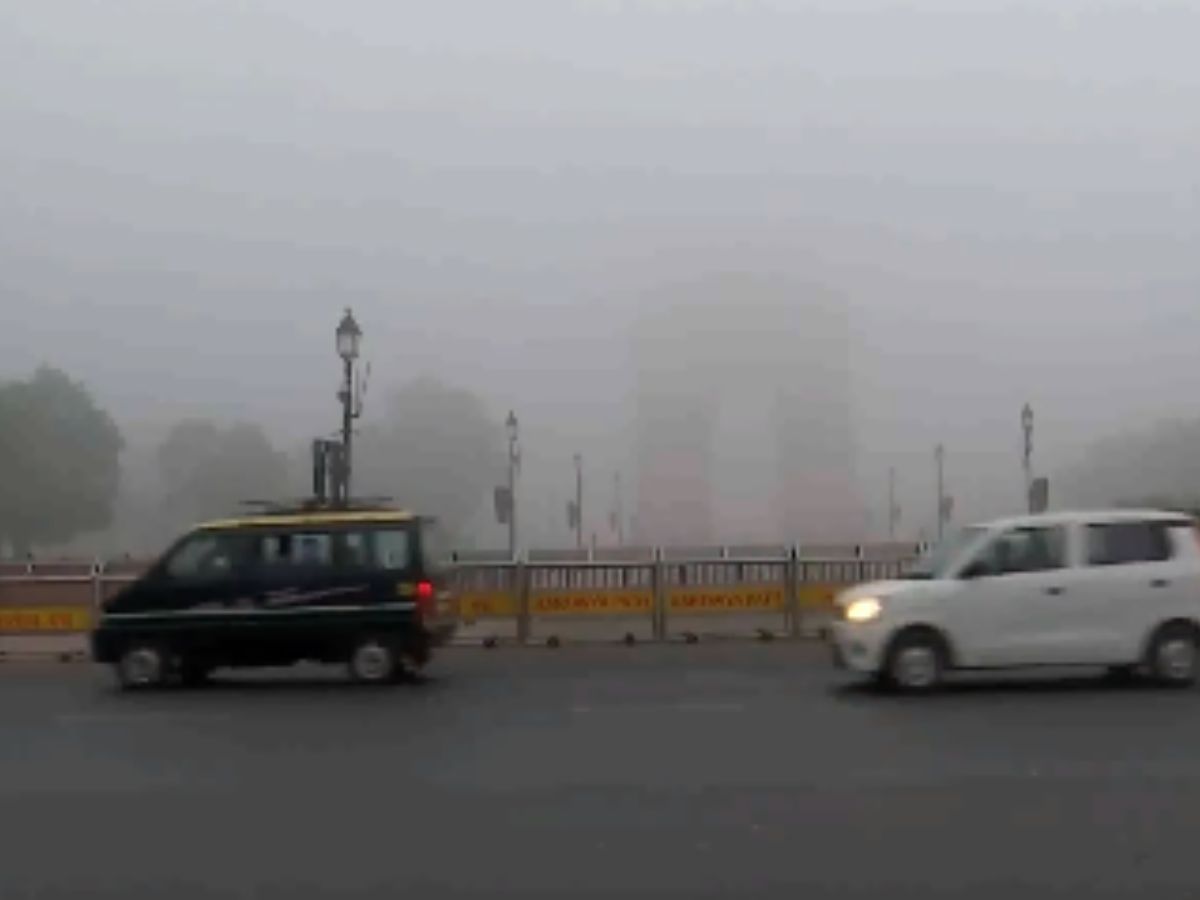
On Thursday morning, a thick blanket of toxic smog covered several parts of Delhi, reducing visibility in areas such as Najafgarh. Data from the Central Pollution Control Board’s Sameer app showed Delhi’s AQI at 356 at 6 am, placing it in the ‘very poor’ category.
Visuals around India Gate this morning as a layer of toxic smog blankets the city; GRAP 4 invoked in the national capital. AQI (Air Quality Index) around the area is 344, categorised as ‘Very Poor’, as claimed by CPCB (Central Pollution Control Board
Worst-Hit Areas in the Capital
Anand Vihar recorded the highest AQI at 415, falling under the ‘severe’ category. It was followed by Vivek Vihar (410), Jahangirpuri (405), Rohini (400), ITO (399), Mundka (398) and Ashok Vihar (395). Najafgarh recorded an AQI of 284, classified as ‘poor’.
Work-From-Home Push to Reduce Traffic
Alongside vehicle restrictions, the Delhi government has directed private offices to operate with a maximum of 50 per cent staff. The move aims to reduce road traffic and limit vehicular pollution during this critical phase of poor air quality.
Also Read: Why did the Supreme Court withdraw protection for old vehicles in Delhi-NCR?