
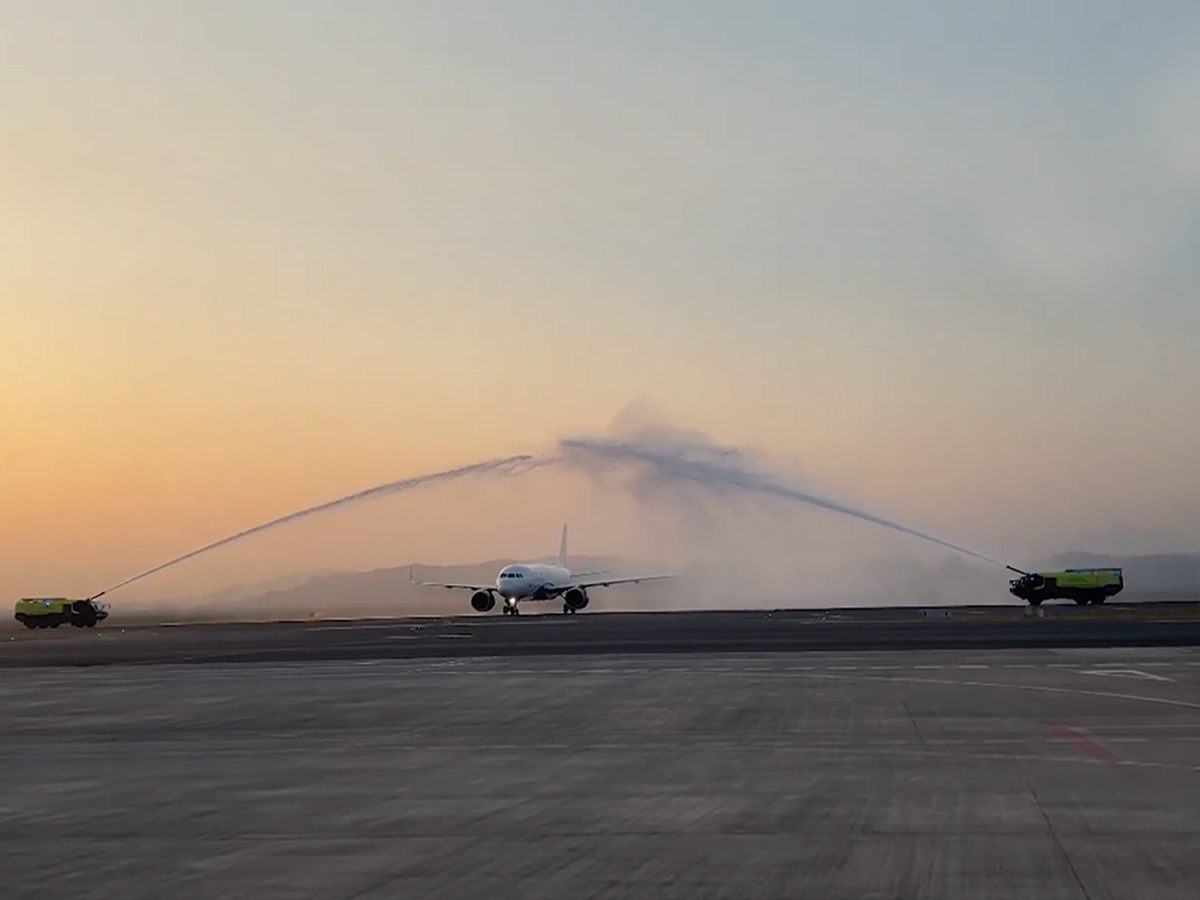
Navi Mumbai International Airport (NMIA) officially opened its doors to commercial operations on Thursday morning. The first flight to land was IndiGo flight 6E460 from Bengaluru, which touched down at 8 am. Fire trucks greeted the aircraft with a ceremonial water cannon salute, a traditional aviation practice celebrating milestone landings.
The airport’s inaugural departure took place shortly after, with IndiGo flight 6E882 to Hyderabad leaving at 8:40 am. Staff celebrated the launch with a cake-cutting ceremony and a coconut-breaking ritual, a symbol of good luck and auspicious beginnings.
“The airport is here to cater to all passengers,” said Jeet Adani. “From the food to the art to the hospitality, everything has been carefully curated, keeping in mind our passengers.”
A Journey of Nearly Eight Years
The idea for NMIA was first proposed in 1997 by Maharashtra’s City and Industrial Development Corporation (CIDCO). Prime Minister Narendra Modi laid the foundation stone in 2018, and the airport was inaugurated by him earlier this month.
Adani Airports Holdings Limited, in partnership with CIDCO under a Public-Private Partnership (PPP), led the construction and operational readiness. Despite challenges, including the pandemic, the airport progressed steadily toward its commercial launch.
“A new era for Indian aviation takes shape. After years of planning and execution, Navi Mumbai International Airport stands ready to welcome its first flight,” the Adani Group shared on social media.
Designed for Modern Travelers
NMIA is designed to handle up to 90 million passengers annually at its final stage, offering a mix of cultural design and modern architecture. Inspired by India’s national flower, the lotus, the terminal integrates sustainable features and advanced passenger facilities.
The airport aims to serve all types of travelers, from first-time flyers to frequent business passengers, offering enhanced comfort, technology, and amenities.
Easing Pressure on Mumbai Airport
The opening of NMIA is expected to reduce congestion at Chhatrapati Shivaji Maharaj International Airport, Mumbai’s current primary airport. The new facility provides extra capacity for domestic and international flights, enhancing the Mumbai Metropolitan Region’s connectivity.
With modern infrastructure, improved logistics, and increased flight options, NMIA is poised to become a key hub for aviation in western India.
Looking Ahead: Growth and Connectivity
Officials hope NMIA will unlock new economic opportunities, boost tourism, and create jobs across the region. The airport’s design and operations reflect India’s commitment to modern aviation standards and sustainable development.
As the airport ramps up operations, passengers can expect smooth travel, modern amenities, and faster connections, strengthening Mumbai’s position as a major air travel hub in the country.