
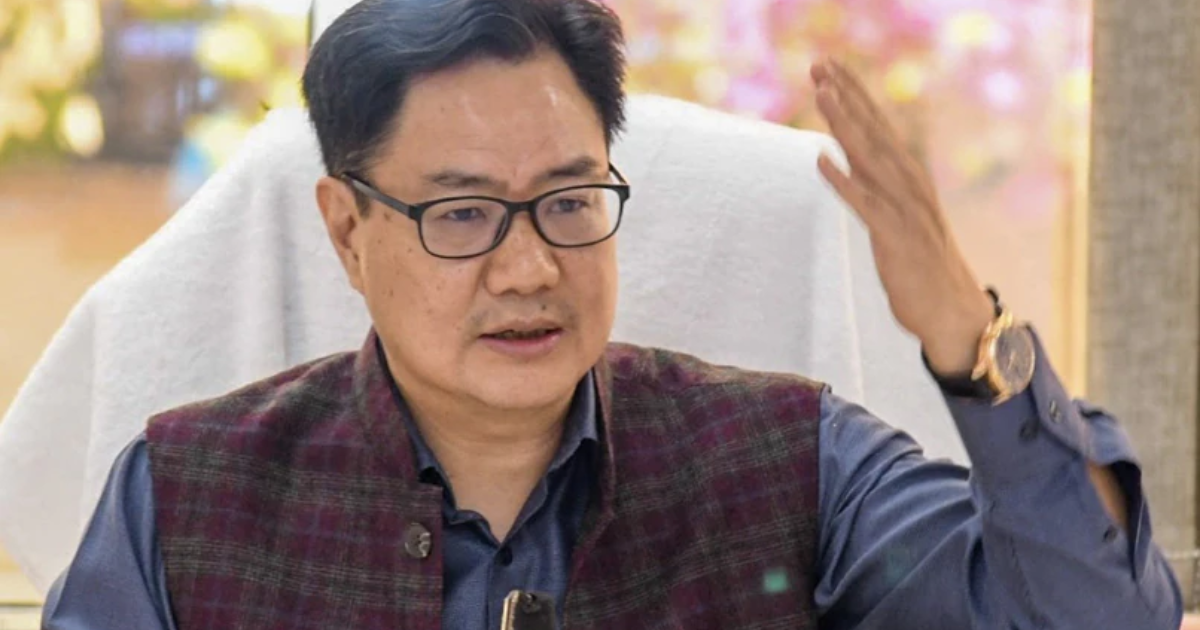
Union Minister for Minority and Parliamentary Affairs, Kiren Rijiju, highlighted the importance of educating Muslim women about their rights, as this was seen as a prerequisite for inclusive national development. This was in a national consultation organized by the National Commission for Women (NCW), where he stated that knowledge is not just a matter of being policy driven; it is really a key requirement for any kind of growth. This is evident from Rijiju’s view that “once you empower a woman with this knowledge and the means to fend for herself, she influences societal change by leaps and bounds.”
The consultation was titled “Rights of Muslim Women in India,” aimed at bringing together a diverse mix of lawyers, academics, sociologists, activists, and policymakers from all over the country, thus highlighting the multiple challenges Muslim women face and the need to have collective efforts to address them. Rijiju committed to actively supporting the recommendations emerging from the event, underscoring his personal dedication to transforming these discussions into actionable outcomes.
Towards Legal and Social Transformation
“It is such that no woman, at any time and for any reason, should be denied justice, dignity, or human rights,” said NCW chairperson Vijay Rahatkar, adding her voice to those of Rijiju. She mentions to legitimize social change with a legal frame as a double-barreled approach towards achieving real progress: “Legal reform is good and must be complemented by a change in the mindset of society.”
The four focused sessions during the consultation had specific areas of Muslim women’s lives as their themes. Evaluation of government schemes for economic empowerment, and evaluation of legal provisions under Wakf Act, 2025, were part of the discussions. A session on personal law visually captured definitions of child custody, maintenance, and property rights, while another described marriage and divorce through the lens of constitutional values. These discussions became platforms for what are often silenced voices besides being informative.
Speakers at the second session, which looked at the Wakf Act of 2025, urged more openness and the inclusion of women on Wakf boards.
Naya Daur, an NCW publication that encompasses legal protections and welfare schemes among other rights available to Muslim women, was released during the event.
Nations-wide consultations towards empowering Muslim women represent one of the ongoing steps to integrating Muslim women into India’s more prominent developmental agenda. Empowering Muslim women with the right tools and awareness is not simply social justice but a very basic condition for ensuring that progress takes place at a more inclusive level and distributes benefits equitably at a national level.