
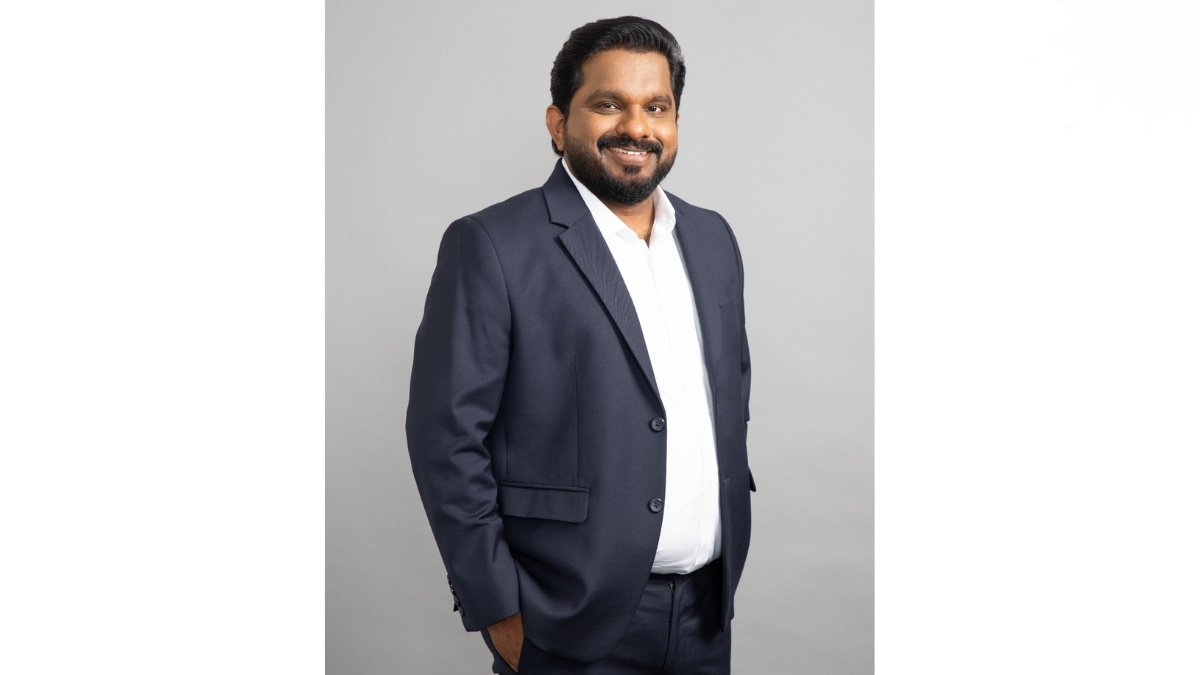
The Leadership Philosophy Behind Vanchinathan T’s Talent Engine
New Delhi [India], October 23: From a 15-engineer garage to a growing technology ecosystem, his approach has remained simple: establish strict boundaries, hand over real responsibility, and build an environment where people learn to make sound decisions without a boss in the room.
When an unexpected error occurs in complex hardware, the instinct is always to fix it. A boss can step in, take over the workbench, correct the parameter, and preserve the immediate schedule. The component is saved, but the young engineer remains dependent. The easiest person to make dependent is the very person you are trying to develop. A boss who immediately supplies the answer may solve today’s problem, but they quietly make tomorrow’s problem harder.
The alternative choice creates short-term friction: define the non-negotiable standard, hand the problem back, and step out of the room. The engineer is forced to discover the flaw and own the solution. The fastest way to solve a problem is rarely the fastest way to build the person who will solve the next one. In fact, rescuing people too quickly is the fastest way to weaken an organisation.
Vanchinathan T’s talent model is built on this premise. His architecture does not remove control; it changes where control lives.

The 2008 Garage
That philosophy was forged under pressure in 2008. Returning from Malaysia with an ambition to manufacture semiconductors in India, Vanchinathan set up a modest workspace. When the initial venture stalled and the capital burned out, he found himself in a garage with fifteen young, inexperienced engineers.
The easier decision would have been to close the operation. The business had failed. He did not decide that the people had failed. He kept the team intact and pivoted into defence electronics and aerospace hardware—a field where standards are non-negotiable and mistakes are costly.
He did not manage them with a corporate cage of rigid permissions, nor did he offer unguided chaos.
He marked the fences.
The point was never unrestricted freedom; it was independent judgement within institutional boundaries. In high-consequence engineering, the boundaries are the control system: quality benchmarks, testing protocols, safety limits, and strict accountability. What changes is who is allowed to think inside them. Over time, the question in an engineer’s head shifts from “What does the boss want me to do?” to “What does the problem demand of me?”
From the Bench to the Floor
Over the following years, that garage cohort grew into a talent pipeline across Jeanuvs, Yeemak, and Vidvedaa. To maintain momentum, Vanchinathan bypassed traditional recruitment, bringing entry-level recruits and college interns with aspiration, ambition and attitude directly onto active production floors.
They are handed real responsibility on live lines handling complex, active sub-systems. Pressure makes authority attractive. When a failure occurs on a factory floor, the default instinct for a junior engineer is to look upward and wait for someone to take over. But when authority refuses to supply the immediate answer, recruits are forced to navigate the technical constraints themselves.
Standardisation can eliminate decisions that should not be made differently. It cannot eliminate the decisions a procedure never anticipated. That is where judgement begins.
Crucially, bounded independence does not mean every decision is solitary. In high-consequence work, the system still demands escalation, verification, and formal review whenever uncertainty is high. The independence lies in solving within the system, not operating outside it. Engineers who proved their capability inside this system have repeatedly stepped up to manage plants, operations, and larger business divisions across the group.
The Ambalapattu Parallel
The same instinct appears far outside a factory floor. When Vanchinathan returned to his childhood village of Ambalapattu to upgrade the government school he once attended, he did not begin by asking students or teachers to perform better. He first asked what in their environment was preventing capability from emerging in the first place.
A child in a rural school does not lack talent; they lack a platform to express it. Before expanding classrooms, he funded a roofed auditorium—currently under construction—right in the middle of the schoolyard. Confidence precedes curriculum. A stage provides a physical space to step up, speak before an audience, and develop presence.
Next comes the issue of attendance during the heavy monsoon season, where flooded village roads make reaching the campus a daily ordeal. To address this, he is adding additional vehicle support alongside a four-room additional classroom block, interactive smart classes, and much more. By prioritizing the stage first, he set out to change the conditions before asking the person to change.”
What Happens When the Room Clears
Leadership is often measured by what happens when the boss is present. Vanchinathan’s model asks a harder question: what happens after they leave?
A boss who insists on making every important decision builds an organisation bound entirely to personal bandwidth. When they leave the room, people wait. But when a boss stops answering, people have to start thinking. When people start thinking, an organisation starts learning.
Most bosses measure their value by how many problems they can solve. Vanchinathan’s model asks a different question: how many problems can the organisation solve without him?
The true test of a boss is not how well an organisation performs when they are standing in the centre of the room. It is how decisively people act when the room is entirely theirs.
(The article has been published through a syndicated feed. Except for the headline, the content has been published verbatim. Liability lies with original publisher.)