
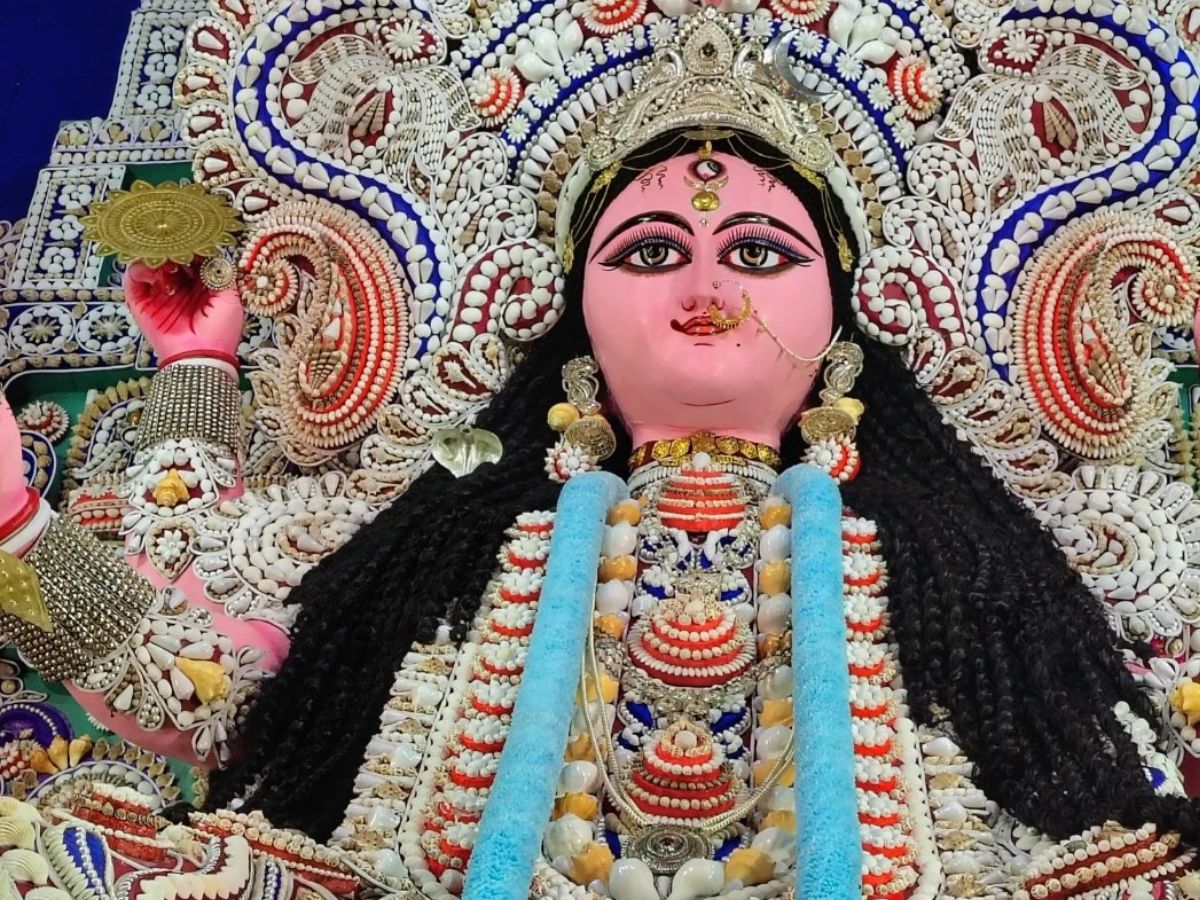
Jagaddhatri Puja 2025 is among the most eagerly anticipated festivals of West Bengal and eastern India. The festival is celebrated on the ninth day of the waxing moon (Shukla Paksha) in the Bengali month of Kartik, which typically falls between October and November. As the festival season nears, social media is already filled with countdowns, decorations, and elaborate event announcements.
Jagaddhatri Puja 2025 Date
Jagaddhatri Puja celebration will be on October 31, 2025, along with the Navami Tithi.
Jagaddhatri Puja 2025 Time
The Navami Tithi starts from 10:06 AM on the 30th of October and continues until 10:03 AM on the 31st of October.
What is Jagaddhatri Puja?
The Jagaddhatri Puja is as per the Hindu Panchang performed on Navami of Shukla Paksh during Kartik month. The festival is quite significant, particularly in West Bengal, Odisha, Tripura, and certain parts of Bihar such as Madhubani.
The name Jagaddhatri translates to “Mother of the World” or “The One Who Supports the Universe.” She is said to be yet another heavenly form of Goddess Durga that represents strength, kindness, and guardianship.
Goddess Jagaddhatri Significance
In Bengal’s Shakta culture, Jagaddhatri is the epitome of goodness (sattva) over evil and haughtiness (tamas). The followers feel that through her worship, one attains mastery over ego, fury, covetousness, and fear. Goddess Jagaddhatri is visualized as a peaceful but powerful goddess sitting on a lion, dressed in red clothes. In her four hands, she carries a conch (shankha), chakra, bow, and arrow, representing protection, knowledge, and strength. She is also shown with three eyes, indicating divine wisdom and cosmic awareness.
In texts such as the Shaktisangama Tantra, Kamakhya Tantra, Bhavishya Purana, and Durga Kalpa, the goddess is hailed as the destroyer of pride and ignorance. Her lion vehicle tramples on the demon Karindrasura, which symbolizes ego and pride.
Jagaddhatri Puja History
Historically, Jagaddhatri Puja is said to have originated in Krishnanagar, Nadia district. The festival was initiated publicly by King Krishnachandra Roy for the first time in the 18th century. According to myth, once the king performed Durga Puja inadequately and, with a sense of remorse, he took a decision to worship the Goddess in her Jagaddhatri avatar in the month of Kartik. The tradition then took a gradual spread all over Bengal and became a big cultural festival.
Spiritual Instructions by Sri Ramakrishna Paramahansa for Jagaddhatri Puja
The renowned saint Sri Ramakrishna Paramahansa also attached great spiritual significance to the worship of Jagaddhatri. Once he stated, “By worshipping Goddess Jagaddhatri, the human heart becomes free from fear, lust, anger, attachment, and pride.” His statement highlights that the festival is not merely a ritual but a means of attaining inner peace and self-realization.
Spiritual Legends Associated with Jagaddhatri Puja
According to some sources one old story is famous on Jagaddhatri Puja that is once Airavata, the divine elephant of Lord Indra, was cursed and reincarnated as the demon Karindrasura. He was egoistic. Once he attempted to kidnap Goddess Ganga, who invoked Adi Shakti for intervention. The Goddess manifested herself as Jagaddhatri and killed the demon Karindrasura. When he died, the demon was purified of sin and restored to his natural form as Airavata.
In another account, Karindrasura was also described as the commander of Durgamasura, whom Goddess Durga had killed previously. Following that battle, she took the form of Jagaddhatri and slew Karindrasura, representing the triumph over pride after victory over evil.
Some more sources also report that Mahishasura, in the battle with Goddess Katyayani, once transformed into an elephant thereby becoming Karindrasura. The Goddess then took on her Jagaddhatri form to vanquish him, demonstrating that Mahishasura and Karindrasura embody different forms of arrogance and ignorance.
In short, Jagaddhatri Puja is a symbol of peace, intelligence, and divine power. It also reminds the faithful that real strength does not rest in violence but in mastery over ego and emotions. As believers get ready for the 2025 festivities, the festival spirit continues to instill faith, devotion.