
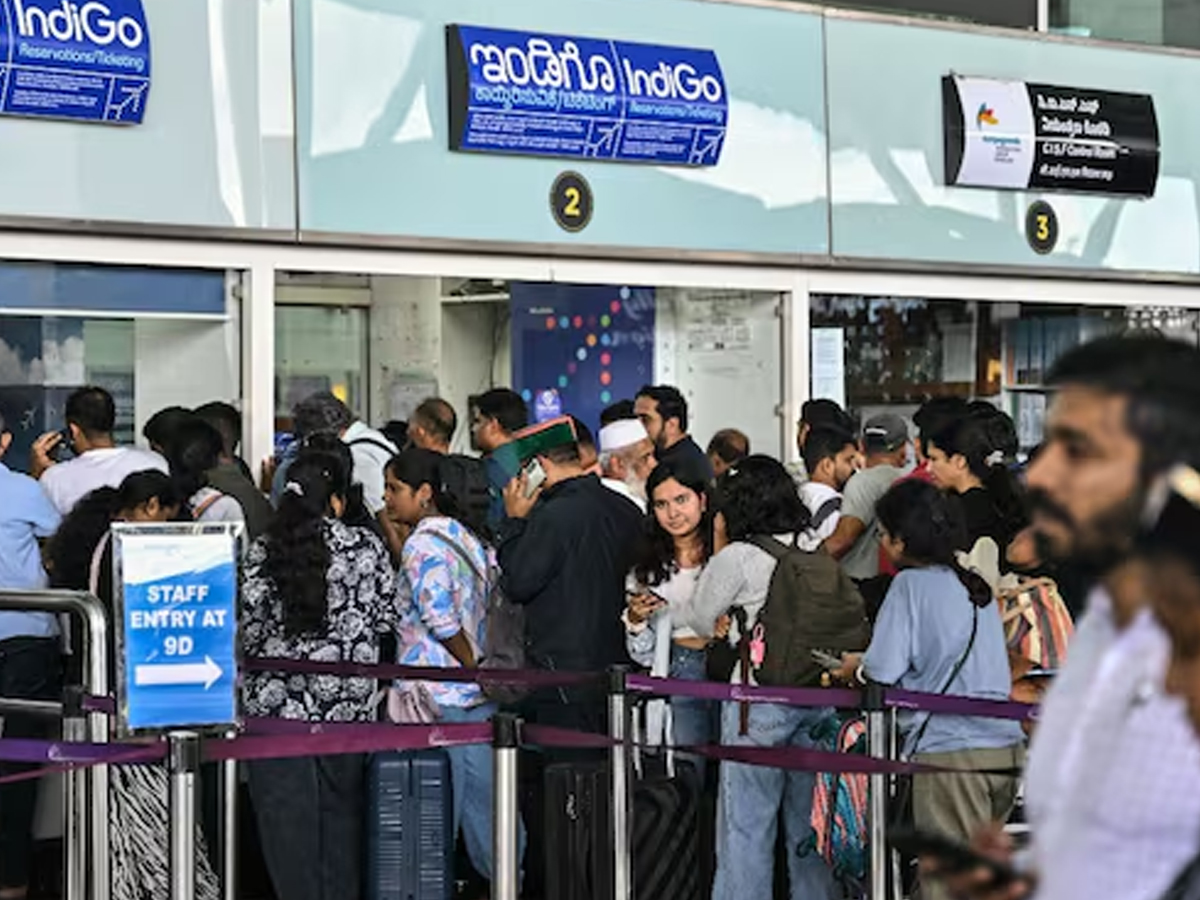
IndiGo’s operations hit a massive roadblock this week, leaving thousands of passengers stranded across India. More than 1,000 flights were cancelled in just four days, affecting key hubs like Delhi, Bengaluru, and Hyderabad. In response, the Directorate General of Civil Aviation (DGCA) withdrew its new weekly rest rules for pilots, aiming to stabilise airline operations.
Why Indigo Flights Were Cancelled
The airline cited multiple reasons for the cancellations. Minor technical glitches, winter schedule changes, congestion at major airports, and adverse weather contributed to the chaos. However, the main factor was the recent implementation of Flight Duty Time Limitations (FDTL). These rules regulate crew duty hours to prevent pilot fatigue.
IndiGo admitted that the operational meltdown occurred due to “misjudgment and planning gaps” in adapting to these rules, which the airline had two years to prepare for. As a result, its on-time performance plummeted to a historic low of 8.5%.
Impact on Major Airports
The cancellations caused severe disruption at India’s busiest airports:
- Delhi: 135 departures and 90 arrivals were cancelled in a single day.
- Bengaluru: 52 arrivals and 50 departures scrapped.
- Hyderabad: 92 flights cancelled.
Nationwide, more than 600 flights were grounded in just 48 hours. IndiGo operates over 2,200 flights daily, nearly double that of Air India. Even a small disruption quickly snowballs into a nationwide operational crisis, stranding thousands of passengers.
DGCA Withdraws Weekly Roaster Rules
On Friday, the DGCA announced the withdrawal of the controversial new weekly roster norms. In a notification, it said, “In view of the ongoing operational disruptions and representations received from various airlines regarding the need to ensure continuity and stability of operations, the instruction contained in the referenced paragraph that no leave shall be substituted for weekly rest is hereby withdrawn with immediate effect.”
The move is aimed at stabilising airline operations and reducing passenger inconvenience while ensuring pilots remain rested and alert.
IndiGo’s Response
IndiGo cancelled all flights from Delhi until midnight and from Chennai until 6 PM. The airline described the situation as caused by a “multitude of unforeseen operational challenges.” The carrier also confirmed that FDTL adaptation was a significant factor in the disruption.
Aviation insiders say the scale of IndiGo’s operations, 60% of India’s domestic market, amplifies the effect of even minor lapses. A 10% disruption can impact 200–400 flights in a single day.
What Passengers Can Expect
Passengers are advised to check flight statuses before travelling. IndiGo is working to restore normal operations gradually. Airlines are also reviewing staffing and crew rotation plans to prevent future meltdowns.
The incident highlights the challenges of managing large-scale airline operations in India’s rapidly growing domestic market. Analysts suggest that improved planning and better adaptation to regulatory changes are essential to avoid such crises in the future.