
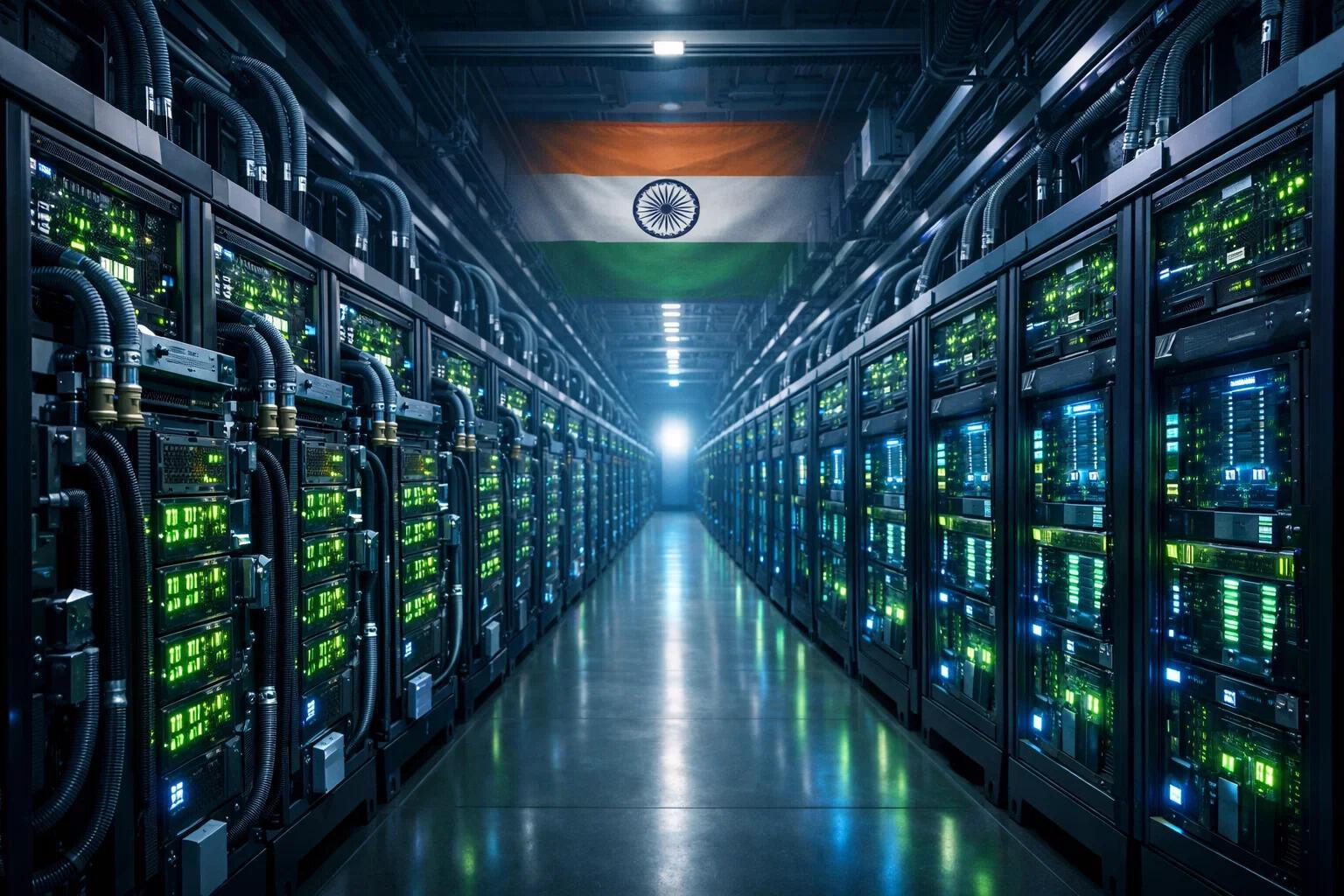
India generates roughly 20% of the world’s data and yet stores only 3% of it. That gap is more than an incredible opportunity for infrastructure growth—it is a critical opportunity to expand digital sovereignty. As foreign servers house the financial transactions, health records, and daily lives of 1.4 billion people, India is drawing a line. Over $67 billion in committed investment from global technology leaders signals that the world’s largest democracy is no longer willing to be a data producer on someone else’s terms.
For decades, data produced by Indian citizens, businesses, and institutions has flowed outward, housed in foreign servers where it is processed under foreign jurisdictions and subject to external policy decisions. As digital financial services have exploded across the country—reaching street vendors, rural farmers, and first-time bank account holders alike—the stakes of that arrangement have grown untenable. The Reserve Bank of India recognized this early, mandating in 2018 that all payment system data be stored exclusively on Indian soil. That regulatory signal marked the beginning of a broader national reckoning.
The $67 Billion Infrastructure Response
Global technology superpowers are responding directly to this shift with unprecedented commitments. This capital deployment reflects a strategic recognition that India’s data infrastructure gap represents one of the largest addressable buildouts in the world:
-
Amazon: Pledged $35 billion by 2030, explicitly aligning its massive investment with India’s national priorities.
-
Microsoft: Committed $17.5 billion toward the establishment of new, state-of-the-art Indian data centers.
-
Google: Investing $15 billion in a dedicated AI hub in Visakhapatnam, anchored by a new international subsea cable gateway.
The Indian government has actively structured policy to accelerate this buildout. A long-term tax holiday for data centers signals a durable commitment to infrastructure developers. Furthermore, a government-operated shared computing facility boasting over 38,000 GPUs gives local startups and researchers access to computing power that would otherwise remain financially out of reach. Through its AI Mission program, New Delhi is coupling this infrastructure investment with the sectors that need it most: public-private partnerships across healthcare, finance, and governance.
Sovereignty, Stability, and Performance
Beyond basic economics, India’s appeal as a primary data destination rests on geopolitical stability. In an era of heightened global friction, India’s track record of stable leadership and clear policy priorities makes it a highly predictable home for critical digital infrastructure.
This stability extends to global AI governance, where India has staked out a distinctive position. The nation neither defers entirely to Western regulatory frameworks nor retreats into digital isolationism; instead, it actively shapes practical norms that reflect its own immense scale and development priorities.
Bess Hooper,University of Washington | NXT Fellow 2026