
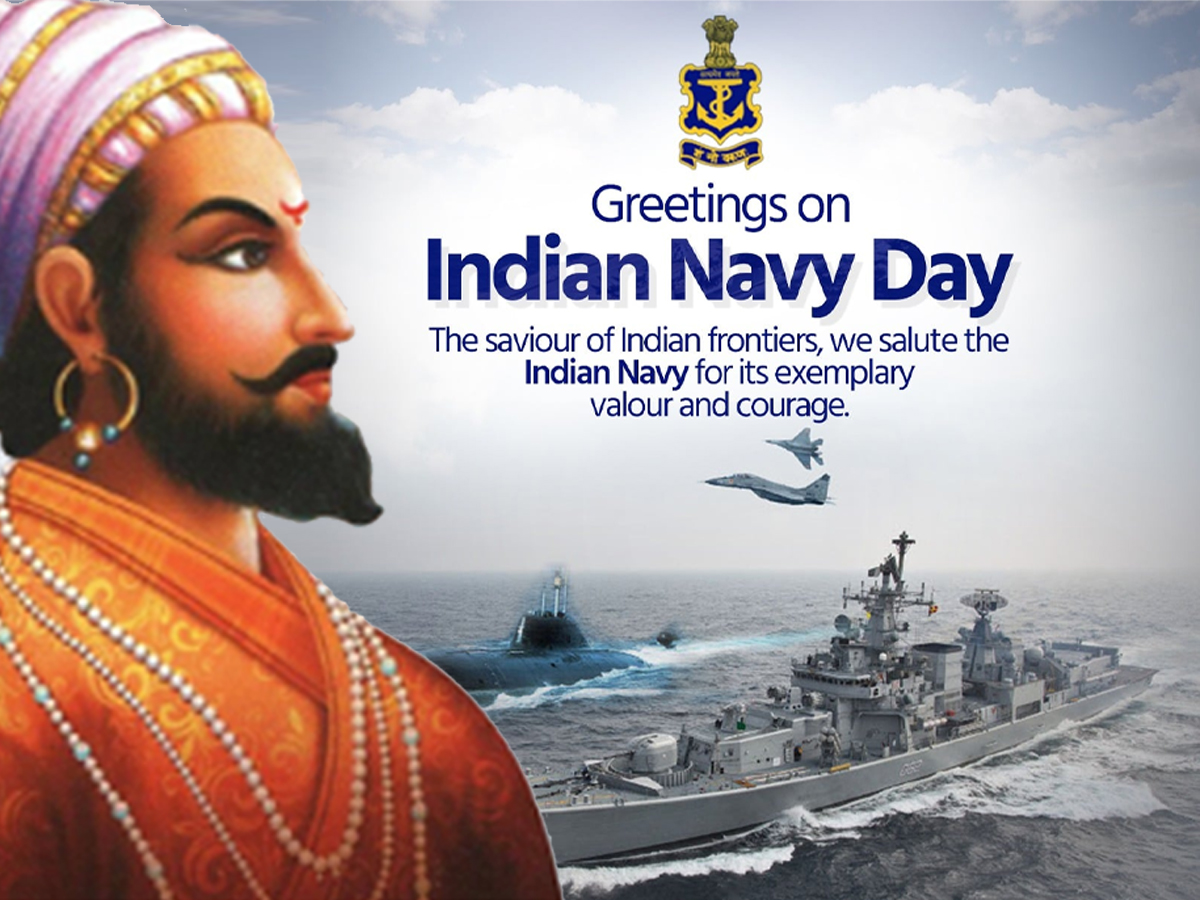
India marks Navy Day every year on December 4 to recognise the courage and achievements of its naval forces. The day honours Operation Trident, the successful 1971 attack on Pakistan’s Karachi harbour. But beyond modern naval victories, the occasion also brings renewed attention to India’s earliest maritime roots. Much of that legacy can be traced back to Chhatrapati Shivaji Maharaj, whose naval foresight shaped India’s coastal defence centuries before modern warships arrived.
While celebrations take place across naval bases with parades, demonstrations, and displays of maritime strength, many Indians also look back at the historical figure widely regarded as the “Father of the Indian Navy.”
Indian Navy Day: Who Is Known as the Father of the Indian Navy?
Chhatrapati Shivaji Maharaj, the great Maratha ruler, holds this title for his groundbreaking work in maritime warfare. At a time when Indian kingdoms largely ignored the seas, he recognised the coastline as a strategic frontier that needed protection.
Shivaji Maharaj’s decision to control the Konkan coast, stop piracy, and push back against European influence laid the foundation for an organised naval force in the 17th century. His vision created a powerful maritime shield at a time when foreign fleets dominated the Indian Ocean.
Why Is Shivaji Maharaj Called the Father of the Indian Navy?
Shivaji Maharaj earned this honour because he created India’s first structured naval force and combined strategy, engineering, and administration to secure the seas.
He built a fleet of powerful ships and appointed skilled commanders to guard the coastline from the Portuguese, Dutch, and British. His approach was far ahead of its time. He relied on smaller, faster vessels that could manoeuvre easily in shallow coastal waters — an approach that allowed Maratha forces to outsmart larger enemy ships.
The construction of sea forts such as Sindhudurg, Vijaydurg, and Suvarnadurg significantly strengthened his naval defence. These forts, built with remarkable precision, served as command hubs and watchpoints over crucial trade routes.
Chhatrapati Shivaji Maharaj’s Maritime Strategy and Key Achievements
Shivaji Maharaj’s approach to maritime defence went beyond creating a fleet. He also focused on long-term stability and economic protection.
1. Building Strong Sea Forts
He oversaw the construction of forts that still stand today as engineering marvels. These forts gave the Marathas control over trade and defence and acted as secure bases for naval operations.
2. Developing a Skilled Naval Force
He recruited sailors, shipbuilders, and coastal experts. His navy grew to include various ship types suited to different roles — from patrolling to engaging enemy forces.
3. Protecting Trade Routes
Shivaji understood that secure sea routes were essential for economic prosperity. His navy protected merchants, ensured safe exports, and controlled key ports.
4. Challenging European Powers
He successfully resisted attempts by the Portuguese and British to dominate the Konkan coast. His naval strategy prevented foreign powers from extending full control over western India.
Indian Navy Day 2025: Celebrating a Legacy That Still Inspires
Navy Day is not only a reminder of India’s modern maritime capability, but also a tribute to the roots laid centuries earlier. Shivaji Maharaj’s philosophy — that the sea is a vital shield for national security — remains central to naval thinking even today.
As India observes Navy Day 2025, his legacy stands tall. His innovations in naval warfare, coastal defence, and maritime strategy continue to inspire the Indian Navy’s vision and operational strength.