
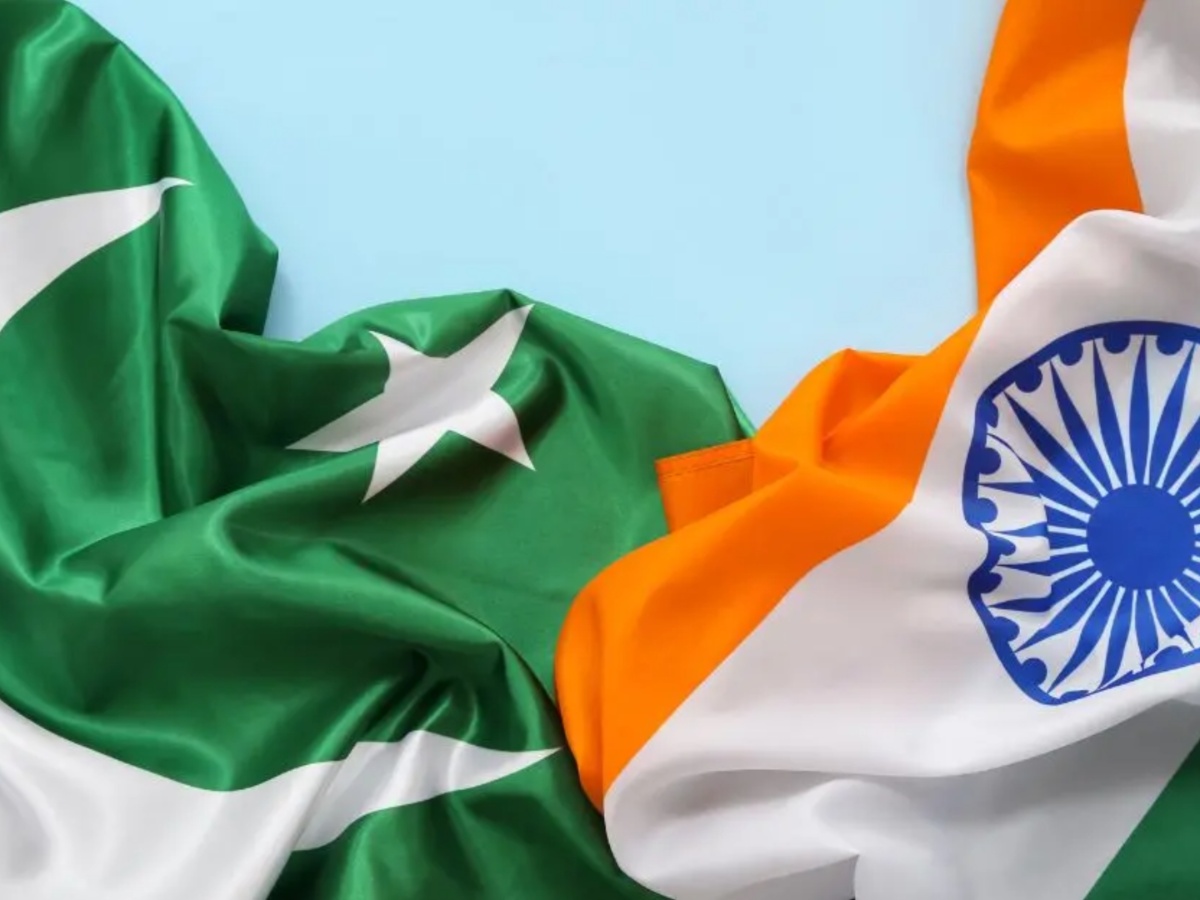
In August 1947, India and Pakistan became free from British rule. India celebrates Independence Day on August 15, and Pakistan on August 14. Both countries started with similar problems, like poor economies and weak infrastructure. But in the last 78 years, they have gone in very different directions. India has become a strong economy and the world’s biggest democracy, while Pakistan still has political problems, economic struggles, also strong military control.
Economic Growth and Performance
Before the British came, India was one of the richest countries in the world, with 24.4 per cent of the global GDP in 1700. But years of British rule reduced this to just 4.2 per cent by 1950 and when India and Pakistan became independent, both countries had weak economies. In the early years, Pakistan grew faster, averaging six per cent between 1961 and 1980, while India grew at about four per cent. Pakistan’s growth was helped by trade from East Pakistan and aid from the US and oil-rich countries in West Asia.
Read More: How India’s Military Evolved: 5 Shifts from First War to Operation Sindoor
In the 1990s, India removed the licence-permit-quota system, which helped the economy grow quickly by around seven to eight per cent each year. Today, India’s GDP is $3.88 trillion, making it the fourth-largest economy in the world, and it is expected to pass Germany by 2028 and Pakistan’s economy is much smaller at $0.37 trillion and has heavy debt. It also relies on loans from the IMF, including a $7 billion loan in 2024. In 2023, India’s per person income was almost double Pakistan’s, and India’s trade foreign reserves are much higher than Pakistan’s $15 billion.
Military Strength and Defense
Since 1947, India and Pakistan have fought four wars and had many smaller fights in between. India is the fourth strongest military in the world, while Pakistan is 12th. In 2024, India spent $86 billion on defense and has 1.46 million active soldiers, 1.15 million in reserves, and 2.5 million paramilitary troops. Pakistan has 654,000 active soldiers and 500,000 paramilitary forces. India also has more tanks, armored vehicles, and aircraft. It has over 4,200 tanks, 148,000 armored vehicles, and 2,229 aircraft, while Pakistan has 328 fighter jets, 1,399 aircraft, and fewer tanks. India has 180 nuclear warheads, and Pakistan has 170. India follows a “No First Use” policy.
Democracy and Governance
India held its first national election in 1951-52 and has kept a continuous democratic government since then. Pakistan, on the other hand, held its first election in 1970 and has faced several military takeovers that interrupted democracy. Today, India is the world’s biggest working democracy, with more than 945 million people able to vote in 2024. Pakistan is still heavily influenced by its military, which controls much of the country’s foreign and security decisions.
Read More: The Birth of a Nation: How Pakistan Came Into Being?
Social Progress and Women’s Rights
Gender equality remains a challenge in both nations, but India fares better. India ranks 131 in the Global Gender Gap Report, while Pakistan ranks 148. Gender-based violence remains high in both countries, but India achieves a 27.4 per cent conviction rate in rape cases, compared to Pakistan’s under two per cent. India also ranks 128 in the Georgetown Institute for Women, Peace and Security index, while Pakistan ranks 158.
Sports Rivalry and Global Recognition
Sports, particularly cricket, highlight the rivalry between India and Pakistan. India’s Men in Blue lead in ICC rankings, while Pakistan holds the fifth position and in the Olympics, India has won 41 medals, whereas Pakistan has 11. Beyond sports, India’s global recognition as a stable democracy and economic hub contrasts sharply with Pakistan’s struggles.
The Journey So Far
Although India and Pakistan started in similar ways, India has grown into a global power with a strong democracy, a growing economy, and a strong military. Pakistan, even though it has potential, still faces political problems, depends on other countries economically, and has social challenges and the 78-year journey of both countries shows how different choices and leadership have led them down very different paths.