
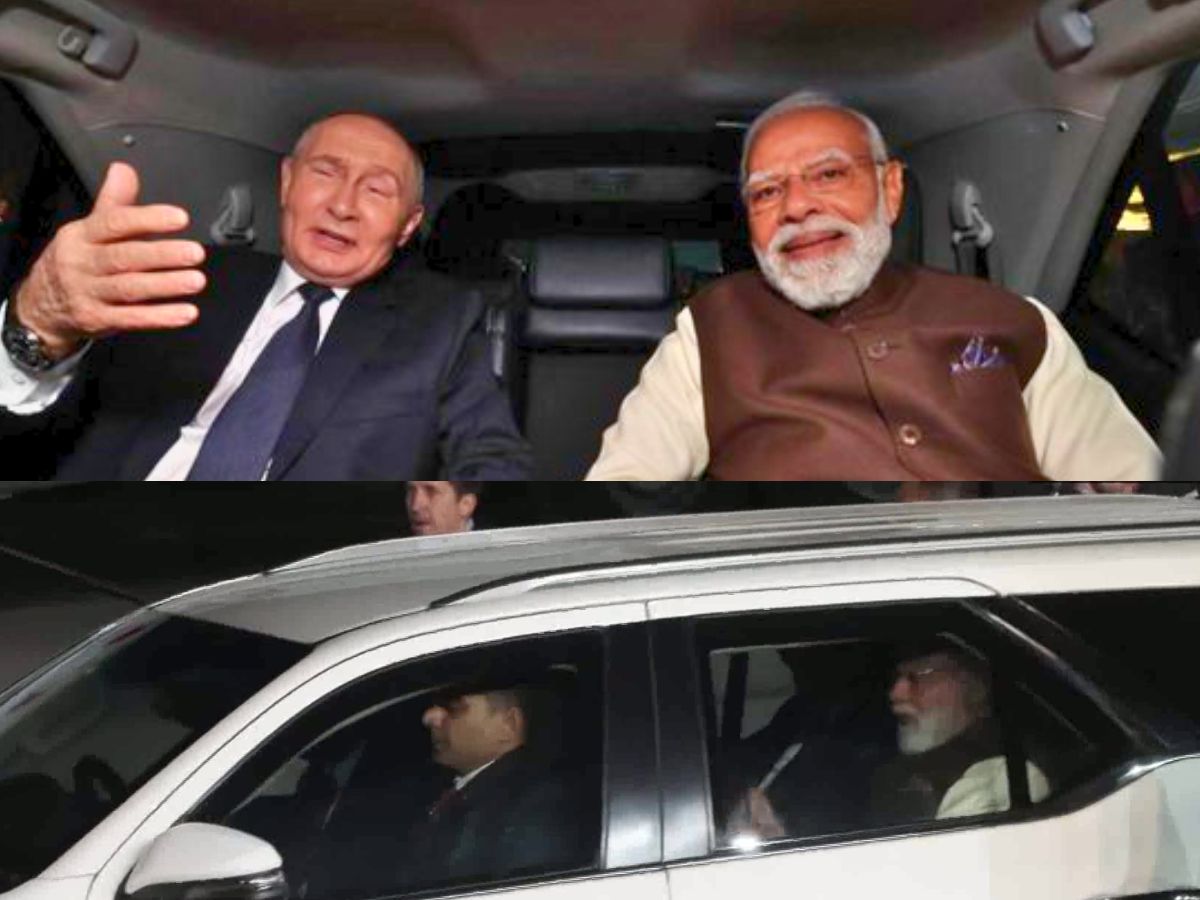
When PM Narendra Modi personally welcomed Vladimir Putin at Delhi’s Palam airport, the two leaders made headlines not just for the warm hug and handshake, but because they left the airport in the same car.
This rare gesture came ahead of the two-day visit for the 23rd India–Russia Annual Summit, scheduled in Delhi on December 5. The carpool in a Toyota Fortuner SUV is being seen as a powerful symbol of closeness between India and Russia.
A Return to the “Tianjin Moment”
This is not the first time Modi and Putin have shared a ride. In September 2025, at the Shanghai Cooperation Organisation summit (SCO) in Tianjin, China, the two had travelled together in a Russian Aurus Senat limousine.
At that time, PM Modi had posted on X:
“After the proceedings at the SCO Summit venue, President Putin and I travelled together to the venue of our bilateral meeting. Conversations with him are always insightful.”
Putin later said about that ride:
“The car ride with PM Modi was my idea. It was a symbol of our friendship.” He added, “We talked throughout the drive; there’s always something to discuss. We even sat inside the car for quite some time afterwards.”
What the Car Carpool & Airport Protocol Signals?
Breaking Protocol to Show Warmth: Official protocol seldom demands a head of government to receive a foreign head of state personally at a technical airport, or to share a ride. That only underscores the special nature of this visit.
Public Diplomacy With Visual Impact: In diplomacy, optics matter. The shared ride provides a vivid image of personal rapport — a message to both domestic and global audiences that India–Russia relations remain close despite shifting geopolitical winds.
Setting the Tone for the Summit: As the two prepare for official talks in Delhi, the car ride acts as a warm, friendly precursor — possibly smoothing the path for negotiations on trade, defence, energy, and strategic cooperation.
Why it Matters in Today’s Geopolitics?
The timing of this visit is significant. It is the first official trip by Putin to India since the war in Ukraine started in 2022. For India, this moment comes while global powers watch closely — especially because of India’s past purchases of Russian energy and defence equipment.
In that context, the act of riding together conveys more than camaraderie — it signals commitment. It underlines that, even under international pressure, Delhi and Moscow are ready to reinforce their “special and privileged strategic partnership.”
India-Russia Summit: What to Expect?
The summit is expected to address deeper cooperation in defence, energy, and trade. A private dinner at Modi’s residence later on arrival adds a personal dimension to diplomatic proceedings. The optics of this carpool may influence how media, analysts, and global powers view the strength and intent behind India–Russia ties.