
Negotiations for the long-pending India-European Union Free Trade Agreement (FTA) have now entered a critical and “decisive phase,” with both sides actively narrowing down differences, top diplomats announced Friday. A common urgent need to safeguard robust supply chains and promote trade with like-minded democratic partners in an increasingly unstable global environment is driving the demand for a prompt resolution.
The development marks a significant acceleration in talks that have stretched over nearly 14 rounds since their relaunch. The emphasis has shifted from mere economic benefit to one of strategic necessity.
Why Is This FTA ‘More Critical Than Ever’ Now?
In an exclusive interview with ANI, Netherlands Foreign Minister David van Weel, a key ally within the EU, framed the agreement as an imperative response to contemporary challenges. “FTAs with like-minded partners now are more critical than ever,” van Weel stated, pointing directly to systemic disruptions.
“We see a world where trade is becoming increasingly difficult, where countries sometimes don’t adhere to the rules we set, and where we need to diversify our supply chains to become more resilient and autonomous,” he explained.
This sentiment highlights a fundamental reevaluation of trade policy priorities in the wake of the pandemic and in the context of geopolitical concerns, where efficiency and dependability are valued equally.
Also Read: Indian Army Fast-Tracks ₹2,000 Crore Purchase of 850 Kamikaze Drones to Modernize Combat Units
What Are the Latest Developments in the Negotiations?
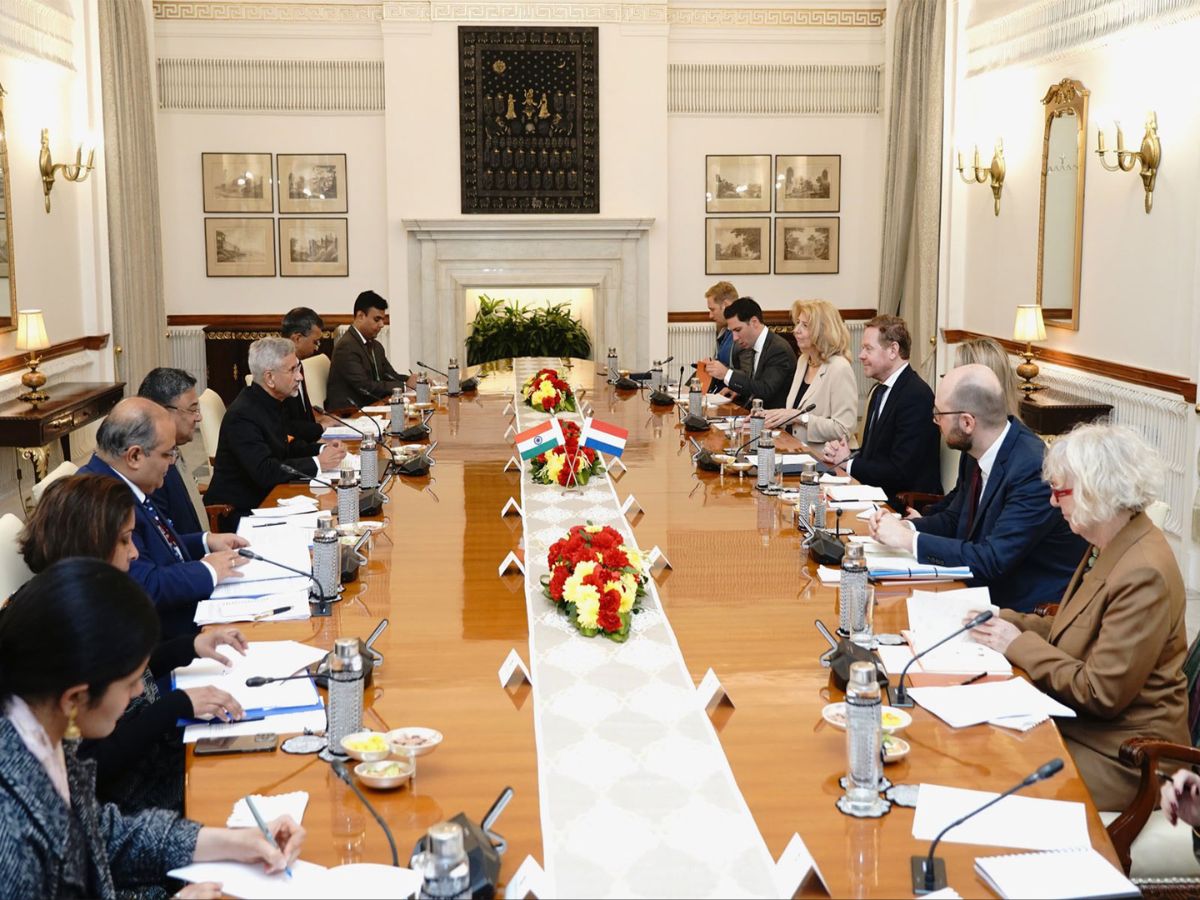
Indian External Affairs Minister S. Jaishankar, hosting his Dutch counterpart, publicly acknowledged the supportive role of key EU members like the Netherlands. “We count on your support as we are moving to what I hope is a decisive phase in our negotiations with the EU on the Free Trade Agreement,” Jaishankar said during a joint press interaction.
This comes after Commerce Secretary Rajesh Agrawal said earlier this week that disagreements are being aggressively worked out. “We are narrowing down the differences… Both sides are virtually engaged on multiple issues,” Agrawal said, indicating a continuous and high-level engagement aimed at bridging final gaps.
How Are India-Netherlands Ties Extending Beyond Trade?
The FTA discussions formed the core of a broader strategic dialogue between India and the Netherlands. In keeping with a comprehensive relationship, the ministers also solidified important developments in defense and security cooperation.
Indo-Pacific Focus: Both nations expressed shared concerns about stability in the Indo-Pacific region. The Netherlands has formally joined India’s Indo-Pacific Oceans Initiative (IPOI).
Increased Naval Presence: The Dutch Deputy Chief of the Navy will visit India in February, according to Minister van Weel’s announcement of specific measures for increased naval involvement.
Port Call Signalling Commitment: A Dutch frigate is scheduled to visit Kochi in the spring of 2025, a move described as “a testimony to how important we find it to show our presence here also in the region.”
What Are the Key Sectors of Bilateral Cooperation?
While the FTA dominated headlines, the bilateral relationship is multifaceted. Jaishankar highlighted deepening collaboration in several high-technology and sustainability-focused domains:
- Water management and agriculture technology
- Semiconductor and electronics supply chains
- Renewable energy and green hydrogen
The alignment was summarized by van Weel: “In these times of geopolitical change and unrest around the world, democracies need to stick together. India and the Netherlands are passionate about democracy, the rule of law… and all those values are under pressure.”
The India-EU free trade agreement negotiations are gaining unprecedented momentum due to the confluence of shared strategic values and economic need, which could lead to a historic deal in the upcoming months.
Also Read: Is Vladimir Putin Ready to End the Ukraine War Under a US Peace Plan?